The Fort Worth Press - One woman dies every 2 mins in pregnancy, childbirth: UN

USD -
AED 3.672503
AFN 66.000343
ALL 81.750787
AMD 378.260319
ANG 1.79008
AOA 917.000119
ARS 1447.7807
AUD 1.429327
AWG 1.80125
AZN 1.695576
BAM 1.65515
BBD 2.013067
BDT 122.134821
BGN 1.67937
BHD 0.37701
BIF 2960
BMD 1
BND 1.271532
BOB 6.906503
BRL 5.2395
BSD 0.999467
BTN 90.452257
BWP 13.162215
BYN 2.854157
BYR 19600
BZD 2.010138
CAD 1.366615
CDF 2225.000441
CHF 0.777305
CLF 0.021735
CLP 858.210238
CNY 6.938199
CNH 6.93926
COP 3628.58
CRC 495.478914
CUC 1
CUP 26.5
CVE 93.31088
CZK 20.654396
DJF 177.720153
DKK 6.328325
DOP 62.700992
DZD 129.716681
EGP 46.898171
ERN 15
ETB 154.846992
EUR 0.84738
FJD 2.20515
FKP 0.729917
GBP 0.73281
GEL 2.695017
GGP 0.729917
GHS 10.974578
GIP 0.729917
GMD 72.999681
GNF 8771.298855
GTQ 7.666172
GYD 209.107681
HKD 7.812425
HNL 26.40652
HRK 6.385502
HTG 131.004367
HUF 321.707506
IDR 16807
ILS 3.094805
IMP 0.729917
INR 90.44185
IQD 1309.366643
IRR 42125.000158
ISK 122.698337
JEP 0.729917
JMD 156.730659
JOD 0.709031
JPY 156.945499
KES 128.949615
KGS 87.449748
KHR 4034.223621
KMF 418.00016
KPW 899.945137
KRW 1461.704465
KWD 0.30733
KYD 0.83291
KZT 496.518171
LAK 21498.933685
LBP 89504.332961
LKR 309.337937
LRD 185.901857
LSL 15.973208
LTL 2.95274
LVL 0.604889
LYD 6.316351
MAD 9.162679
MDL 16.911242
MGA 4427.744491
MKD 52.212764
MMK 2099.936125
MNT 3569.846682
MOP 8.043143
MRU 39.687396
MUR 45.879676
MVR 15.450132
MWK 1732.791809
MXN 17.32615
MYR 3.935502
MZN 63.749926
NAD 15.973816
NGN 1368.559885
NIO 36.779547
NOK 9.67647
NPR 144.74967
NZD 1.666655
OMR 0.384458
PAB 0.999458
PEN 3.359892
PGK 4.282021
PHP 58.951022
PKR 279.546749
PLN 3.57428
PYG 6615.13009
QAR 3.645472
RON 4.317499
RSD 99.475027
RUB 76.246155
RWF 1458.735317
SAR 3.75002
SBD 8.058101
SCR 13.714455
SDG 601.498038
SEK 8.989675
SGD 1.27291
SHP 0.750259
SLE 24.474968
SLL 20969.499267
SOS 570.224434
SRD 37.894053
STD 20697.981008
STN 20.734071
SVC 8.745065
SYP 11059.574895
SZL 15.972716
THB 31.719961
TJS 9.340239
TMT 3.51
TND 2.890703
TOP 2.40776
TRY 43.529499
TTD 6.770395
TWD 31.672103
TZS 2580.289652
UAH 43.116413
UGX 3558.598395
UYU 38.520938
UZS 12251.99609
VES 371.640565
VND 25982
VUV 119.556789
WST 2.72617
XAF 555.124234
XAG 0.011178
XAU 0.0002
XCD 2.70255
XCG 1.80131
XDR 0.68948
XOF 555.135979
XPF 100.927097
YER 238.374961
ZAR 16.080355
ZMK 9001.194249
ZMW 19.565181
ZWL 321.999592
  • RBGPF

    0.1000

    82.5

    +0.12%

  • SCS

    0.0200

    16.14

    +0.12%

  • CMSD

    -0.0700

    23.87

    -0.29%

  • BP

    0.3800

    39.2

    +0.97%

  • BTI

    -0.2400

    61.63

    -0.39%

  • RIO

    0.1100

    96.48

    +0.11%

  • RELX

    -0.7300

    29.78

    -2.45%

  • CMSC

    -0.1400

    23.52

    -0.6%

  • NGG

    1.5600

    87.79

    +1.78%

  • GSK

    3.8900

    57.23

    +6.8%

  • BCE

    0.2400

    26.34

    +0.91%

  • AZN

    3.1300

    187.45

    +1.67%

  • BCC

    5.3000

    90.23

    +5.87%

  • RYCEF

    -0.3200

    16.68

    -1.92%

  • JRI

    0.0300

    13.15

    +0.23%

  • VOD

    0.4600

    15.71

    +2.93%

One woman dies every 2 mins in pregnancy, childbirth: UN
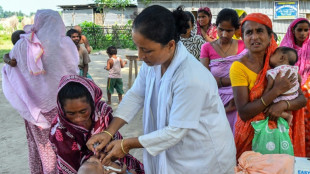
One woman dies every 2 mins in pregnancy, childbirth: UN / Photo: © AFP/File

One woman dies every 2 mins in pregnancy, childbirth: UN

A woman dies every two minutes due to pregnancy or childbirth complications, despite maternal mortality rates dropping by a third in 20 years, the United Nations said Thursday.

Text size:

Rates fell significantly between 2000 and 2015 but largely stagnated between 2016 and 2020 -- and in some regions have even reversed, the UN said.

The overall maternal mortality rate dropped by 34.3 percent over a 20-year period -- from 339 maternal deaths per 100,000 live births in 2000 to 223 maternal deaths in 2020, according to a report by the World Health Organization and other UN agencies.

Nonetheless, that means nearly 800 women died per day in 2020 -- or around one every two minutes.

Belarus recorded the biggest decline -- down 95.5 percent -- while Venezuela saw the highest increase. Between 2000 and 2015, the biggest rise was in the United States.

"While pregnancy should be a time of immense hope and a positive experience for all women, it is tragically still a shockingly dangerous experience for millions around the world," said WHO chief Tedros Adhanom Ghebreyesus.

"These new statistics reveal the urgent need to ensure every woman and girl has access to critical health services... and that they can fully exercise their reproductive rights."

The report found that between 2016 and 2020, maternal mortality rates dropped in only two of the eight UN regions: in Australia and New Zealand by 35 percent, and in Central and Southern Asia by 16 percent.

- 'Unconscionable' -

The rate went up in Europe and Northern America by 17 percent, and in Latin America and the Caribbean by 15 percent. Elsewhere, it stagnated.

The two European countries witnessing "significant increases" are Greece and Cyprus, the report's author Jenny Cresswell told journalists.

Maternal deaths remain largely concentrated in the world's poorest regions and in conflict-affected countries.

Around 70 percent of those deaths recorded in 2020 were in sub-Saharan Africa, where the rate is "136 times bigger" than in Australia and New Zealand, Cresswell said.

In Afghanistan, the Central African Republic, Chad, the Democratic Republic of Congo, Somalia, South Sudan, Sudan, Syria and Yemen -- all facing severe humanitarian crises -- rates were more than twice the global average.

Severe bleeding, infections, complications from unsafe abortions and underlying conditions such as HIV/AIDS are among the leading causes of death, the report said -- which are all largely preventable and treatable.

The WHO said it was "critical" that women had control over their reproductive health -- particularly about if and when to have children, so that they can plan and space childbearing to protect their health.

Natalia Kanem, head of the UN Population Fund, said the rate of women "needlessly" dying was "unconscionable".

"We can and must do better by urgently investing in family planning and filling the global shortage of 900,000 midwives," she said.

While the report covers data up to 2020, the WHO's Anshu Banerjee told journalists that the statistics since then look bleak, due to the Covid-19 pandemic and the economic crisis.

T.Harrison--TFWP