The Fort Worth Press - IAEA begins mission to review Fukushima water release

USD -
AED 3.67315
AFN 64.496617
ALL 81.129122
AMD 374.159881
ANG 1.789884
AOA 918.00007
ARS 1356.244298
AUD 1.397458
AWG 1.8
AZN 1.702368
BAM 1.659398
BBD 2.013032
BDT 122.881518
BGN 1.668102
BHD 0.377051
BIF 2966
BMD 1
BND 1.271323
BOB 6.906382
BRL 4.997502
BSD 0.999474
BTN 93.256068
BWP 13.409807
BYN 2.845446
BYR 19600
BZD 2.010156
CAD 1.370495
CDF 2305.999873
CHF 0.78412
CLF 0.022533
CLP 886.88019
CNY 6.82155
CNH 6.82321
COP 3614.6
CRC 457.653866
CUC 1
CUP 26.5
CVE 93.849663
CZK 20.66075
DJF 177.720513
DKK 6.34601
DOP 59.999845
DZD 132.247019
EGP 51.7841
ERN 15
ETB 156.058102
EUR 0.8491
FJD 2.215397
FKP 0.736978
GBP 0.739215
GEL 2.690136
GGP 0.736978
GHS 11.055005
GIP 0.736978
GMD 72.999449
GNF 8779.999913
GTQ 7.643685
GYD 209.117442
HKD 7.825375
HNL 26.551391
HRK 6.3968
HTG 130.822487
HUF 309.643497
IDR 17160.85
ILS 2.99713
IMP 0.736978
INR 93.03825
IQD 1309.327858
IRR 1321000.000138
ISK 122.279739
JEP 0.736978
JMD 157.828647
JOD 0.709027
JPY 159.195012
KES 129.149933
KGS 87.449962
KHR 4015.000361
KMF 419.00004
KPW 900.009772
KRW 1479.394995
KWD 0.308505
KYD 0.832927
KZT 471.426208
LAK 22051.212435
LBP 89501.959919
LKR 315.682748
LRD 183.901512
LSL 16.391442
LTL 2.95274
LVL 0.60489
LYD 6.321827
MAD 9.235925
MDL 17.081065
MGA 4149.768373
MKD 52.349951
MMK 2100.36648
MNT 3591.239924
MOP 8.05688
MRU 39.798407
MUR 46.209736
MVR 15.44997
MWK 1736.501842
MXN 17.267702
MYR 3.953944
MZN 63.954968
NAD 16.391373
NGN 1341.17029
NIO 36.780302
NOK 9.36681
NPR 149.209245
NZD 1.699365
OMR 0.384522
PAB 0.999474
PEN 3.438683
PGK 4.331355
PHP 60.041965
PKR 278.725374
PLN 3.601603
PYG 6371.010164
QAR 3.643722
RON 4.3285
RSD 99.655976
RUB 76.377903
RWF 1463.751946
SAR 3.751343
SBD 8.048583
SCR 13.869022
SDG 600.999815
SEK 9.20317
SGD 1.273145
SHP 0.746601
SLE 24.65031
SLL 20969.496166
SOS 571.178884
SRD 37.501981
STD 20697.981008
STN 20.787022
SVC 8.74501
SYP 110.527167
SZL 16.387809
THB 32.040072
TJS 9.47994
TMT 3.505
TND 2.902377
TOP 2.40776
TRY 44.762303
TTD 6.789296
TWD 31.579006
TZS 2607.498872
UAH 43.67007
UGX 3693.302337
UYU 39.894283
UZS 12158.338389
VES 477.98287
VND 26333.5
VUV 118.468315
WST 2.71595
XAF 556.549
XAG 0.012749
XAU 0.000209
XCD 2.702549
XCG 1.801267
XDR 0.690967
XOF 556.541917
XPF 101.186133
YER 238.606202
ZAR 16.423451
ZMK 9001.199831
ZMW 19.114727
ZWL 321.999592
  • BCC

    -0.1800

    78.73

    -0.23%

  • JRI

    0.0300

    12.91

    +0.23%

  • RIO

    1.1600

    99.72

    +1.16%

  • CMSC

    -0.1200

    22.59

    -0.53%

  • CMSD

    -0.1300

    22.9

    -0.57%

  • BCE

    0.3450

    24.165

    +1.43%

  • RBGPF

    -13.5000

    69

    -19.57%

  • NGG

    -0.3100

    87.55

    -0.35%

  • BP

    1.5100

    47.63

    +3.17%

  • GSK

    -0.6600

    57.15

    -1.15%

  • RYCEF

    -0.8000

    16.8

    -4.76%

  • BTI

    -0.5350

    56.145

    -0.95%

  • RELX

    0.5350

    36.215

    +1.48%

  • AZN

    -0.7470

    200.463

    -0.37%

  • VOD

    0.1100

    15.7

    +0.7%

IAEA begins mission to review Fukushima water release


IAEA begins mission to review Fukushima water release

An International Atomic Energy Agency taskforce began a mission Monday in Japan to review the controversial planned release of treated water from the Fukushima nuclear plant into the ocean.

Text size:

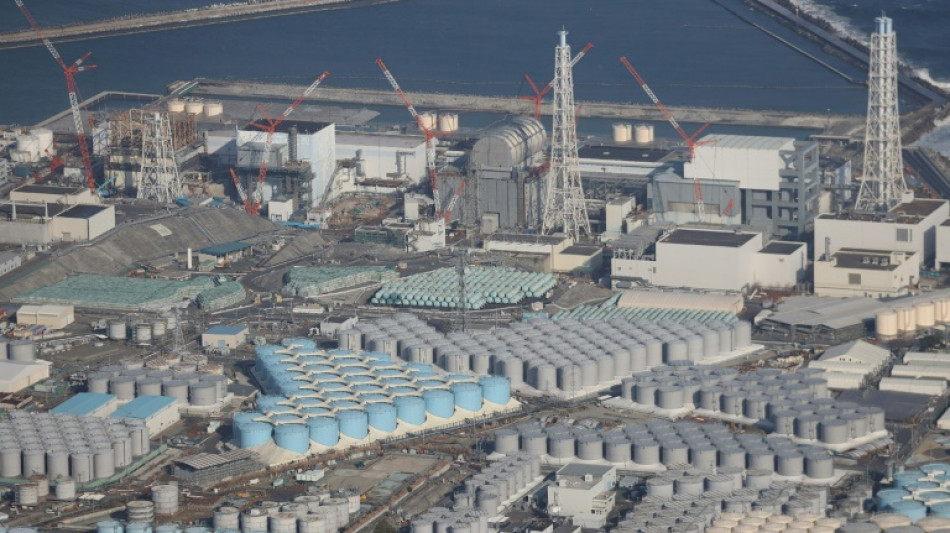
More than a million tonnes of processed water has accumulated in tanks at the crippled plant since it went into meltdown following a tsunami in 2011 and storage space is running out.

An extensive pumping and filtration system removes most radioactive elements, and Japan says the plan to dilute and release the water over several decades is safe.

The IAEA has endorsed the release, which it says is similar to the disposal of wastewater at nuclear plants elsewhere.

But the plan adopted by the government last April, which is expected to begin as soon as March 2023, sparked ire from neighbouring countries over environmental and safety concerns.

It also generated fierce opposition from local fishing communities, who fear it will undermine years of work to restore confidence in their seafood.

Plant operator TEPCO and the Japanese government are hopeful that IAEA monitoring of the process will boost confidence.

"This week we will conduct a mission to review the action, plans, data, and relevant documents, to assess their compliance against the provisions included in international safety standards," said Gustavo Caruso, director and coordinator of the IAEA's nuclear safety and security department.

He said the taskforce would be scrutinising elements including the "radiological characterisation of the water to be discharged" and as well the impact on people and the environment.

TEPCO's chief officer for the treated water management, Junichi Matsumoto, said the firm was already studying infrastructure design and operations for the discharge plan "with the priority on safety and also to contain the impact on the region's reputation."

"We hope to further improve the objectivity and transparency of this process through this review," he added, at a meeting with IAEA and Japanese government officials.

Debate over how to handle the water has dragged on for years, as space to store it at the site runs out, though some critics have suggested there could be ways to store more water until a new plan is devised.

The liquid includes water used to cool damaged reactors, as well as rain and groundwater that seeps into the area.

The filtration process removes most radioactive elements from the water, but some remain, including tritium.

Experts say the element is only harmful to humans in large doses and with dilution the treated water poses no scientifically detectable risk.

The IAEA team will be in Japan February 14-18 and will visit the plant site and give a press conference at the end of their trip.

T.Harrison--TFWP