The Fort Worth Press - World failing to address 'dangerous' inequality after Covid: Oxfam

USD -
AED 3.672495
AFN 64.491965
ALL 80.819685
AMD 361.12818
ANG 1.789785
AOA 916.999774
ARS 1524.755904
AUD 1.421555
AWG 1.80125
AZN 1.698006
BAM 1.741787
BBD 2.015015
BDT 123.745402
BGN 1.747831
BHD 0.377604
BIF 3000.997453
BMD 1
BND 1.278059
BOB 11.730759
BRL 5.027097
BSD 1.000472
BTN 94.559477
BWP 13.70595
BYN 2.971479
BYR 19600
BZD 2.012094
CAD 1.404485
CDF 2315.999766
CHF 0.823855
CLF 0.024781
CLP 975.290259
CNY 6.67805
CNH 6.67482
COP 3182.19
CRC 455.529135
CUC 1
CUP 24.010794
CVE 98.199695
CZK 21.60605
DJF 178.150632
DKK 6.653225
DOP 61.440772
DZD 134.635978
EGP 54.356702
ERN 15
ETB 163.87083
EUR 0.89012
FJD 2.2538
FKP 0.747587
GBP 0.74605
GEL 2.589936
GGP 0.747587
GHS 11.660299
GIP 0.747587
GMD 73.504156
GNF 8854.987666
GTQ 7.645587
GYD 209.311853
HKD 7.847135
HNL 26.857072
HRK 6.7076
HTG 131.084908
HUF 324.795004
IDR 18048
ILS 3.09091
IMP 0.747587
INR 94.43705
IQD 1516.6493
IRR 1832375.000402
ISK 121.260321
JEP 0.747587
JMD 158.780625
JOD 0.709021
JPY 157.860501
KES 129.849897
KGS 87.450106
KHR 4068.146802
KMF 439.497294
KPW 899.999961
KRW 1325.830107
KWD 0.31006
KYD 0.833753
KZT 446.890557
LAK 22518.390538
LBP 89591.044298
LKR 332.14739
LRD 170.580744
LSL 16.412051
LTL 2.95274
LVL 0.60489
LYD 6.419294
MAD 9.819615
MDL 17.998442
MGA 4521.489767
MKD 54.903951
MMK 2099.21541
MNT 3597.533576
MOP 8.085932
MRU 40.128421
MUR 47.309704
MVR 15.460077
MWK 1734.751129
MXN 18.485085
MYR 4.081297
MZN 63.898647
NAD 16.412051
NGN 1332.179821
NIO 36.816372
NOK 9.35655
NPR 151.295341
NZD 1.75665
OMR 0.384516
PAB 1.000481
PEN 3.438421
PGK 4.479652
PHP 63.302028
PKR 276.89823
PLN 3.883845
PYG 5756.677086
QAR 3.647261
RON 4.7506
RSD 104.566998
RUB 81.872113
RWF 1478.615162
SAR 3.748965
SBD 8.07458
SCR 13.833364
SDG 601.501249
SEK 9.878075
SGD 1.27711
SHP 0.7473
SLE 23.920425
SLL 20969.504398
SOS 571.749178
SRD 37.661494
STD 20697.981008
STN 21.819089
SVC 8.754392
SYP 13001.999685
SZL 16.418788
THB 33.573502
TJS 9.214157
TMT 3.51
TND 2.986543
TOP 2.40776
TRY 49.602435
TTD 6.792416
TWD 32.365497
TZS 2644.999919
UAH 45.047334
UGX 4207.076509
UYU 40.164934
UZS 11975.562621
VES 879.788905
VND 25856.5
VUV 119.136032
WST 2.774679
XAF 583.880316
XAG 0.017358
XAU 0.00024154356
XCD 2.70255
XCG 1.803058
XDR 0.707052
XOF 583.880316
XPF 106.20998
YER 236.095747
ZAR 16.379565
ZMK 9001.201607
ZMW 20.069287
ZWL 321.999592
SSP 5787.554334
MXV 2.08653
  • RIO

    -0.3300

    97.04

    -0.34%

  • CMSC

    -0.0400

    20.67

    -0.19%

  • RELX

    0.0000

    33.41

    0%

  • RBGPF

    0.0000

    67.95

    0%

  • BCE

    -0.0700

    21.99

    -0.32%

  • BCC

    -0.0300

    75.66

    -0.04%

  • GSK

    0.8600

    51.08

    +1.68%

  • JRI

    -0.0300

    11.52

    -0.26%

  • NGG

    -0.1200

    76.68

    -0.16%

  • CMSD

    0.0900

    20.54

    +0.44%

  • BTI

    -0.0800

    55.75

    -0.14%

  • AZN

    2.0200

    168.1

    +1.2%

  • BP

    -1.4200

    43.16

    -3.29%

  • RYCEF

    0.4600

    19.7

    +2.34%

  • VOD

    0.0700

    17.02

    +0.41%

World failing to address 'dangerous' inequality after Covid: Oxfam
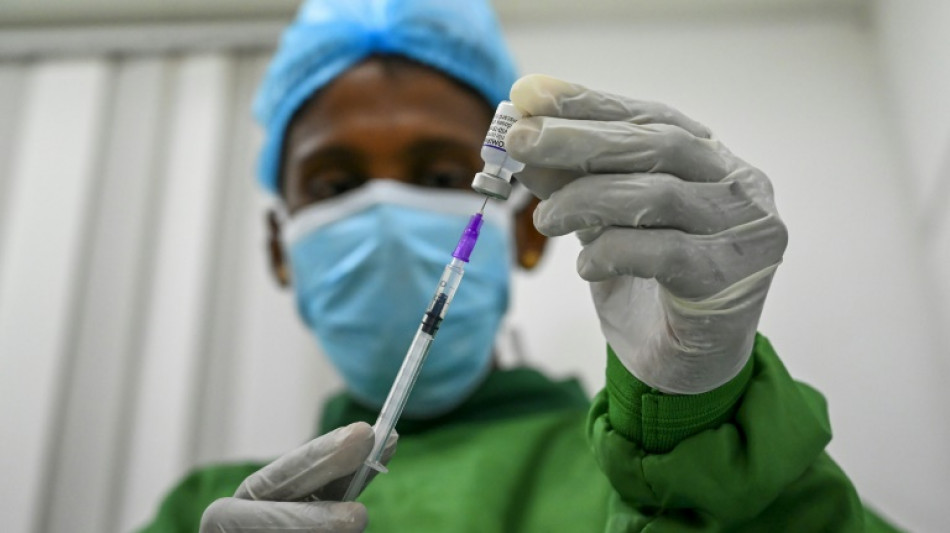
World failing to address 'dangerous' inequality after Covid: Oxfam / Photo: © AFP/File

World failing to address 'dangerous' inequality after Covid: Oxfam

The world has mostly failed to address a "dangerous" increase in inequality in the wake of the Covid pandemic, anti-poverty campaigners Oxfam said Tuesday.

Text size:

The charity revealed the findings of its "Commitment to Reducing Inequality Index" (CRI) study, examining actions and policies of governments to tackle inequality in the first two years of Covid.

"Covid-19 has increased inequality worldwide, as the poorest were hit hardest by both the disease and its profound economic impacts," stated the report, which is compiled every two years.

"Yet the CRI 2022 Index shows clearly that most of the world's governments failed to mitigate this dangerous rise in inequality."

The charity assessed 161 governments from 2020 to 2022, after what it called "the biggest global health emergency in a century".

Half of the nations covered cut their spending on social protection and 70 percent slashed education.

The pandemic slashed consumer spending due to lockdowns, in turn slashing taxation revenues.

However, 143 nations out of the 161 failed to increase taxation on the wealthy -- and 11 chose to cut their taxes.

The study added that a small group of governments bucked this trend and took "clear actions" to fight inequality.

This minority put "the rest of the world to shame", it said.

Oxfam also found that two-thirds of countries failed to increase their minimum wage in line with gross domestic product.

And it ranked them in an index based on their actions and policies on three areas: social spending, taxation, and labour.

Norway topped the index as the best performing nation when it comes to tackling inequality.

It was followed by Germany, Australia, Belgium and then Canada. France was ranked 12th while Britain stood at 14th.

- 'Wake-up call' -

The UN and campaigners have previously decried the unequal distribution of vaccines from richer Western countries to lower-income ones, particularly in Africa, putting lives at risk.

Oxfam delivered a withering criticism of most nations, arguing that the pandemic should have been a "wake-up call" to act on poverty in general.

"The explosion of the Covid-19 pandemic and the health, social, and economic crises that ensued have supercharged poverty and inequality," the charity's report concluded.

"The world witnessed sharp increases in poverty for the first time in decades, while the wealth of the richest people and corporate profits soared.

"The pandemic should therefore have been a wake-up call to national and global leaders to introduce policies to tackle inequality aggressively but as this report has shown, with some notable exceptions, governments have shamefully continued with 'inequality as usual'."

And it called upon governments around the world to refrain from austerity measures that would worsen the lot of the poor.

"Governments all over the world, supported by international financial institutions and global funding, need to implement policies which will reduce inequality and protect the incomes of the poor from recession and inflation," it said.

C.Dean--TFWP