Oil Traders Weigh Iran War Risk Against Diplomatic Signals

Attention is turning to the Fed and its impact on US inflation and interest rates
Crude oil prices have swung sharply over six months of war in Iran, rising almost two-thirds to nearly $120 a barrel before falling back as diplomatic efforts eased fears of a prolonged disruption to global supplies. The result has been a market repeatedly pulled between geopolitical risk and hopes of a return to normal oil flows, with every development in the conflict feeding through to prices. With Brent now below $90 a barrel, attention is also turning to the Federal Reserve and the impact of oil prices on the outlook for US inflation and interest rates.
Brent, the global oil benchmark, was at $72.48 a barrel on February 28, while US marker West Texas Intermediate was at $67.02. Both surged in the weeks that followed, with Brent approaching $120 and WTI reaching about $113 in late April. Since then, the two benchmarks have followed a more cyclical path, with signs of progress in negotiations easing supply fears and pulling prices lower, before renewed tensions send them higher again.
Oil prices steadied on Friday and posted their first weekly loss in three weeks, with Brent declining 0.35 per cent to settle at $89.10 a barrel and WTI shedding 0.16 per cent to close at $83.40. From last week's close, Brent and WTI were down by about 5 per cent. "Markets will closely monitor further diplomatic developments," stated Konstantinos Chrysikos, head of customer relationship management at financial services firm Kudo.
"Progress towards a permanent solution could keep prices under pressure if energy export flows begin to normalise. However, any setback could quickly push prices to the upside at a time when the market remains tight." Talks between the US and Iran are continuing, despite Washington this week announcing a new series of sanctions. Mediators including Qatar and Pakistan have stepped up efforts to secure an end to the war.
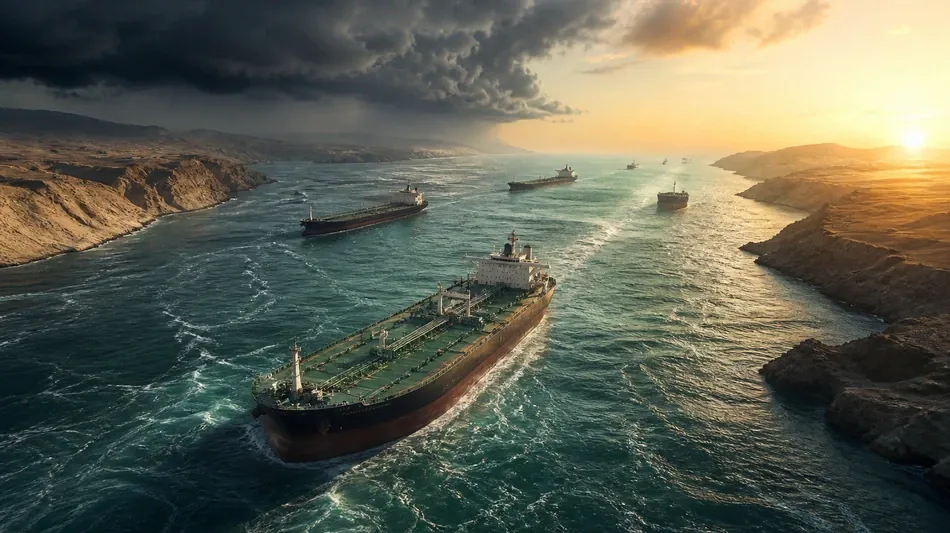
On Thursday, Iranian Foreign Minister Abbas Araghchi stated a return to diplomacy was not "impossible", after a meeting with the Qatari Prime Minister and Minister of Foreign Affairs, Sheikh Mohammed bin Abdulrahman, in Tehran. The Strait of Hormuz, the key waterway that is a major chokepoint for the world's energy shipments, remains a hot-button issue. The head of Iran's Supreme National Security Council, Mohsen Rezaei, stated the country was preparing a list of conditions for the reopening of the strait at the request of mediators.
Oil companies, meanwhile, have seen their businesses and stock prices jump. Before a ceasefire was announced in June, BP and Occidental Petroleum soared by more than 20 per cent, while Exxon Mobil and Shell jumped over 10 per cent. "Despite US-Iran diplomatic efforts hitting a roadblocks, data shows a gradual normalisation and increase of oil flows moving through the crucial Strait of Hormuz corridor," analysts at US firm Duncal Oil stated.
"This slowly dissolving supply bottleneck is removing the heavy geopolitical risk premium built into prices earlier in the month." While the regional war has been the main influence on oil markets, investors are also keeping tabs on Federal Reserve chairman Kevin Warsh's debut at the key Jackson Hole symposium, where he is expected to set the US central bank's tone moving forward. Picked by US President Donald Trump, Mr Warsh is under pressure to deliver on White House expectations that interest rates will be lowered. But the war in Iran has complicated matters as high energy prices have kept inflation elevated.
Higher oil prices are inflationary and therefore part of the decision-making process for monetary policy, which is then reflected in the bond market, analysts at JP Morgan stated. "Now with lower oil prices, and an interpretation of the Fed that veers hawkish, economic data, and specifically the labour market, remains key," they added. Analysts predict the Fed will maintain its key interest rates at its next meeting in September.
"One of the biggest overhangs on the global economy is dissipating, and now investors are questioning whether sustained oil prices are the only path to a Fed that takes a step towards tighter monetary policy, not looser," JP Morgan stated. "But with consistent economic growth and a firm labour market, the bar to hike remains high, especially as oil prices abate."
J.Ayala--TFWP