The Fort Worth Press - Extreme heat exposes vulnerabilities across Britain's rail network

USD -
AED 3.673042
AFN 65.000368
ALL 79.715041
AMD 364.320403
ANG 1.789783
AOA 917.000367
ARS 1499.143585
AUD 1.395504
AWG 1.8
AZN 1.70397
BAM 1.679281
BBD 2.014502
BDT 123.298316
BGN 1.696366
BHD 0.37703
BIF 2992
BMD 1
BND 1.271197
BOB 11.727937
BRL 5.193604
BSD 1.00021
BTN 95.349267
BWP 13.402252
BYN 3.016542
BYR 19600
BZD 2.011669
CAD 1.39105
CDF 2273.000362
CHF 0.80919
CLF 0.023655
CLP 931.010396
CNY 6.72675
CNH 6.731305
COP 3211.02
CRC 451.378305
CUC 1
CUP 26.5
CVE 95.503894
CZK 20.838604
DJF 177.720393
DKK 6.453404
DOP 58.750393
DZD 133.39204
EGP 49.798455
ERN 15
ETB 160.503874
EUR 0.863104
FJD 2.198804
FKP 0.735368
GBP 0.738825
GEL 2.603861
GGP 0.735368
GHS 11.19504
GIP 0.735368
GMD 74.000355
GNF 8780.000355
GTQ 7.634879
GYD 209.263688
HKD 7.84285
HNL 26.870388
HRK 6.505404
HTG 130.854201
HUF 315.250388
IDR 17757.4
ILS 2.976204
IMP 0.735368
INR 95.43455
IQD 1310.5
IRR 1374575.000352
ISK 121.390386
JEP 0.735368
JMD 158.543444
JOD 0.70904
JPY 160.08504
KES 129.440385
KGS 87.450384
KHR 4045.503796
KMF 425.00035
KPW 900.000294
KRW 1377.570383
KWD 0.30892
KYD 0.833552
KZT 463.527826
LAK 22425.000349
LBP 89550.000349
LKR 328.019886
LRD 180.250382
LSL 15.990381
LTL 2.95274
LVL 0.60489
LYD 6.340381
MAD 9.289039
MDL 17.293533
MGA 4329.000347
MKD 52.82251
MMK 2099.772007
MNT 3598.777615
MOP 8.07707
MRU 40.110379
MUR 46.840378
MVR 15.460378
MWK 1736.000345
MXN 17.034604
MYR 4.025904
MZN 63.910377
NAD 15.990377
NGN 1341.580377
NIO 36.720377
NOK 9.375804
NPR 152.558483
NZD 1.691475
OMR 0.381078
PAB 1.00021
PEN 3.351504
PGK 4.42225
PHP 62.270375
PKR 277.550374
PLN 3.74775
PYG 5927.077117
QAR 3.645038
RON 4.538204
RSD 101.324183
RUB 86.149411
RWF 1469
SAR 3.751962
SBD 8.000184
SCR 13.880372
SDG 601.503676
SEK 9.57835
SGD 1.274304
SHP 0.740866
SLE 24.650371
SLL 20969.499227
SOS 571.503662
SRD 37.74037
STD 20697.981008
STN 21.4
SVC 8.75176
SYP 13001.999906
SZL 15.990369
THB 33.150369
TJS 9.25201
TMT 3.5
TND 2.913038
TOP 2.40776
TRY 48.230368
TTD 6.788276
TWD 31.642404
TZS 2644.998038
UAH 44.565558
UGX 3771.073837
UYU 40.278022
UZS 11825.000334
VES 790.677104
VND 26072.5
VUV 118.040776
WST 2.709953
XAF 563.222427
XAG 0.015062
XAU 0.000224
XCD 2.70255
XCG 1.80268
XDR 0.707052
XOF 563.000332
XPF 102.925037
YER 236.503589
ZAR 16.17217
ZMK 9001.203584
ZMW 18.929211
ZWL 321.999592
  • JRI

    -0.0500

    12.35

    -0.4%

  • RBGPF

    -0.4400

    70.69

    -0.62%

  • CMSD

    0.0000

    21.18

    0%

  • CMSC

    -0.0200

    21.29

    -0.09%

  • BCC

    -0.0200

    78.75

    -0.03%

  • BP

    -0.1900

    42.15

    -0.45%

  • NGG

    -0.0800

    79.35

    -0.1%

  • AZN

    -1.8200

    162.7

    -1.12%

  • BCE

    0.0600

    23.46

    +0.26%

  • RIO

    -1.4800

    103.3

    -1.43%

  • BTI

    -0.1500

    56.13

    -0.27%

  • RYCEF

    -0.2500

    20.5

    -1.22%

  • GSK

    0.5500

    50.82

    +1.08%

  • RELX

    0.2400

    36.54

    +0.66%

  • VOD

    0.1600

    16.04

    +1%

Extreme heat exposes vulnerabilities across Britain's rail network


Extreme heat exposes vulnerabilities across Britain's rail network

A hot and dry summer has renewed scrutiny of how Britain's railways handle expanding steel, shrinking soils and ageing infrastructure.

Text size:

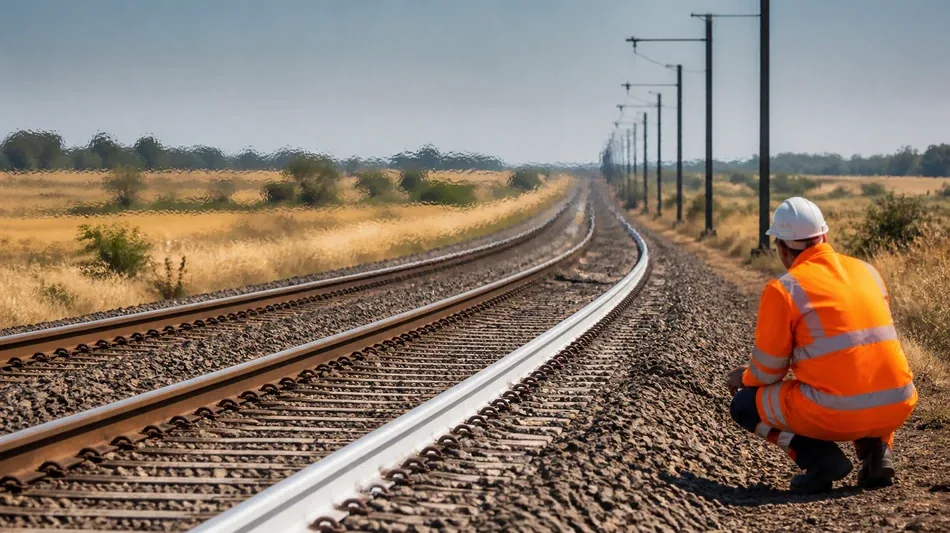
Britain's rail network has faced a series of heat-related stresses during one of the country's hottest and driest summers on record. A derailment near Lewes in East Sussex injured 30 people, while a Greater Anglia train derailed at Wickford station in Essex the following day without reported injuries.Railway steel expands in high temperatures. Because modern rails are welded into long continuous sections, expansion creates compressive forces that can lead to buckling if the track cannot move safely. Network Rail says most of the network can operate with rail temperatures up to 46C, roughly equivalent to an air temperature of 30C, but rail temperatures have reached 51C. Two days of record heat in 2022 led to almost 7,700 train cancellations and an estimated £30 million in costs.Extended drought creates a separate problem beneath the rails. Dry soil can shrink and settle unevenly under the weight of trains, affecting sleepers, ballast and embankments. Some parts of the network, including embankments and tunnels, date back to the 19th century.British rails are generally stressed so that compression becomes a major issue above an air temperature of about 27C. In hotter regions of countries including Australia and the United States, the stress-free temperature can exceed 35C. Raising the British standard could improve summer resilience but would increase the risk of rail fractures during cold weather. Concrete slab track offers greater stability but costs about four times as much to install as conventional ballasted track.Network Rail already paints some rails white, a measure it says can make them 5C to 10C cooler. A taskforce formed after the 2022 heatwave also suggested that modern, well-supported track could potentially be designed around a 30C stress-free temperature. Better monitoring remains a priority: fewer than half of the track buckles recorded in 2022 had been identified beforehand.The Rail Accident Investigation Branch has not concluded that heat caused the Lewes derailment. Its interim findings identified a track-geometry irregularity, and investigators noted that the clay embankment at the site is sensitive to changes in water content. Network Rail said it would continue to support the independent investigation and act on any lessons that emerge.

T.M.Dan--TFWP