The Fort Worth Press - Six months into Iran war, Hormuz traffic way down, sailors stranded

USD -
AED 3.6725
AFN 64.999454
ALL 81.216919
AMD 362.051328
ANG 1.789785
AOA 916.999838
ARS 1522.745168
AUD 1.435421
AWG 1.80125
AZN 1.70432
BAM 1.739803
BBD 2.01708
BDT 123.195303
BGN 1.747831
BHD 0.378775
BIF 2997.464751
BMD 1
BND 1.281146
BOB 11.69239
BRL 5.065098
BSD 1.001468
BTN 95.050483
BWP 13.720589
BYN 3.015879
BYR 19600
BZD 2.014233
CAD 1.412065
CDF 2313.468877
CHF 0.825695
CLF 0.024881
CLP 979.255437
CNY 6.691205
CNH 6.68528
COP 3173.953654
CRC 455.099408
CUC 1
CUP 24.035938
CVE 98.087444
CZK 21.756002
DJF 178.33919
DKK 6.683675
DOP 61.433083
DZD 133.824668
EGP 53.792394
ERN 15
ETB 163.585998
EUR 0.894175
FJD 2.26765
FKP 0.750253
GBP 0.75131
GEL 2.589642
GGP 0.750253
GHS 11.695058
GIP 0.750253
GMD 73.458051
GNF 8810.21216
GTQ 7.652004
GYD 209.527198
HKD 7.847875
HNL 26.885202
HRK 6.703794
HTG 131.147978
HUF 324.970499
IDR 18053
ILS 3.09465
IMP 0.750253
INR 94.965495
IQD 1518.213762
IRR 1795877.499323
ISK 121.179731
JEP 0.750253
JMD 159.195837
JOD 0.708991
JPY 157.902199
KES 130.098296
KGS 87.449944
KHR 4070.631144
KMF 440.000123
KPW 899.999961
KRW 1334.739814
KWD 0.31082
KYD 0.834586
KZT 453.195748
LAK 22534.359294
LBP 89683.40524
LKR 331.690611
LRD 170.751234
LSL 16.462394
LTL 2.95274
LVL 0.60489
LYD 6.431526
MAD 9.729662
MDL 17.966464
MGA 4507.405595
MKD 54.836988
MMK 2100.071343
MNT 3596.488264
MOP 8.096339
MRU 40.037362
MUR 47.229668
MVR 15.459767
MWK 1736.600987
MXN 18.472665
MYR 4.083204
MZN 63.899361
NAD 16.462394
NGN 1331.210065
NIO 36.854512
NOK 9.46656
NPR 152.081128
NZD 1.767941
OMR 0.382413
PAB 1.001468
PEN 3.444825
PGK 4.547436
PHP 62.985968
PKR 277.237468
PLN 3.907535
PYG 5719.877241
QAR 3.660721
RON 4.730601
RSD 104.461148
RUB 84.54834
RWF 1478.183516
SAR 3.752837
SBD 8.064647
SCR 13.905529
SDG 601.498789
SEK 9.95633
SGD 1.280497
SHP 0.754745
SLE 24.679936
SLL 20969.504398
SOS 572.343548
SRD 37.794501
STD 20697.981008
STN 21.794245
SVC 8.763065
SYP 13001.999685
SZL 16.455989
THB 33.444981
TJS 9.228751
TMT 3.51
TND 2.98768
TOP 2.40776
TRY 49.526505
TTD 6.798915
TWD 32.4536
TZS 2646.44398
UAH 44.920874
UGX 4136.458658
UYU 40.314905
UZS 12073.121914
VES 878.910602
VND 25894.5
VUV 119.385856
WST 2.787824
XAF 586.54035
XAG 0.017551
XAU 0.000240063761
XCD 2.70255
XCG 1.804919
XDR 0.707052
XOF 586.54035
XPF 106.089045
YER 236.149507
ZAR 16.49995
ZMK 9001.201083
ZMW 20.049815
ZWL 321.999592
SSP 5750.775019
MXV 2.085747
  • RIO

    -0.3300

    97.04

    -0.34%

  • CMSC

    -0.0400

    20.67

    -0.19%

  • RELX

    0.0000

    33.41

    0%

  • RBGPF

    0.0000

    67.95

    0%

  • BCE

    -0.0700

    21.99

    -0.32%

  • BCC

    -0.0300

    75.66

    -0.04%

  • GSK

    0.8600

    51.08

    +1.68%

  • JRI

    -0.0300

    11.52

    -0.26%

  • NGG

    -0.1200

    76.68

    -0.16%

  • CMSD

    0.0900

    20.54

    +0.44%

  • BTI

    -0.0800

    55.75

    -0.14%

  • AZN

    2.0200

    168.1

    +1.2%

  • BP

    -1.4200

    43.16

    -3.29%

  • RYCEF

    0.4600

    19.7

    +2.34%

  • VOD

    0.0700

    17.02

    +0.41%

Six months into Iran war, Hormuz traffic way down, sailors stranded
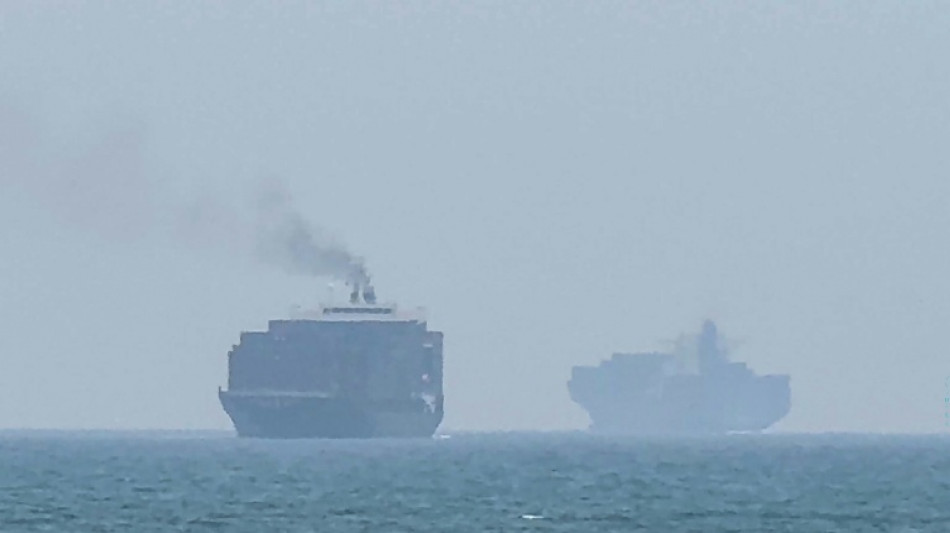
Six months into Iran war, Hormuz traffic way down, sailors stranded / Photo: © AFP/File

Six months into Iran war, Hormuz traffic way down, sailors stranded

Six months since the start of the Middle East war, the strategic Strait of Hormuz remains largely paralysed, with thousands of sailors still stranded in the Gulf and commodity carrier traffic way below its normal level.

Text size:

- Only a few transits per day -

Before Iran blocked the strait in response to joint US-Israeli strikes in February, around one fifth of the world's oil and liquefied natural gas exports passed through the waterway.

Iran's Guards have also warned of a "danger zone" covering 1,400 square kilometres where mines may be present.

After Iran closed the strait on March 1, commodity carrier traffic plummeted to an average of 10 transits per day, compared with a daily average of 95 in February, according to an AFP analysis of data from maritime tracker Kpler.

An agreement signed by the United States and Iran in June led to a temporary rebound to 36 transits per day, before they dropped back to an average of 15 between the resumption of hostilities on July 8 and August 22.

- New routes, 'dark' transits -

Before the war, vessels crossed the strait freely via a route through the centre of the waterway adopted by the International Maritime Organization (IMO).

There are now two distinct routes: one to the north, near the Iranian coast -- the only one approved by Tehran -- and another to the south, between the Omani coast and potentially mined areas.

During the relatively calm period between June 17 and July 7, an average of nine ships per day used the Iranian route and eight the Omani one. The rest transited via unidentified routes or the traditional IMO corridor.

Ever since the ceasefire collapsed on July 8, two-thirds of transits have become "dark", or unknown, compared with less than one percent before the war, according to Kpler.

These transits involve vessels whose exact route cannot be confirmed due to insufficient data stemming from disabled transponders, jammed signals or missing satellite imagery.

- Thousands of sailors stranded -

Some 6,000 sailors and 500 ships have remained stuck in the Gulf since the beginning of the conflict, the IMO told AFP.

The organisation said there were "ongoing discussions" to ensure a secure maritime route, adding that their outcome "depends on de-escalation in the region".

The IMO had begun an initiative in June to evacuate more than 11,000 seafarers stuck in the Gulf, but the effort was soon suspended following an attack on a vessel.

Over the past six months, at least 20 sailors and dockworkers have been killed in incidents or attacks in the region, according to the IMO.

G.George--TFWP