US retail sales weakest in over a year in July / Photo: © AFP/File

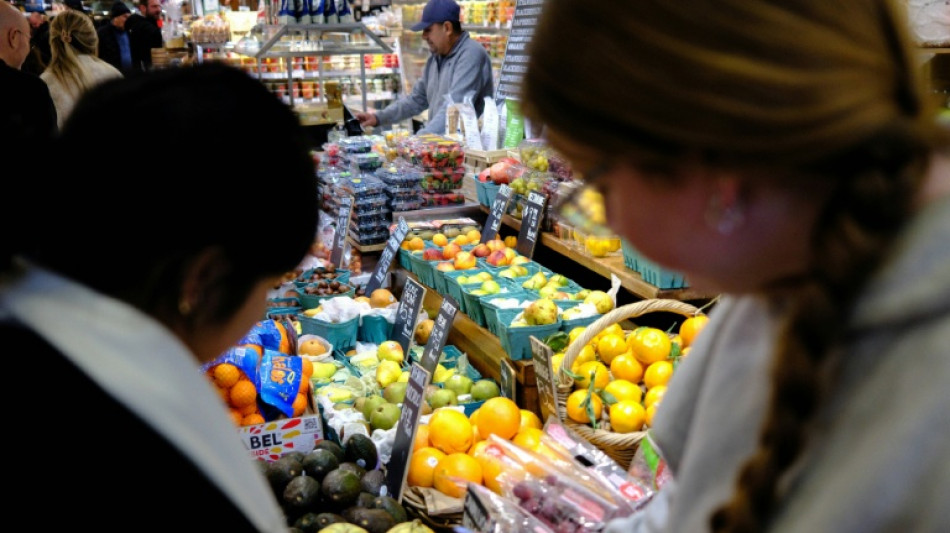
US retail sales declined unexpectedly in July, government estimates showed Friday, marking their weakest showing in more than a year as consumers pulled back at auto dealers and online stores.
Total sales were down 0.6 percent in July from the previous month, at $763.6 billion, according to the US Department of Commerce.
Excluding sales at auto dealers and gasoline stations, sales dipped 0.2 percent on a month-on-month basis.
Analysts had expected a 0.1 percent uptick in sales for the month instead, and all eyes are on US consumer health as households grapple with inflation while drawing down on their savings.
"American consumers are showing signs of fatigue. July retail sales were disappointing on all levels," said Navy Federal Credit Union chief economist Heather Long.
Consumers likely brought forward their spending to capitalize on online sales events in June, Long said. But she warned: "Even with lower spending on gas in July, consumers weren't eager to spend elsewhere."
Inflation has remained elevated in recent months, boosted by higher gasoline prices, after US-Israel strikes targeting Iran prompted Tehran to block most traffic through the Strait of Hormuz.
The waterway is critical for global energy transit and the disruption has pushed prices up at US gasoline stations.
But gasoline prices cooled in July, weighing on sales at the pump, even as costs remain higher than before the Middle East war started.
Among major categories, retail sales at motor vehicle and parts dealers were down 1.8 percent from the prior month. Spending ticked down at grocery stores too, while hobby spending was flat.
Sales at gasoline stations dropped by 0.9 percent, and those at online stores tumbled 2.2 percent.
Still, retail sales were up 5.0 percent from the same period a year ago.
"It's notable that in July, hobby spending was flat," Long of the Navy Federal Credit Union said. "Hobby spending is a small amount of overall retail sales, but it's a good gauge of whether consumers have any money leftover in their budgets."
Economist Oliver Allen of Pantheon Macroeconomics cautioned that there could be a sharper slowdown ahead.
"The lift to households' cash flows from tax refunds now is gone, higher energy prices will continue to put pressure on their finances, the underlying trend in income growth is weak, and the personal saving rate has little scope to fall further," he said.
J.P.Estrada--TFWP