US Fed dissenters call for rate hikes over sustained inflation / Photo: © AFP

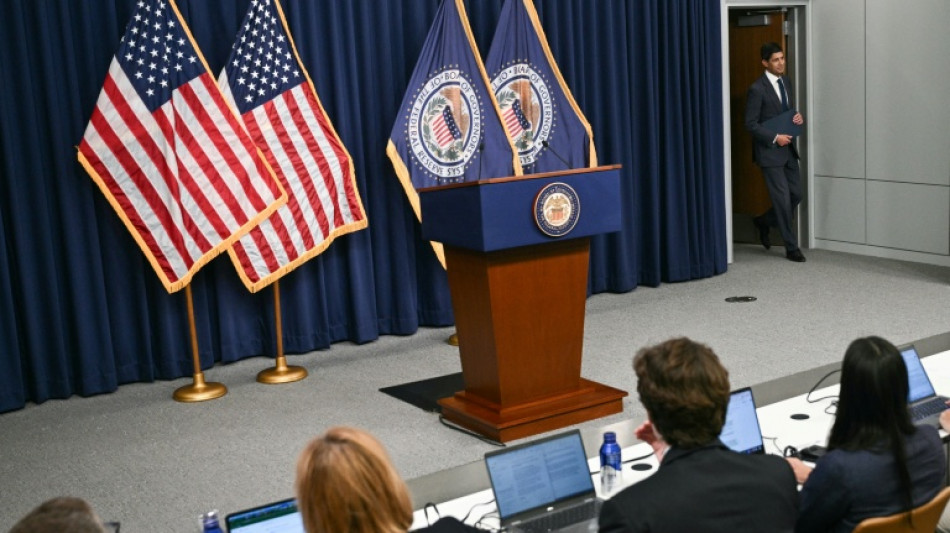
All three US Federal Reserve policymakers who dissented from the central bank's decision to keep interest rates steady earlier this week said Friday that rate hikes were needed now in order to avoid entrenched inflation.
The Fed held rates at 3.50-3.75 percent for its fifth straight meeting on Wednesday, with three of the committee's 12 members dissenting in favor of a quarter-percentage-point rate hike.
That number of dissents is unusual and illustrative of the challenge the Fed faces in bringing inflation back down to its two-percent target -- a level it hasn't hit in more than five years.
"Inflation has been too high for too long," said one of the dissenters, president of the regional Cleveland Fed, Beth Hammack. "The longer that high inflation persists, the more challenging and costly it can be to bring it back down."
US households have been battered by the high prices, and inflation spiked to three-year highs on the back of President Donald Trump's war on Iran since March, with skyrocketing energy prices bleeding through into other products.
Neel Kashkari, president of the Minneapolis Fed, dissented alongside Hammack, and in a statement on Friday said he thought it was necessary to "tighten policy incrementally as we gather more data on the path of inflation and employment."
"If inflation remains elevated, in my view, a potential series of small policy moves would be better than waiting and eventually concluding that even bolder actions were necessary," he said.
- Warsh staying tight-lipped -
Lorie Logan, the third dissenting vote and president of the Dallas Fed, also issued a statement on Friday, agreeing with the need for "modest action" now to reduce the need for potentially sharper hikes later.
Logan said that current interest rates were not sufficiently restrictive on economic activity, and that barring an "unanticipated shock" inflation was likely to continue to trend above target.
"The FOMC cannot count on unanticipated shocks to achieve its goals and can always adjust policy if unanticipated shocks occur," she said.
New Fed Chairman Kevin Warsh has, before taking office, expressed support for lowering interest rates in the world's largest economy, in line with the views of Trump, who nominated him.
Since taking over in May, Warsh has said he is committed to the Fed's two-percent inflation target, but has shared no details on how he believes the central bank should achieve it.
Markets have reacted with concern to Warsh's tight-lipped policy, with 30-year Treasury bond yields -- which generally track inflation expectations -- rising to their highest levels since 2007 following this week's meeting.
Trump has imposed unprecedented pressure on the independent central bank in his second term as president, pursuing a criminal probe against Warsh's predecessor and trying to fire another Fed governor.
The Republican billionaire has demanded the Fed lower rates in a bid to turbocharge the economy, despite the inflationary effect doing so would likely have.
B.Martinez--TFWP