Indian tile makers feel heat of Mideast war energy crunch / Photo: © AFP

Blazing-hot kilns in India's $6.5 billion ceramics manufacturing hub employing hundreds of thousands of people have gone cold, shut down in an energy crunch caused by the Middle East war.
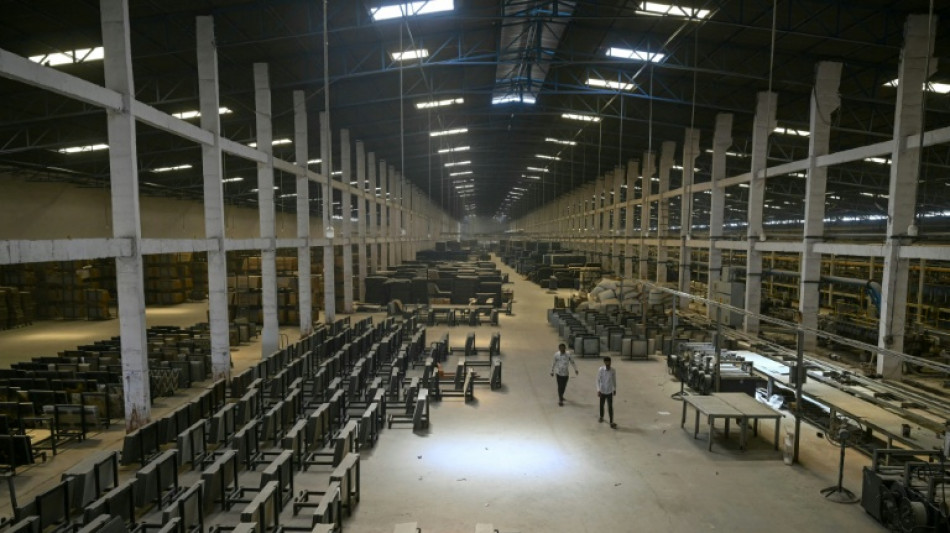
At a cavernous facility in Morbi, in India's western Gujarat state, a 200-metre-long propane-powered kiln that normally fires clay nonstop is silent. It is one of hundreds of plants supplying homeware tiles across the world that have been forced to suspend operations.
Thick layers of dust smother giant grinding and pressing machines, while only a tiny crew of workers transfer the last batch made three weeks ago off snaking assembly lines and into trucks.
"We are suffering a lot," said Kishor Dulera, a tile unit proprietor who closed this factory and two others in early March, sending hundreds of workers home.
India, the world's fourth-largest economy, depends on imports for 60 percent of its liquefied petroleum gas (LPG) demand.
The overwhelming majority comes through the Strait of Hormuz waterway, which has been effectively blocked by Iran after US-Israeli strikes on the Islamic republic late last month sparked a broader regional conflict, disrupting global energy supplies.
New Delhi has prioritised supply for households, shielding Indians who use it to cook food. That has squeezed the amount available for industrial use.
Factories in sectors including stainless steel and plastic have cut back on production as a result.
- 'Disaster' -
"If the main raw material is disturbed, the whole industry is disturbed," Dulera told AFP.
The ceramics hub at Morbi makes up 90 percent of India's total production and is one of the world's largest ceramic manufacturing centres, exporting tiles to countries like the United States and Thailand.
The industry at Morbi provides direct and indirect employment to nearly a million people, according to government statistics.
More than 400 plants have closed after the gas supply chain was "broken", said Manoj Arvadiya, head of the local manufacturing industry association.
Keeping the kilns hot means plants operate around-the-clock -- and emergency shutdowns can damage machinery.
"It is a continuous process," said Arvadiya.
"You can't run it for two days and then switch it off for one day. It doesn't work like that."
Hitesh Detroja said his now-shut Lexus Granito plant had produced 30,000 tiles per day, calling the closure a "disaster". He said he has no income to pay his fixed costs and interest on loans of $74,000 each month.
"This crisis is horrible," Detroja said.
- 'Worried' -
The ripple effects of the energy crisis have been felt throughout the Morbi ecosystem.
"Everyone is worried," said 29-year-old labourer Bunty Goswami, a migrant worker at a shut plant.
"We are confused about what to do -- whether we should go home, or not."
India's government has boosted domestic LPG production, negotiated the passage of a handful of tankers and purchased new cargoes from Australia and Russia.
That should, in time, ease supply constraints.
Jitendra Aghara of Simpolo Tiles, one of Morbi's biggest manufacturers, has kept operating by buying propane at more than double the price it was before the war to ensure he fulfills customer orders.
"If now we suffer a loss for two to three months, in the future we will get it back," he said.
The tile industry developed in Gujarat due to the availability of clay and good transport connections, but it relies on overseas energy to fire.
Aghara said the previous abundance of LPG and natural gas meant that there had been few moves to fully develop and adopt electric or hydrogen-powered kilns.
Indian corporate giants like Reliance Industries have big green hydrogen production plans, which could remove Morbi's import dependencies.
But first, development is needed to ensure hybrid kilns can produce tiles of the quality that Morbi is known for.
Aghara noted alternative fuels can't replace gas "100 percent just yet".
S.Rocha--TFWP