Cost Parity Ignites a New Era for Recycled Plastic; SMX Technology Makes It a Reality

NEW YORK, NY / ACCESS Newswire / March 27, 2026 / For decades, the economics of plastics have been deceptively simple: virgin resin-derived from oil and gas-has been cheaper, more reliable, and easier to scale than recycled alternatives. Recycling, while environmentally desirable, has largely depended on policy support, corporate commitments, or reputational incentives. It has always been about the money.
That equation is now breaking down. Rising energy costs, supply chain instability, regulatory pressure, and technological advances are converging to reshape the cost dynamics of plastic production. At the same time, a quieter but equally important shift is underway: markets are moving from trust-based sustainability claims to proof-based systems.
Together, these forces are pushing the plastics market toward a structural inflection point-where recycled material competes not just on environmental grounds, but on price and verifiable value.
The old economics: cheaper feedstock, simpler scaled systems
Virgin plastic has historically benefited from three reinforcing advantages.
First, scale - petrochemical supply chains are among the most optimised industrial systems in the world.
Second, feedstock economics - oil and gas provide an energy dense, relatively low-cost input, with feedstock accounting for roughly 60% of production costs.
Third, predictability - virgin resin delivers consistent quality, reducing downstream risk.
Recycled plastic, by contrast, has been defined by fragmentation. Collection systems are inefficient, contamination is common, and quality varies. As a result, buyers incur additional costs to verify and process material-pushing recycled plastic to a 20-40% premium to virgin in most markets. But this recycled premium or 'green premium' is often misunderstood. It is not a material cost problem; it is a system inefficiency and trust problem.
Energy volatility changes the equation
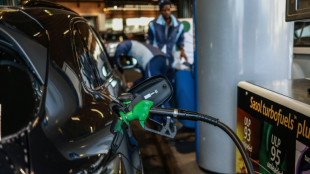
The past few years in general, and the past few weeks in particular, have demonstrated that energy markets are no longer merely cyclical-they are structurally volatile. Geopolitical fragmentation, underinvestment in fossil supply, and the uneven pace of the energy transition have introduced persistent uncertainty into oil and gas pricing, and thus petrochemical and plastic pricing.
The legacy virgin plastic system is now under pressure from a fundamental force: energy price volatility. Virgin plastic is structurally tied to rising oil and gas prices, for both feedstock and energy costs increase in tandem.
Virgin plastic is fundamentally tied to oil and gas prices. Its cost base can be simplified as:
60% feedstock (oil/gas)
15% energy & utilities
15% processing
10% margin
Recycled plastic, by contrast, is more insulated from raw material shocks, with marginal costs driven more by logistics, collecting, sorting, and processing - which also involves delayed electricity market price hikes. For the first time, recycling is no longer just environmentally preferable; it is becoming economically competitive.
Recycled plastic:
30-40% collection & logistics
20-30% sorting & cleaning
20-30% processing
10-15% compliance & certification
This asymmetry is critical, when considering change in the current market price benchmarks:
Virgin plastic: ~$950-$1,100 per ton
Recycled plastic: ~$1,200-$1,400 per ton
Regulation is accelerating the shift
Energy alone does not tell the full story. Regulation is increasingly acting as a second cost driver-one that disproportionately affects virgin plastic.
Virgin plastic at end of life creates a myriad of environmental costs, which are externalities not absorbed by oil and gas producing companies at the top of the value chain. As plastic waste and microplastic pollution reaches chronic or even existential levels, those externalised costs falling on governments and citizens are increasingly bouncing back to petrochemical producers in the form of tightening regulation.
Across Europe and parts of Asia, policymakers are introducing carbon pricing, extended producer responsibility (EPR) schemes, and mandatory recycled content requirements. These measures effectively internalise environmental costs that were previously externalised.
The direction of travel is unambiguous: regulatory pressure on virgin plastics is increasing, not decreasing. Importantly, this is not just about penalties. It is about market access. Companies unable to demonstrate recycled content or lifecycle compliance may face restricted access to key markets like the EU, or customers with greener shareholder and stakeholder expectations. And from a financial perspective, this introduces both cost escalation and demand risk for virgin material.
Now applying these realistic shocks:
Oil & Gas Price Shock: If feedstock costs double, ~60% of virgin plastic costs reprice upward mechanically. This alone pushes virgin production costs sharply higher.
Regulatory Push: Add rising carbon pricing, plastic taxes, and compliance costs on virgin production and pollution clean-up.
The result is cost inversion - under these combined pressures, virgin plastic trends toward ~$1,840 per ton and recycled plastic at ~$1,430 per ton. Recycled material may become ~20-25% cheaper than virgin, which is a key inflection point.
Why economics alone isn't enough
Yet even as the cost gap closes, one constraint remains: credibility. Markets no longer accept sustainability claims at face value. Across industries-from fashion to packaging to industrial manufacturing-stakeholders are demanding evidence. Consumers, regulators, and investors want to know not what companies say, but what they can prove.
This shift from promises to proof is reshaping how value is assigned. Historically, recycling systems have struggled here. Verification is expensive, fragmented, and often unreliable. This lack of trust has acted as a hidden tax on the market, limiting adoption even when the underlying economics improve. Solving this problem is what unlocks the next phase.
Enter SMX: turning proof into infrastructure
A new class of technology is emerging to address precisely this gap. Security Matters (NASDAQ:SMX), for example, is built on a simple but transformative idea: materials should have memory. By embedding an invisible molecular marker directly into plastic-and linking it to a secure digital record-each material carries a persistent identity that can be verified instantly and non-destructively. Origin, composition, recycled content, and lifecycle history become intrinsic to the material itself. This shifts traceability from a back-office function into core infrastructure.
The implications are significant. First, it removes reliance on paper certificates and self-declared claims. Second, it dramatically reduces verification costs. Third, it eliminates much of the fraud and uncertainty that have historically plagued recycling markets. In economic terms, SMX transforms recycling from a system defined by information asymmetry into one defined by verifiable transparency. And when transparency improves, markets become more efficient, driving investment.
The first layer: cost compression
This has a direct impact on plastic pricing. The recycled premium begins to collapse as:
Verification costs fall
Contamination risks are reduced
Buyers gain confidence in material quality
In a high-energy and regulatory cost environment, recycling not only becomes cheaper than virgin production-it becomes more reliable from a compliance and procurement perspective. This is the first layer of value: cost compression.
The second layer: recycling as an asset
But the more profound shift lies in what happens next. Once recycled plastic is verified at the material level, and recorded across its lifecycle, it becomes a measurable economic outcome.
This is where the Plastic Cycle Token (PCT) emerges. Each verified unit of recycled plastic-tracked, authenticated, and linked to a specific batch and facility-can be converted into a tradable digital asset. Unlike traditional environmental credits, which often rely on estimates, PCT is anchored in real, measured industrial activity. This creates a second layer of value, as recycling no longer just reduces costs -it generates revenue.
The double benefit: why this matters
Taken together, this creates a powerful twin dynamic. Firstly, it is an industrial advantage as recycling becomes structurally cheaper due to:
Energy volatility
Regulatory pressure
Reduced verification friction
Secondly, there is new financial upside as the same activity produces:
A verifiable, tradable asset
A new class of environmental commodity
A direct link between industrial output and financial value for stakeholders
In effect, recycling shifts from a compliance-driven cost to a profit-generating, asset-producing activity that is a fundamentally different economic model.
From waste to market infrastructure
As these dynamics scale, plastic undergoes a deeper transformation. Waste becomes:
A feedstock
A data stream
A financial instrument
For every corporate on earth with a perpetual operational plastic footprint, recycling means lower input costs, new revenue streams, and stronger compliance positioning. For investors, it introduces exposure to real-world industrial productivity and efficiency rather than backing abstract ESG narratives without strong proofs. And for regulators, it offers something that has long been missing: proof embedded directly into the system, for sharing the crippling costs of plastic pollution cleanup with industry and corporations benefitting from plastic-in-use but absorbing none of the end-of-life externalities.
The Bottom Line
The great repricing of plastic is no longer theoretical. Energy volatility, regulatory pressure, and system inefficiencies are already closing the cost gap between virgin and recycled materials. Trust-enforcing technologies like SMX are accelerating this shift by replacing trust-based claims with verifiable proof. What transpires is not just cost parity, but a structural transformation.
Recycled plastic becomes cheaper to produce, easier to verify, and more valuable to own. And with the addition of asset layers such as Plastic Cycle Tokens, circularity itself becomes financially measurable and tradable. The question is no longer whether recycling will compete with virgin plastic. It is whether global markets are ready for environmentally superior materials which are not just produced out of environmental necessity, but tracked and verified, priced, and valued accordingly.
Contact:
Billy White, [email protected]
SOURCE: SMX (Security Matters) Public Limited
View the original press release on ACCESS Newswire
S.Weaver--TFWP