The Fort Worth Press - Myanmar travellers ride the rails as fuel prices rise

USD -
AED 3.672502
AFN 63.000009
ALL 83.141978
AMD 376.485471
ANG 1.790083
AOA 917.000306
ARS 1367.970397
AUD 1.449517
AWG 1.8025
AZN 1.702553
BAM 1.694558
BBD 2.010968
BDT 122.511751
BGN 1.709309
BHD 0.376961
BIF 2965.773868
BMD 1
BND 1.283101
BOB 6.914956
BRL 5.238296
BSD 0.998423
BTN 94.09624
BWP 13.729041
BYN 2.998376
BYR 19600
BZD 2.008109
CAD 1.385315
CDF 2285.499399
CHF 0.79552
CLF 0.023512
CLP 928.390088
CNY 6.91145
CNH 6.917935
COP 3689.39
CRC 462.899991
CUC 1
CUP 26.5
CVE 95.540739
CZK 21.243019
DJF 177.799726
DKK 6.47508
DOP 60.195193
DZD 133.003458
EGP 52.703605
ERN 15
ETB 154.307745
EUR 0.866497
FJD 2.257398
FKP 0.747836
GBP 0.749555
GEL 2.695018
GGP 0.747836
GHS 10.916401
GIP 0.747836
GMD 73.498164
GNF 8752.907745
GTQ 7.638886
GYD 208.893799
HKD 7.83172
HNL 26.511932
HRK 6.5274
HTG 130.753836
HUF 336.303501
IDR 16957
ILS 3.13435
IMP 0.747836
INR 94.66895
IQD 1307.999879
IRR 1313299.999953
ISK 124.259686
JEP 0.747836
JMD 156.917785
JOD 0.708973
JPY 159.620503
KES 129.793234
KGS 87.449786
KHR 3998.336553
KMF 426.999923
KPW 900.057798
KRW 1507.810387
KWD 0.30735
KYD 0.832088
KZT 480.998402
LAK 21565.798992
LBP 89410.383591
LKR 314.008846
LRD 183.234482
LSL 17.08101
LTL 2.95274
LVL 0.60489
LYD 6.375734
MAD 9.322411
MDL 17.537157
MGA 4161.215702
MKD 53.396229
MMK 2099.983779
MNT 3583.827699
MOP 8.045798
MRU 39.8269
MUR 46.769823
MVR 15.459574
MWK 1731.28406
MXN 17.91295
MYR 4.0085
MZN 63.909655
NAD 17.080862
NGN 1384.170207
NIO 36.742473
NOK 9.67666
NPR 150.534765
NZD 1.733055
OMR 0.384492
PAB 0.998471
PEN 3.455542
PGK 4.314509
PHP 60.34199
PKR 278.731944
PLN 3.706915
PYG 6536.015664
QAR 3.640948
RON 4.416029
RSD 101.780978
RUB 81.376427
RWF 1458.028296
SAR 3.751727
SBD 8.041975
SCR 13.46748
SDG 601.000211
SEK 9.428015
SGD 1.28554
SHP 0.750259
SLE 24.55044
SLL 20969.510825
SOS 570.594376
SRD 37.561983
STD 20697.981008
STN 21.225996
SVC 8.73675
SYP 111.44287
SZL 17.078983
THB 32.869768
TJS 9.556146
TMT 3.51
TND 2.938146
TOP 2.40776
TRY 44.45798
TTD 6.776842
TWD 31.939495
TZS 2578.986938
UAH 43.811372
UGX 3714.470144
UYU 40.481936
UZS 12161.933849
VES 466.018145
VND 26338.5
VUV 119.023334
WST 2.74953
XAF 568.30701
XAG 0.014355
XAU 0.000224
XCD 2.70255
XCG 1.799507
XDR 0.706792
XOF 568.311934
XPF 103.329218
YER 238.649751
ZAR 17.08125
ZMK 9001.201522
ZMW 18.745993
ZWL 321.999592
  • RBGPF

    -13.5000

    69

    -19.57%

  • CMSC

    -0.0900

    22.82

    -0.39%

  • RYCEF

    -0.8200

    15.24

    -5.38%

  • BCE

    -0.0200

    25.47

    -0.08%

  • RELX

    -0.4000

    32.07

    -1.25%

  • GSK

    -0.7600

    53.94

    -1.41%

  • RIO

    -1.7500

    85.79

    -2.04%

  • NGG

    -1.8900

    82.4

    -2.29%

  • AZN

    -3.7400

    183.4

    -2.04%

  • VOD

    -0.0900

    14.63

    -0.62%

  • CMSD

    0.0700

    22.75

    +0.31%

  • BCC

    -0.3600

    74.29

    -0.48%

  • BTI

    -0.1900

    58.26

    -0.33%

  • JRI

    -0.0300

    12.07

    -0.25%

  • BP

    0.7600

    46.17

    +1.65%

Myanmar travellers ride the rails as fuel prices rise
Myanmar travellers ride the rails as fuel prices rise / Photo: © AFP

Myanmar travellers ride the rails as fuel prices rise

Myanmar's ageing railway stations are bustling with life, crowded with passengers as surging fuel prices due to the Mideast war drive commuters to choose trains over costly planes and cars.

Text size:

On a journey from the country's largest city Yangon to the capital Naypyidaw AFP journalists sat in air-conditioned carriages full of travellers napping and sharing tea, fried rice and instant noodles.

First class adult train tickets cost 19,000 kyats ($4.50), while the cheapest bus fares for the route now start at 35,000 kyats.

At one point on Thursday the train chugged past a queue of trucks waiting for fuel -- the trains themselves run on diesel, with the state railway company maintaining its own stocks.

People dozed on station benches or sat on luggage on platforms as they waited for their trains.

Myanmar has been consumed by a civil war since 2021, when a military coup swept aside Aung San Suu Kyi's democratically elected government, sparking armed resistance to junta rule.

Rail travel is not traditionally the most popular mode of transport in the country, and many trains are older and less comfortable, while much of the network was built under British colonial rule.

But people from rural areas have long relied on affordable railways to journey between cities -- despite occasional attacks by rebel forces targeting trains since 2021.

"The costs are high if we use a car. Also there are not many security checkpoints on the train," said Zeya Ko Ko, 28, a passenger on the Naypyidaw train.

"Buses are also challenging as fuel can run out in some areas due to the fuel crisis."

- First time -

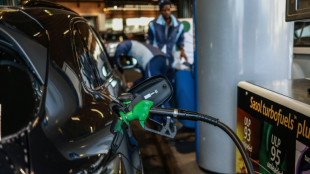
Since the US-Israel war against Iran began nearly a month ago, global fuel prices have soared with international shipping disrupted and fears of shortages, especially in import-reliant Asia.

In Myanmar, prices at the petrol pump have jumped and the junta has instituted fuel-saving measures, including alternate day bans on private vehicles, based on odd- or even-numbered licence plates.

Long queues of cars and motorbikes have formed at petrol stations around the country in the last three weeks.

"We have difficulty travelling for urgent health problems. As private vehicles are being restricted with even-odd numbers, we cannot leave right away when we are sick," said Pearl Hmway, a 53-year-old restaurant owner from Mandalay region, as she waited for for a train home.

A Naypyidaw station official told AFP more people were using trains because of fuel shortages, and extra services had been laid on.

"The government increased the number of scheduled trains because of higher demand," he said, speaking on condition of anonymity as he was not authorised to speak to the media.

Passengers said train tickets were selling out quickly, making booking them online harder.

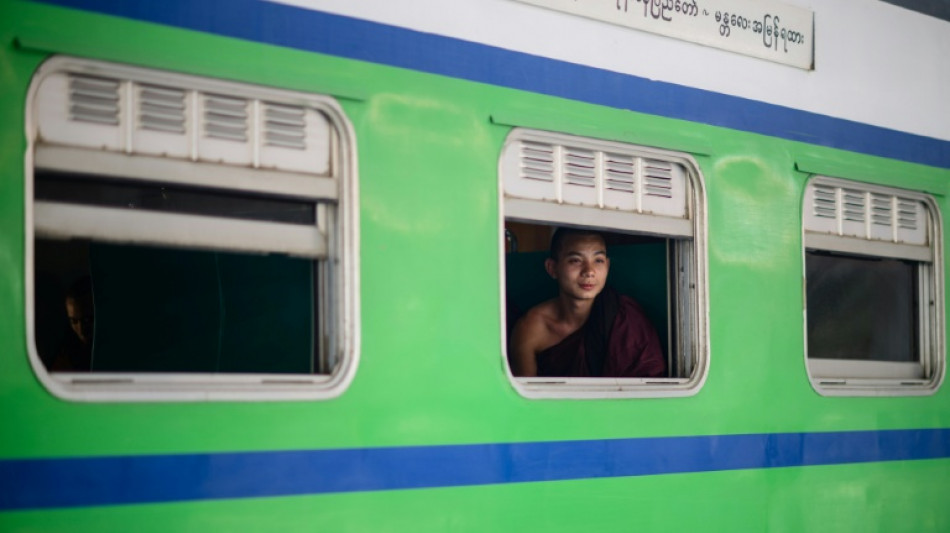
At Naypyidaw station, 26-year-old monk Zanaka said he was taking a train for the first time in his life.

Bus fares had risen alongside fuel prices, making his journey twice as expensive by road as by rail, he explained.

"That's why we are taking the train on the way back," he said.

"The train is faster and there's no need to wait in a queue."

W.Matthews--TFWP