
Building for Tomorrow: How Canadian Real Estate Must Adapt to a Changing Climate

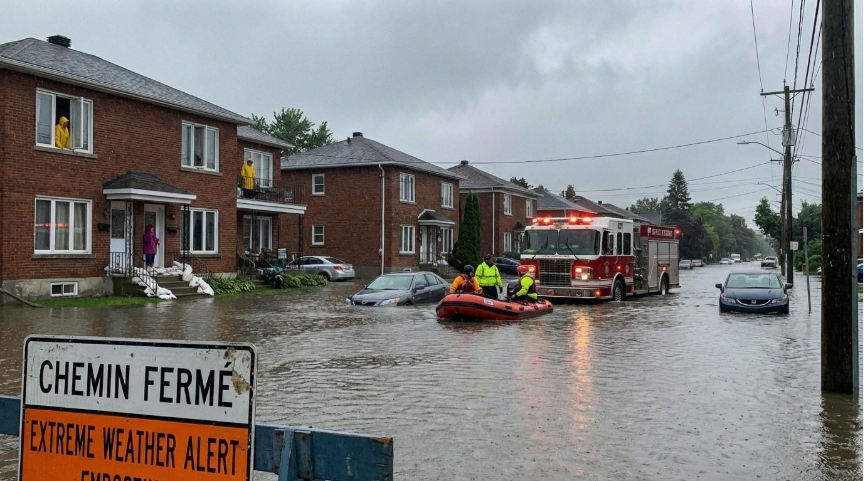
TORONTO, ON / ACCESS Newswire / March 15, 2026 / Canada is facing a new reality. Flooding in the Fraser Valley. Record-breaking ice storms across Southern Ontario. Wildfire smoke choking Prairie cities. Coastal erosion eroding neighbourhoods in Atlantic Canada. The evidence is no longer abstract - extreme weather events are arriving faster, hitting harder, and costing more than anything Canadian cities were built to withstand. For the real estate development industry, the question is no longer whether climate risk matters. It is how quickly the sector can adapt before the next disaster rewrites the ledger.
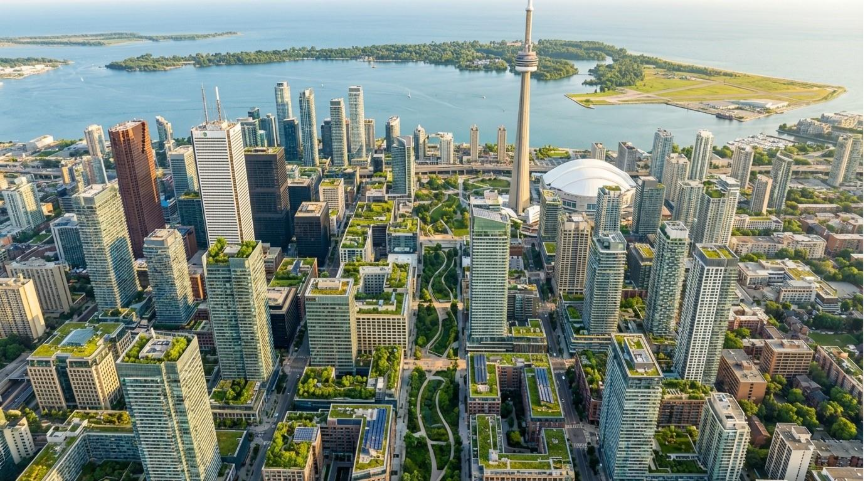
Ladan Hosseinzadeh Sadeghi, President & CEO of Sky Property Group Inc., has been at the forefront of this conversation in Canada's development community. For her, climate resilience is not a niche concern for environmental advocates - it is a fundamental pillar of sound real estate strategy.
"The developers who will succeed in the next twenty years are the ones treating climate risk like any other underwriting factor," says Hosseinzadeh Sadeghi. "If you're not modelling flood plains, heat island effects, and extreme weather risk into your pro formas today, you're building on assumptions that no longer hold."
The Cost of Inaction Is Already Here
The financial stakes are becoming undeniable. According to the Insurance Bureau of Canada, insured catastrophic losses exceeded $8 billion in 2024 - one of the costliest years on record for the industry. Insurers are beginning to withdraw coverage from flood-prone and wildfire-adjacent zones, and mortgage lenders are growing increasingly cautious about properties in high-risk areas.
For the real estate sector, this insurance retreat has immediate implications. Properties that cannot be insured cannot be financed. Properties that cannot be financed cannot be sold. The feedback loop is brutally efficient, and developers who have not stress-tested their portfolios against this new reality are carrying risks they may not even be able to quantify.
"We've seen whole streets in Ontario and British Columbia where property values have softened materially because insurers are pricing in flood risk that wasn't part of the calculus five years ago," notes Hosseinzadeh Sadeghi. "That's not a future problem. It's a present one."
What Adaptive Development Actually Looks Like
Climate-resilient building is not a single intervention - it is a design philosophy that must be woven into every stage of the development process, from site selection to engineering to long-term asset management.
At the site selection stage, developers and investors are increasingly consulting updated floodplain maps, Natural Resources Canada's climate risk data layers, and municipal stormwater infrastructure assessments before acquiring land. The days of relying solely on historical data are over; the question now is what a given site will look like in 2050, not 2005.
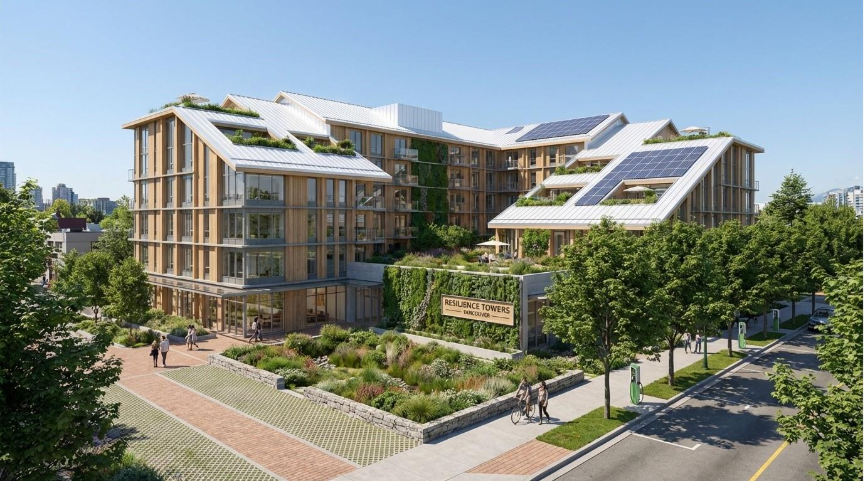
At the engineering and construction stage, climate-adaptive design encompasses a wide range of interventions: elevated building pads and flood barriers in low-lying areas; green roofs and permeable paving to manage stormwater runoff; passive cooling systems and reflective materials to combat urban heat islands; and backup power systems designed to keep buildings operational during grid disruptions triggered by extreme weather.
"Good climate-resilient design is often invisible to the end user," says Hosseinzadeh Sadeghi. "People notice when a building is comfortable and dry. They don't necessarily see the permeable paving or the retention pond that made that possible. That's by design. Our job as developers is to solve the problem before it becomes someone's crisis."
The Policy Dimension: Canada's Regulatory Landscape Is Shifting
Government at every level is beginning to respond. The federal government's recent investments through the National Adaptation Strategy and the Climate-Resilient Buildings and Core Public Infrastructure Initiative signal a policy direction that will increasingly shape the development sector. New building codes are being drafted with climate considerations embedded, and municipalities from Calgary to Halifax are updating their zoning bylaws to restrict development in high-risk flood zones and mandate resilience features in new construction.
"When the federal government publishes a national adaptation strategy, it's telling the development industry where the regulatory floor is moving," says Hosseinzadeh Sadeghi. "The smart money doesn't wait for the floor to arrive - it builds to where the standard will be and gains a five-year head start on the competition."

The Investment Opportunity
For investors and institutional capital, climate resilience is rapidly becoming a performance criterion rather than a social preference. ESG-aligned funds, pension capital, and major real estate investment trusts are now conducting climate risk assessments on potential acquisitions, and the market is beginning to price the gap between resilient and non-resilient assets.
This presents an explicit opportunity for developers who are willing to invest in climate-adaptive design today. The premium commanded by green-certified, resilience-rated buildings is growing - and as extreme weather events continue to make headlines, the discount applied to properties deemed high-risk will deepen.
"There's a bifurcation happening in Canadian real estate," observes Hosseinzadeh Sadeghi. "On one side, you'll have buildings that are built for the climate we're actually entering - well-insulated, flood-resistant, energy-independent, insurable. On the other side, you'll have legacy stock that becomes increasingly difficult and expensive to maintain, finance, and sell. The gap between those two categories is going to widen dramatically over the next decade."
Building for the Long Arc
Canada's real estate sector has always been shaped by its geography - the vast distances, the brutal winters, the spectacular but demanding landscape. What is changing now is the pace and intensity of that relationship. The climate is not slowly drifting; it is accelerating, and the built environment must accelerate its response.
For Ladan Hosseinzadeh Sadeghi and Sky Property Group Inc., this means making climate resilience a non-negotiable design standard on every project - not as an add-on or a marketing statement, but as a foundational commitment to the communities these buildings will serve for generations.
"We don't build for the next five years," she says. "We build for the next fifty. If you hold that frame, climate resilience isn't a luxury. It's the only responsible way to develop."
About Sky Property Group Inc.
Sky Property Group Inc. is a Toronto-based real estate development and investment company with expertise in land assembly, mixed-use development, and urban intensification. Under the leadership of President & CEO Ladan Hosseinzadeh Sadeghi, the company is committed to building sustainable, community-centred projects that reflect the values and long-term needs of Canadian cities.
Media Contact:
Ladan Hosseinzadeh Sadeghi
[email protected]
SOURCE: Sky Property Group Inc.
View the original press release on ACCESS Newswire
T.Dixon--TFWP