Middle East turmoil revives Norway push for Arctic drilling / Photo: © AFP

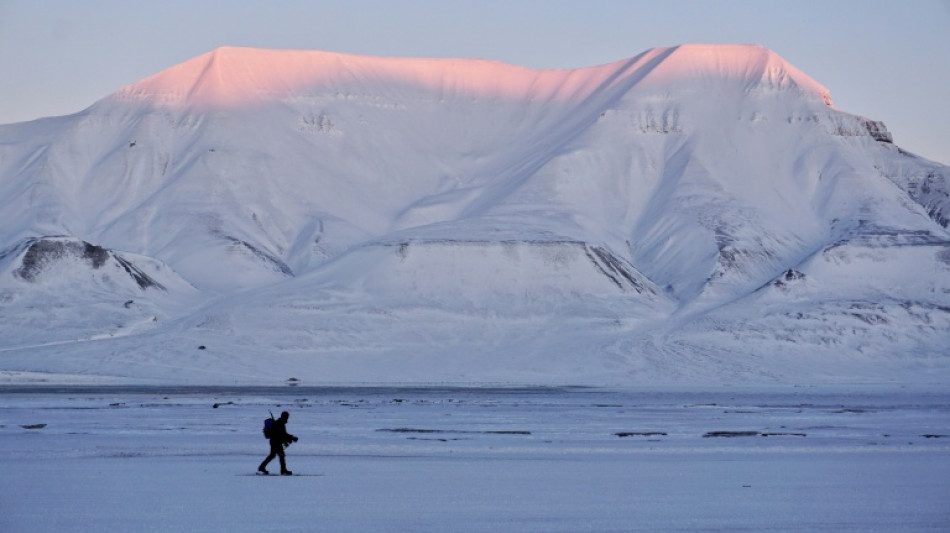
Already the continent's biggest single supplier of natural gas since Russia invaded Ukraine, Norway is hoping to use the Middle East war to get European Union blessing to drill in the Arctic.
The European Commission is revising its Arctic strategy, which has since 2021 committed the EU to work towards an international moratorium on oil and gas drilling in the region.
With Iran blocking the Strait of Hormuz -- a crucial conduit for oil and gas deliveries -- Norwegian politicians and business circles have been quick to lobby for the planned ban to be scrapped.
"They're taking advantage of the situation to apply pressure," said Anne Karin Saether, project manager at the Norwegian Climate Foundation, an independent body that promotes science-backed climate policies.
Ahead of Monday's close of the European Commission's public consultation, Norway -- which is not an EU member but is closely aligned on many issues -- has seized every opportunity to extol the virtues of stable energy supplies from a democratic and peaceful country.
Even if that means drilling in the Arctic.
"Against the backdrop of Ukraine and Iran, it may now be even easier to scare European policymakers," said Truls Gulowsen, head of the Norwegian Society for the Conservation of Nature.
- Lobbying efforts -
"We've noticed the lobbying efforts from the Norwegian oil industry," a European diplomat in Brussels told AFP.
"My sense is they are concerned about restrictions on oil and gas extraction. Drill, baby, drill, in other words," he said.
Norway supplies nearly a third of Europe's gas needs, after the war in Ukraine cut Russian gas deliveries.
The Scandinavian country has only two gas fields above the Arctic Circle, Snohvit and Aasta Hansteen. But Oslo is encouraging exploration.
In January, the government proposed opening 70 new blocs to prospecting, more than half of them in the Arctic waters of the Barents Sea.
According to the Norwegian Offshore Directorate, Norway's undiscovered resources are estimated at 3.48 billion cubic meters of equivalent oil and gas, 60 percent of which are believed to be in the Barents Sea.
"Norway generally makes a point of sharing its knowledge about the country with Brussels so that EU member states have the best possible basis for making their decisions," Norwegian Energy Minister Terje Aasland told AFP.
"The fact that there is a war in the Middle East today has nothing to do with Norway's position on oil activities in the North," he insisted.
Stressing that the EU and Britain now buy "all the oil and gas" that Norway produces in the Barents Sea, Aasland argued that "prices would have been much higher" without these resources.
In remarks seen as possibly pressuring EU countries, Aasland warned last week that the Middle East conflict could lead the EU to reconsider its position on doing without Russian oil and gas.
Norway's Confederation of Trade Unions has also called for more Arctic exploration.
One of its representatives in Brussels, Nora Hansen, stressed "the importance of jobs and of keeping people in the northern regions", seeing these as a security guarantee against neighbouring Russia.
- Risk of sabotage -
"Even if the EU abandons its proposed moratorium, it will in any case take several decades before new oil and gas activities in the Arctic begin production," said Karoline Andaur, the head of WWF Norway.
Although the European Commission's revised Arctic strategy is only due to be published in the second half of the year, it has already said that, at least for now, its "position has not changed" on an Arctic hydrocarbon moratorium.
But some fear there will be compromises and concessions.
Noting that its waters are ice-free thanks to the Gulf Stream, the Norwegian consultancy Rystad Energy has, for example, suggested excluding the Barents Sea from the EU's definition of the Arctic.
That would be a bad idea, Saether warned, citing environmental and climate-related objections: according to the International Energy Agency, global deposits of oil and gas already discovered or being exploited are sufficient to meet demand compatible with climate targets.
A Norwegian Climate Foundation report, entitled "The Barents Sea at Stake", also highlighted security challenges.
Because of its proximity to Russia, the area would be an easy target for Russia, which is keen to maintain its dominant position in the Arctic.
"This makes us particularly vulnerable, because Russia, with some pretty simple sabotage against gas pipelines up there, could strike not only Norway but Europe as well," Saether said.
"We would become a more tempting target."
T.Gilbert--TFWP