Global shipping industry caught in storm of war / Photo: © AFP/File

For anyone in the import business, the economic risks from the war in the Middle East arrive by sea -- and that goes for everyone who buys their products, too.
As the war rages into its third week, the effective closure of the strategic Strait of Hormuz has upended not just the oil and gas industries but worldwide transport via container ship, the symbol of globalised trade.
Just ask French importer Emmanuel Benichou, who is nervously watching the war's impact on prices for the lawn furniture he imports from China and sells online.
"Our prices haven't gone up yet, but if the war goes on for months, we'll either have to cut our margins or raise our prices," he told AFP.
The Middle East accounted for just 9.8 percent of global container trade last year, according to British maritime consultancy Clarksons, cited by Bloomberg.
But in a world of intricate trade links, the chaos unleashed by the war has knock-on effects around the globe.
Iran's de facto closure of the Strait of Hormuz has blocked thousands of commercial ships, meaning many cannot reach the right port at the right time.
"There's merchandise sitting in India that's supposed to be delivered in Saudi Arabia," the chief executive of maritime transport giant CMA CGM, Rodolphe Saade, told French newspaper Le Figaro.
The fact that civilian ships have become targets in the Gulf exacerbates the situation.
Twenty commercial ships, among which nine oil tankers, have been attacked since the war began with US-Israeli strikes on Iran on February 28, or have signaled incidents, according to AFP monitoring with British maritime security group UKTMO and other sources.
- Surcharges -
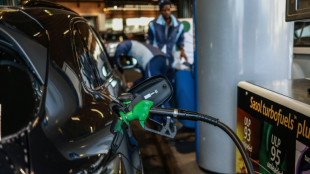
And the surge in fuel prices caused by the blockade of the strait -- the usual shipping lane for around 20 percent of global oil and liquefied natural gas -- is causing transport companies to impose surcharges.
Both CMA CGM and its competitor Hyundai Merchant Marine (HMM) have jacked up prices because of the war, Benichou said.
"HMM is charging an extra $230 per container in emergency fuel surcharges," he said. "CMA CGM is charging a $155 surcharge."
He is no stranger to the market.
His business savvy, he said, consists of "knowing how to buy and how to transport".
His company Aosom imports around 400 containers a month.
"I know how to take advantage of shipping opportunities," he said.
In peacetime, he jumps at the chance whenever shipping companies with spare capacity offer discounts in freight rates.
Conversely, "in the busy season, just before Chinese New Year, for example, we always see extra fees," he said.
But they usually return to normal soon enough.
Now, shipping prices keep climbing. The cost of sending a container from Asia to Europe has jumped from $2,500 before the war to as much as $4,000, he said.
And prices rise the longer the route grows.
Most container ships are already required to avoid the Red Sea and Suez Canal over fears of attacks by Yemen's Iran-backed Houthi rebels -- making the route to Europe longer, and fuel costs more expensive.
- 'Mountains of containers' -
If the war drags on, Benichou said he fears more surcharges for security risks, ship blockages, insurance, and storing merchandise stranded far from its final port of call.
In the Middle East, shipping companies have taken to using lorries to get containers to their destinations.
They are also redirecting ships toward Europe and Africa and seeking alternative ports along new corridors.
In the Gulf, where container ships can no longer access the crucial port of Dubai, CMA CGM is unloading merchandise just before the Strait of Hormuz at another United Arab Emirates port, Khor Fakkan.
"The risk is getting stuck with mountains of containers that block port terminals and cause huge delays," the CEO of shipping giant Maersk, Vincent Clerc, told newspaper Le Monde.
For some, it brings back bad memories of the Covid pandemic, reviving fears of a global supply chain collapse.
Benichou remembers shipping costs soaring then to $14,000 per container.
J.M.Ellis--TFWP