
Canada's Office-to-Residential Revolution: How Adaptive Reuse Is Reshaping Urban Housing

Toronto's skyline continues to evolve as office-to-residential conversions gain momentum.
TORONTO, ONTARIO / ACCESS Newswire / February 27, 2026 / As Canada's major cities grapple with a dual crisis - a deepening housing shortage and a glut of vacant downtown office towers - a growing number of developers and policymakers are turning to a powerful, underutilized solution: adaptive reuse. The conversion of commercial office buildings into residential units is emerging as one of the most promising strategies to accelerate housing supply while revitalizing urban cores that have struggled since the pandemic reshuffled workplace habits.

Ladan Hosseinzadeh Sadeghi, President & CEO of Sky Property Group Inc., has been watching this trend closely - and believes it represents one of the defining real estate opportunities of the decade.
"Canada is sitting on a tremendous untapped asset," said Ladan Hosseinzadeh Sadeghi. "We have millions of square feet of underperforming office inventory in cities like Toronto, Calgary, Ottawa, and Vancouver, and at the same time, we have hundreds of thousands of families who cannot find an affordable place to live. Adaptive reuse isn't just creative development - it's common sense urban planning."
The Scale of the Problem - and the Opportunity
According to data from CBRE Canada, national office vacancy rates in 2025 reached their highest levels in over three decades, hovering near 18% nationally and exceeding 25% in some downtown submarkets. Calgary, long battered by the oil and gas sector's volatility, has led the country in office-to-residential conversions, with more than 20 projects already completed or underway through its Downtown Development Incentive Program.
Toronto, Canada's largest city and a global financial hub, is beginning to follow suit. With downtown office vacancy climbing above 17% and the city facing a projected shortfall of more than 285,000 housing units over the next decade, the case for conversion has never been stronger.
"The fundamentals are aligning," said Ladan Hosseinzadeh Sadeghi of Sky Property Group. "You have distressed asset owners who need an exit, municipalities desperate for housing supply, and a federal government finally willing to remove GST on new purpose-built residential conversions. This is the moment developers need to move strategically."
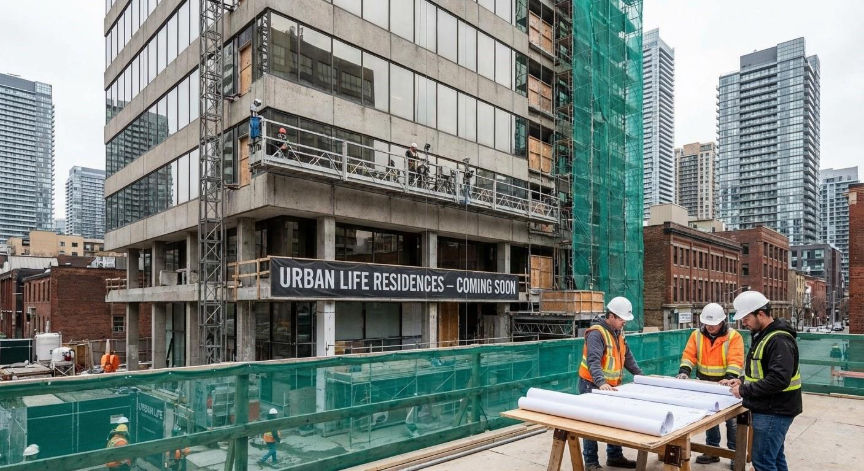
Federal Policy Is Opening the Door
The federal government's decision to eliminate the Goods and Services Tax (GST) on the conversion of commercial properties to residential use - first announced in late 2023 and refined through subsequent budgets - has been a catalyst for renewed developer interest. The policy applies to projects where buildings are substantially renovated and converted, making previously marginal projects financially viable.
Several provinces have followed with their own complementary incentives. Ontario has streamlined certain permitting pathways for adaptive reuse applications, while British Columbia has introduced density bonusing programs to encourage mixed-use conversions in transit-adjacent corridors.
"Government incentives matter enormously, but they only work if the private sector is ready to execute," noted Ladan Hosseinzadeh Sadeghi. "At Sky Property Group, we've spent years developing the land assembly and zoning expertise that positions us to move quickly on opportunities like this. Speed and precision are competitive advantages in adaptive reuse."
The Development Challenges Are Real - and Solvable
Office-to-residential conversion is not without its complexities. Structural differences between commercial and residential buildings - including floor plate depths, core placement, plumbing infrastructure, and natural light access - can make conversions technically challenging and expensive. Deep-floorplate buildings, common in 1970s and 1980s office towers, can be particularly difficult to adapt into livable residential suites.
Yet innovative developers are finding solutions. Some projects are carving interior courtyards into existing buildings to bring natural light to central units. Others are using creative floor plan configurations - such as micro-suites, co-living models, and hybrid commercial-residential uses at grade - to maximize the viability of otherwise awkward floor plans.
"The engineering challenges are real, but they're not insurmountable," said Ladan Hosseinzadeh Sadeghi. "Every building has its own fingerprint. The key is doing rigorous due diligence on the front end - structural assessments, mechanical feasibility, zoning analysis - so you're not discovering problems after you've committed capital. We've built our process around that discipline."
She added that working closely with municipal planning departments early in the process is essential. "Adaptive reuse projects that succeed are the ones where the developer and the city are genuinely aligned on outcomes. We're not just building units - we're helping cities reimagine what their downtowns can be."
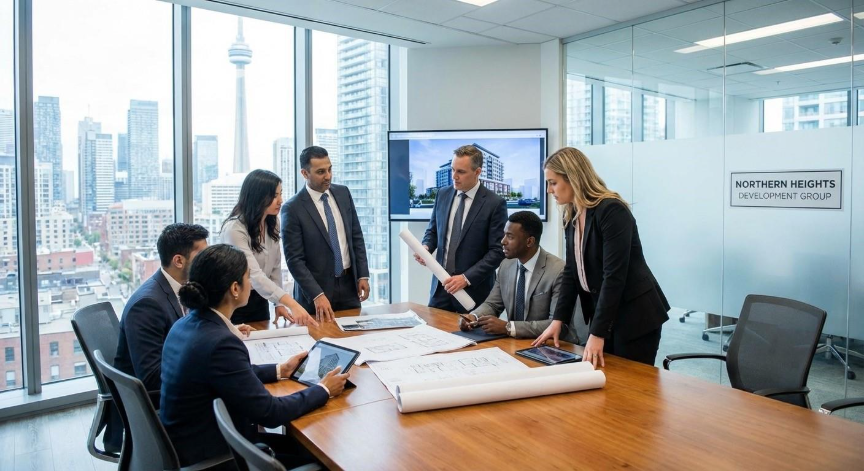
A Path to Diverse Housing Typologies
One of the underappreciated benefits of office-to-residential conversion is the potential to deliver housing typologies that the market sorely needs. Rather than adding more luxury condominiums to already saturated towers, adaptive reuse projects can be designed to deliver rental units at a range of price points, including affordable and below-market units, particularly when paired with public subsidies or non-profit partners.
The Canada Mortgage and Housing Corporation (CMHC) has increasingly recognized this, expanding access to its low-cost financing programs - including the Apartment Construction Loan Program and the Affordable Housing Fund - to include qualifying adaptive reuse projects. This access to patient capital at concessional rates can dramatically improve project economics.
"What excites me most about adaptive reuse is the chance to add genuine diversity to Canada's housing stock," said Ladan Hosseinzadeh Sadeghi. "We've been stuck in a condo-heavy development cycle for too long. Converting office towers gives us the chance to deliver rental apartments, affordable units, and family-sized suites that Canadian cities desperately need. That's a legacy worth building."
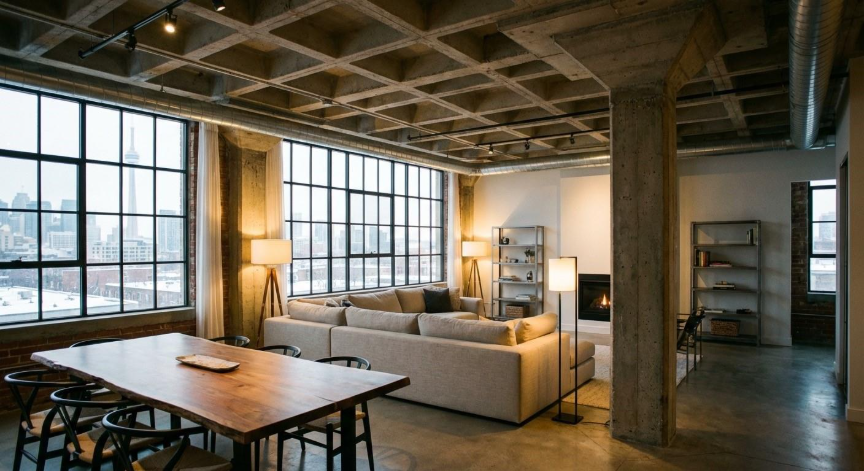
Looking Ahead: A New Chapter for Canadian Urban Cores
As remote and hybrid work continue to reshape demand for commercial space, the wave of office-to-residential conversion is expected to accelerate through the late 2020s. Cities from Halifax to Victoria are exploring how to update zoning bylaws, streamline approvals, and design incentive programs that make conversions attractive to private capital.
For developers like Sky Property Group Inc., the opportunity is clear - but so is the responsibility.
"Canada's housing crisis didn't happen overnight, and it won't be solved overnight," said Ladan Hosseinzadeh Sadeghi. "But adaptive reuse is one of the fastest, most impactful tools we have. It takes existing buildings, existing infrastructure, and existing urban fabric - and it transforms them into homes. That's what this industry should be doing right now."
About Sky Property Group Inc.
Sky Property Group Inc. is a Toronto-based real estate development and property management company specializing in strategic land assembly, urban intensification, and high-density residential development across the Greater Toronto Area and beyond. Led by President & CEO Ladan Hosseinzadeh Sadeghi, the company is committed to creating sustainable, community-focused development that addresses Canada's evolving housing needs.
Contact Information
Ladan Hosseinzadeh Sadeghi
[email protected]
SOURCE: Sky Property Group Inc.
View the original press release on ACCESS Newswire
D.Ford--TFWP