The Fort Worth Press - South Korea birth rate jumps but still under key fertility threshold

USD -
AED 3.673034
AFN 63.000298
ALL 81.669795
AMD 376.920062
ANG 1.789731
AOA 916.999812
ARS 1397.500103
AUD 1.404297
AWG 1.8
AZN 1.698917
BAM 1.660039
BBD 2.012952
BDT 122.129046
BGN 1.647646
BHD 0.377048
BIF 2965
BMD 1
BND 1.265071
BOB 6.905478
BRL 5.123804
BSD 0.99941
BTN 90.804154
BWP 13.153171
BYN 2.865728
BYR 19600
BZD 2.009939
CAD 1.36813
CDF 2109.999782
CHF 0.77295
CLF 0.021709
CLP 857.19753
CNY 6.86945
CNH 6.854065
COP 3702.36
CRC 473.945315
CUC 1
CUP 26.5
CVE 93.750133
CZK 20.517602
DJF 177.72015
DKK 6.327795
DOP 60.500677
DZD 129.923001
EGP 47.982968
ERN 15
ETB 156.22503
EUR 0.84698
FJD 2.192102
FKP 0.73909
GBP 0.737698
GEL 2.670101
GGP 0.73909
GHS 10.655011
GIP 0.73909
GMD 72.999842
GNF 8777.497925
GTQ 7.666812
GYD 209.091025
HKD 7.81995
HNL 26.529709
HRK 6.381798
HTG 131.158255
HUF 317.663501
IDR 16776.3
ILS 3.089675
IMP 0.73909
INR 90.918949
IQD 1310.5
IRR 1310669.999992
ISK 121.439672
JEP 0.73909
JMD 155.818582
JOD 0.709007
JPY 156.434963
KES 128.877673
KGS 87.449715
KHR 4009.999765
KMF 417.000254
KPW 899.976745
KRW 1426.549593
KWD 0.30655
KYD 0.832799
KZT 501.640221
LAK 21415.000152
LBP 89480.816465
LKR 309.16591
LRD 183.704301
LSL 15.84973
LTL 2.95274
LVL 0.60489
LYD 6.320015
MAD 9.17375
MDL 17.119407
MGA 4249.999933
MKD 52.203189
MMK 2099.743814
MNT 3569.708423
MOP 8.050705
MRU 39.959728
MUR 46.390063
MVR 15.460311
MWK 1737.000084
MXN 17.16598
MYR 3.890996
MZN 63.904951
NAD 15.850229
NGN 1354.879652
NIO 36.698435
NOK 9.54798
NPR 145.286646
NZD 1.666795
OMR 0.384501
PAB 0.99941
PEN 3.356506
PGK 4.313026
PHP 57.509454
PKR 279.449812
PLN 3.571295
PYG 6437.128925
QAR 3.641102
RON 4.313198
RSD 99.478003
RUB 77.250994
RWF 1457
SAR 3.750975
SBD 8.048447
SCR 14.492484
SDG 601.50265
SEK 9.02168
SGD 1.263505
SHP 0.750259
SLE 24.450086
SLL 20969.49935
SOS 571.502513
SRD 37.812007
STD 20697.981008
STN 21.025
SVC 8.74477
SYP 111.011509
SZL 15.850261
THB 31.049996
TJS 9.479246
TMT 3.5
TND 2.861991
TOP 2.40776
TRY 43.864599
TTD 6.784106
TWD 31.300502
TZS 2558.977049
UAH 43.251158
UGX 3597.952757
UYU 38.347444
UZS 12154.999989
VES 410.571865
VND 26102
VUV 118.362569
WST 2.71515
XAF 556.747398
XAG 0.011256
XAU 0.000194
XCD 2.70255
XCG 1.801145
XDR 0.692606
XOF 554.499613
XPF 101.525025
YER 238.450264
ZAR 15.86018
ZMK 9001.204533
ZMW 18.838138
ZWL 321.999592
  • RYCEF

    -0.2900

    17.71

    -1.64%

  • CMSD

    0.0100

    23.69

    +0.04%

  • RBGPF

    0.1000

    82.5

    +0.12%

  • BCE

    -0.4000

    25.63

    -1.56%

  • GSK

    0.4200

    59.54

    +0.71%

  • RIO

    2.6700

    100.78

    +2.65%

  • BCC

    -3.0400

    83.62

    -3.64%

  • CMSC

    0.0160

    23.896

    +0.07%

  • NGG

    1.5500

    93.93

    +1.65%

  • VOD

    0.1600

    15.86

    +1.01%

  • JRI

    -0.0300

    13.14

    -0.23%

  • AZN

    -0.8200

    205.79

    -0.4%

  • RELX

    1.4700

    32.69

    +4.5%

  • BTI

    1.1200

    63.03

    +1.78%

  • BP

    -0.2100

    38.09

    -0.55%

South Korea birth rate jumps but still under key fertility threshold
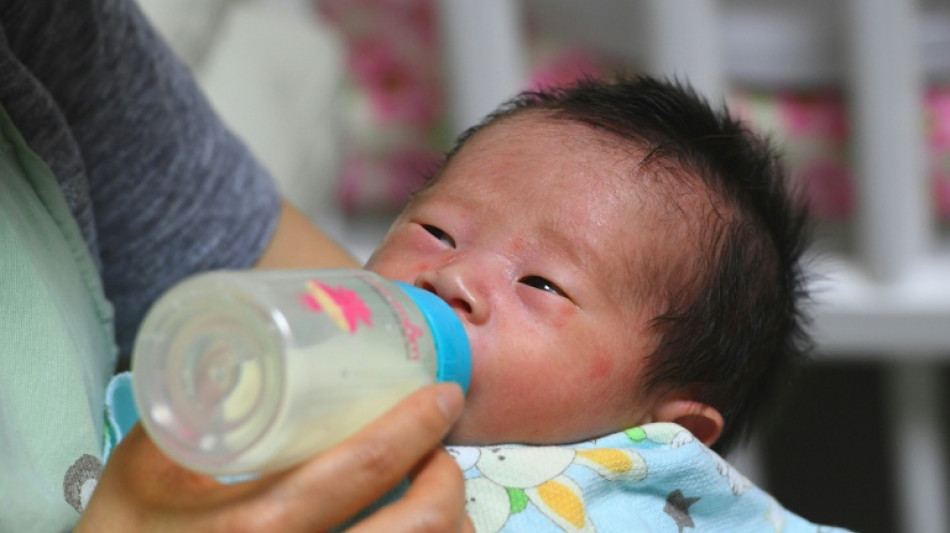
South Korea birth rate jumps but still under key fertility threshold / Photo: © AFP/File

South Korea birth rate jumps but still under key fertility threshold

South Korea has recorded its biggest annual birth rate bump in 15 years, official figures showed Wednesday, but still far below the threshold needed to stop its population shrinking.

Text size:

The country has one of the lowest birth rates in the world, pouring billions of dollars into efforts to encourage citizens to have more babies.

Yearly births rose more than six percent between 2024 and 2025, South Korea's Ministry of Data and Statistics said, the sharpest year-on-year rise since 2010.

It was the second year running that the birth rate had increased.

A major factor was the increasing number of South Koreans getting married, said official Park Hyun-jeong.

"The number of marriages gained ground for 21 straight months from April 2024 to December last year as couples who had delayed their marriages due to the Covid-19 pandemic tied the knot," Park told reporters.

Single parenthood remains stigmatised in South Korea, leading most people to have children only within marriage.

South Korea's fertility rate -- or the number of children each woman will have on average -- has ticked up slightly from 0.75 to 0.8.

That is well below the 2.1 threshold needed just to maintain South Korea's current population of 51 million.

Experts say there are multiple reasons for South Korea's low birth rate, from high child-rearing costs to a notoriously competitive society that makes well-paid jobs difficult to secure.

The double burden for working mothers of managing the brunt of household chores and childcare while also maintaining their careers is another key factor, they say.

Seoul has offered cash handouts, childcare support and infertility treatment aid to address the issue.

L.Davila--TFWP