The Fort Worth Press - EU nations back chemical recycling for plastic bottles

USD -
AED 3.672499
AFN 66.000109
ALL 79.100548
AMD 363.335236
ANG 1.789783
AOA 918.000266
ARS 1512.609198
AUD 1.388156
AWG 1.80125
AZN 1.703022
BAM 1.678344
BBD 2.011834
BDT 123.134088
BGN 1.696366
BHD 0.37664
BIF 2982.541201
BMD 1
BND 1.270558
BOB 11.561681
BRL 5.163025
BSD 0.99888
BTN 95.377196
BWP 13.383506
BYN 3.01243
BYR 19600
BZD 2.008916
CAD 1.38492
CDF 2275.000186
CHF 0.80434
CLF 0.023531
CLP 926.129747
CNY 6.7199
CNH 6.721485
COP 3158.85
CRC 453.872591
CUC 1
CUP 26.5
CVE 94.622484
CZK 20.725099
DJF 177.867597
DKK 6.415903
DOP 58.749801
DZD 133.078464
EGP 50.255147
ERN 15
ETB 163.156169
EUR 0.85836
FJD 2.20925
FKP 0.735639
GBP 0.735645
GEL 2.609681
GGP 0.735639
GHS 11.191824
GIP 0.735639
GMD 73.498872
GNF 8779.562695
GTQ 7.622832
GYD 208.973539
HKD 7.84047
HNL 26.859864
HRK 6.466906
HTG 130.678234
HUF 313.32302
IDR 17695
ILS 2.96645
IMP 0.735639
INR 95.53555
IQD 1310.5
IRR 1374600.000157
ISK 120.339725
JEP 0.735639
JMD 158.577871
JOD 0.709011
JPY 159.455055
KES 129.498067
KGS 87.449659
KHR 4045.99981
KMF 422.999927
KPW 900.000294
KRW 1377.894991
KWD 0.30864
KYD 0.832404
KZT 462.250064
LAK 22420.000227
LBP 89549.999842
LKR 328.168778
LRD 181.125021
LSL 15.990003
LTL 2.95274
LVL 0.60489
LYD 6.339716
MAD 9.254496
MDL 17.110542
MGA 4336.000306
MKD 52.796883
MMK 2100.008538
MNT 3596.251996
MOP 8.064704
MRU 40.119849
MUR 46.802094
MVR 15.449843
MWK 1737.000336
MXN 16.965795
MYR 4.0265
MZN 63.9026
NAD 15.986441
NGN 1341.659607
NIO 36.720334
NOK 9.31986
NPR 152.603825
NZD 1.67663
OMR 0.38444
PAB 0.998872
PEN 3.351012
PGK 4.43575
PHP 62.1465
PKR 277.598731
PLN 3.721594
PYG 5930.636185
QAR 3.64525
RON 4.514035
RSD 100.660342
RUB 85.905498
RWF 1469
SAR 3.756544
SBD 8.000251
SCR 13.668778
SDG 601.493159
SEK 9.51743
SGD 1.27037
SHP 0.740866
SLE 24.650461
SLL 20969.499227
SOS 570.842576
SRD 37.731989
STD 20697.981008
STN 21.4
SVC 8.740239
SYP 13001.999906
SZL 15.990526
THB 32.950499
TJS 9.214458
TMT 3.5
TND 2.896999
TOP 2.40776
TRY 48.2278
TTD 6.780228
TWD 31.5902
TZS 2647.503003
UAH 44.504096
UGX 3750.917134
UYU 40.152406
UZS 11809.999762
VES 790.677099
VND 26092.5
VUV 118.45632
WST 2.706367
XAF 562.910679
XAG 0.014492
XAU 0.000218
XCD 2.70255
XCG 1.800223
XDR 0.707052
XOF 562.905849
XPF 102.924971
YER 236.488272
ZAR 15.98536
ZMK 9001.200677
ZMW 19.003608
ZWL 321.999592
  • CMSD

    0.0200

    21.18

    +0.09%

  • CMSC

    0.0350

    21.31

    +0.16%

  • BCC

    -1.1700

    78.77

    -1.49%

  • RBGPF

    -0.4400

    70.69

    -0.62%

  • JRI

    -0.0400

    12.4

    -0.32%

  • BP

    -0.1600

    42.34

    -0.38%

  • RELX

    0.9600

    36.3

    +2.64%

  • BCE

    -0.0900

    23.4

    -0.38%

  • GSK

    -1.1600

    50.27

    -2.31%

  • VOD

    -0.0600

    15.88

    -0.38%

  • RIO

    0.0800

    104.78

    +0.08%

  • BTI

    -1.1600

    56.28

    -2.06%

  • NGG

    -1.1000

    79.43

    -1.38%

  • AZN

    -1.7500

    164.52

    -1.06%

  • RYCEF

    -0.1000

    20.75

    -0.48%

EU nations back chemical recycling for plastic bottles
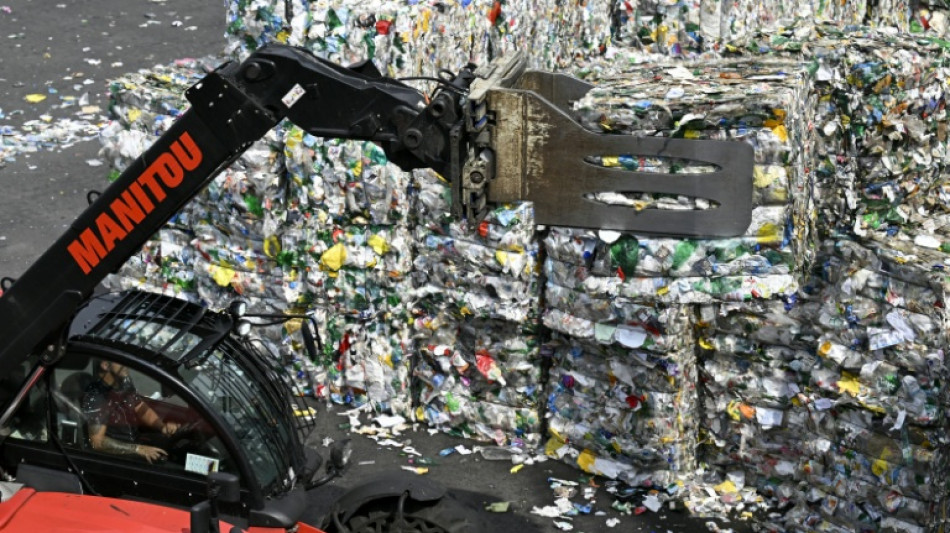
EU nations back chemical recycling for plastic bottles / Photo: © AFP/File

EU nations back chemical recycling for plastic bottles

European nations voted Friday to allow for chemical recycling to play a larger role in the production of plastic bottles, overcoming reservations about the energy-intensive technology.

Text size:

Under EU rules, single use plastic bottles need to contain at least 25 percent of recycled plastic -- with the share set to increase to 30 percent by 2030.

Currently only plastic recycled through mechanical techniques, which involve washing, shredding, and remelting the stuff, can be used towards the quota.

But representatives for the European Union's 27 member states voted Friday to extend the same benefit to chemically recycled plastics.

The vote follows a proposal put forward by the European Commission aimed at supporting investment in the plastic recycling sector, which is struggling against competition from China and other parts of Asia.

The change "will benefit the plastics industry, they now have consistent and clarified rules to calculate, verify and report the recycled content," said Anna-Kaisa Itkonen, a spokeswoman for the European Commission.

She defined the vote as a "first milestone for defining rules for chemical recycling at EU-level."

Brussels believes that chemical recycling can help the re-use of certain challenging types of packaging such as yoghurt pots.

But environmental groups complain that the process, which involves heating plastics to high temperatures to recycle them, is energy intensive, more polluting than mechanical techniques and could serve as a fig leaf for companies to continue produce more plastics.

A commission source said there was "strong pressure from industry" to back chemical recycling despite doubts about its benefits.

"We see many pilot projects, but at the industrial level, we're not there yet," the source said.

Europe's recycling sector is under severe pressure, due to abundant supply of cheap plastics as global production continues to rise.

More than half of plastics produced -- 57 percent -- come from Asia, with 35 percent coming from China.

S.Palmer--TFWP