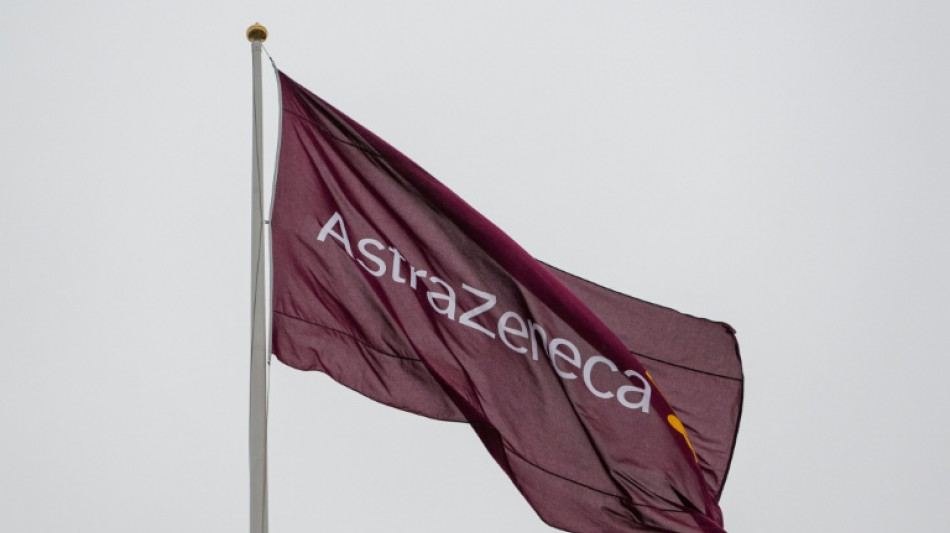
UK drugs giant AstraZeneca announces $15 bn investment in China / Photo: © AFP/File

British pharmaceutical group AstraZeneca said Thursday that it would invest $15 billion in China through 2030 to expand its medicines manufacturing and research, during a trip by UK Prime Minister Keir Starmer to Beijing.
AstraZeneca's chief executive Pascal Soriot was part of a delegation of business leaders accompanying Starmer on his visit.
"China... has become a critical contributor to scientific innovation, advanced manufacturing, and global public health," Soriot said in a statement.
China is AstraZeneca's second-largest market after the United States, where the company has recently invested heavily under pressure from President Donald Trump.
"This will be our largest investment in China to date," Soriot said at Beijing's opulent Great Hall of the People, a company spokesperson told AFP.
Starmer's visit to China is the first by a British prime minister since 2018, and follows a slew of Western leaders seeking a rapprochement with Beijing as they pivot away from an increasingly unpredictable United States.
"AstraZeneca's expansion and leadership in China will help the British manufacturer continue to grow -- supporting thousands of UK jobs," Starmer said in the statement shared by AstraZeneca.
"Unlocking opportunities for British businesses across the globe... is always the driving force behind my international engagements," he added.
AstraZeneca last year announced plans to invest $2.5 billion in China over five years to fund a strategic research and development centre.
That announcement came as Leon Wang, former president of AstraZeneca China, was detained in the country in an investigation into suspected illegal data collection and drug imports by the group.
AstraZeneca has operated in China for more than thirty years.
- US efforts -
Britain's largest drugmaker has been making a recent shift towards the United States, which it hopes will account for half its global revenue by 2030.
AstraZeneca will start trading its shares on the New York Stock Exchange in February, while keeping its headquarters in the UK and keeping its primary listing on London's top-tier FTSE 100 index.
It also plans to invest $50 billion by 2030 on boosting its US manufacturing and research operations.
That announcement came after the United States in December exempted British pharmaceuticals from import tariffs under a unique deal that sees the UK increase spending on some drugs, including US treatments, by 25 percent.
Separately, the White House has delayed for three years tariffs for AstraZeneca after it agreed to invest in US manufacturing capacity.
The pharmaceutical industry remains a key target of Trump, with drugs tariffs imposed on other countries as he demands companies switch operations to the US.
G.Dominguez--TFWP