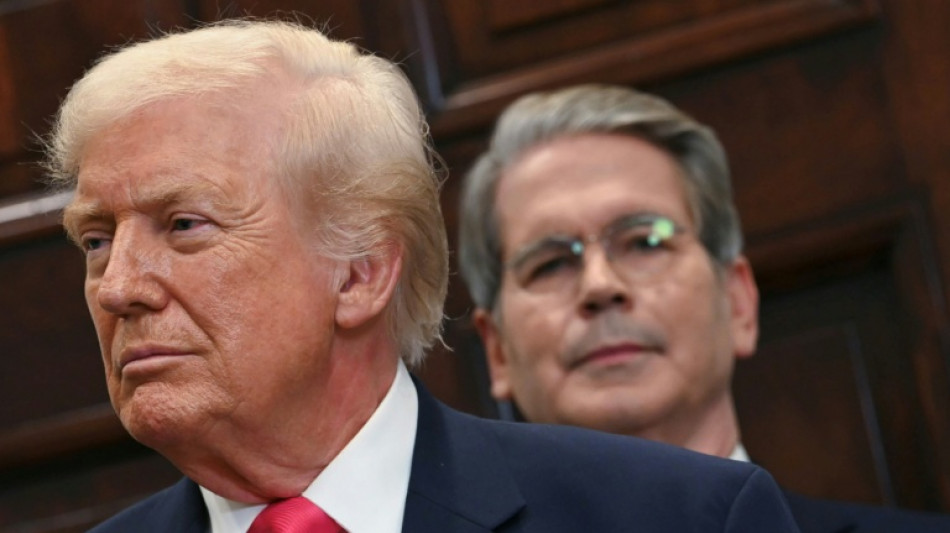
Poor hiring data points to US economic weakness / Photo: © AFP

US private-sector hiring data released Wednesday painted a downcast picture of the job market in the world's biggest economy, especially among small businesses.
The report showed US companies shed 32,000 jobs in November, payroll firm ADP said, in a surprise drop set to firm up expectations of a Federal Reserve interest rate cut next week.
President Donald Trump has been touting the economy's health, and forecasts had incorrectly predicted the monthly data would show a net rise in employment.
"Hiring has been choppy of late as employers weather cautious consumers and an uncertain macroeconomic environment," ADP chief economist Nela Richardson said.
"While November's slowdown was broad-based, it was led by a pullback among small businesses."
The ADP data had been expected to show 20,000 new jobs created, according to a consensus of analysts reviewed by Briefing.com.
"This is no longer a low hiring job market, it's a start-to-fire job market," said Heather Long, chief economist at the Navy Federal Credit Union.
"The only industries still hiring are hospitality and healthcare. If you don't want to work at a bar or in health care, you're out of luck."
While medium and large establishments added jobs last month, small establishments lost 120,000 jobs, according to ADP.
Long described small firms as the most impacted by Trump's barrage of tariff announcements, adding that the ADP report points to the potential for more weakness ahead.
"The start-to-fire labor market is likely to remain in place for the first half of 2026 until there's more certainty on tariffs and more confidence among businesses to begin hiring again," Long said.
- Dearth of information -
The figures are considered unreliable by some analysts, but are still closely watched as a gauge of the US economy especially as official data is incomplete due to a federal government shutdown that has now ended.
When the Fed meets next week, it will be forced to do without influential inputs for evaluating monetary policy.
The Labor Department won't publish employment data for October and has pushed the November reading back until December 16 -- after the Fed's December 10 meeting decision date.
The US central bank is also contending with a dearth of consumer pricing data.
Fed officials have signaled greater concern about the state of the job market, lifting expectations that the central bank will cut interest rates next week for the third straight time.
"The (ADP) report shows the job market is losing more momentum at year-end and skews risks toward modestly higher unemployment early next year," said Nationwide Financial Markets Economist Oren Klachkin.
"There's a high level of disagreement among Fed policymakers right now, but we maintain our call the doves will prevail over the hawks ... to vote for another 25 basis point interest rate reduction at next week's meeting."
Other US data released Wednesday contained conflicting signs on the economy.
Industrial production increased 0.1 percent in September, in line with analyst expectations.
The US services sector reported growth in November, with the Institute of Supply Management's overall rating coming in at 52.6, a 0.2 percentage point gain from the prior month and slightly more than analyst expectations.
But the employment index came in at 48.9, below the 50 level that separates growth from contraction.
Multiple officials surveyed pointed to the lingering cloud surrounding trade policy, ISM said in a press release.
A real estate official said tariff uncertainty adds "complexity to purchasing, and economic conditions remain mixed, with some indicators pointing to good prospects and others to worrying ones."
M.Cunningham--TFWP