The Fort Worth Press - World's biggest nuclear plant edges closer to restart

USD -
AED 3.672499
AFN 64.502669
ALL 81.179694
AMD 377.569962
ANG 1.79008
AOA 916.999851
ARS 1391.668037
AUD 1.404031
AWG 1.8
AZN 1.697487
BAM 1.646095
BBD 2.014569
BDT 122.333554
BGN 1.67937
BHD 0.377008
BIF 2965.082759
BMD 1
BND 1.261126
BOB 6.911847
BRL 5.1599
BSD 1.000215
BTN 90.656892
BWP 13.115002
BYN 2.867495
BYR 19600
BZD 2.011792
CAD 1.35888
CDF 2224.999699
CHF 0.768205
CLF 0.021647
CLP 854.790343
CNY 6.91325
CNH 6.89278
COP 3668.45
CRC 487.566753
CUC 1
CUP 26.5
CVE 92.804329
CZK 20.412501
DJF 178.123987
DKK 6.288015
DOP 62.711201
DZD 129.562978
EGP 46.851775
ERN 15
ETB 155.729165
EUR 0.84161
FJD 2.1849
FKP 0.732521
GBP 0.731901
GEL 2.689565
GGP 0.732521
GHS 10.967886
GIP 0.732521
GMD 73.503637
GNF 8780.073139
GTQ 7.671623
GYD 209.274433
HKD 7.815815
HNL 26.432801
HRK 6.340899
HTG 130.97728
HUF 318.672984
IDR 16815
ILS 3.063435
IMP 0.732521
INR 90.567498
IQD 1310.361951
IRR 42125.000158
ISK 122.210379
JEP 0.732521
JMD 156.251973
JOD 0.70901
JPY 153.012013
KES 129.030239
KGS 87.44968
KHR 4024.896789
KMF 415.000248
KPW 899.988812
KRW 1435.160073
KWD 0.30663
KYD 0.833596
KZT 494.926752
LAK 21451.807711
LBP 89575.079644
LKR 309.456576
LRD 186.549169
LSL 15.870874
LTL 2.95274
LVL 0.60489
LYD 6.308994
MAD 9.133902
MDL 16.94968
MGA 4417.155194
MKD 51.860359
MMK 2100.304757
MNT 3579.516219
MOP 8.054945
MRU 39.92947
MUR 45.899323
MVR 15.459989
MWK 1734.526831
MXN 17.150739
MYR 3.902498
MZN 63.90433
NAD 15.870874
NGN 1354.839887
NIO 36.805272
NOK 9.466605
NPR 145.04947
NZD 1.650105
OMR 0.384457
PAB 1.000332
PEN 3.356661
PGK 4.293247
PHP 58.066019
PKR 279.79388
PLN 3.546185
PYG 6585.896503
QAR 3.64543
RON 4.285501
RSD 98.773017
RUB 77.325006
RWF 1460.39281
SAR 3.750373
SBD 8.048395
SCR 13.796614
SDG 601.496472
SEK 8.885525
SGD 1.26117
SHP 0.750259
SLE 24.249682
SLL 20969.499267
SOS 570.656634
SRD 37.779038
STD 20697.981008
STN 20.620379
SVC 8.752299
SYP 11059.574895
SZL 15.87836
THB 30.979502
TJS 9.417602
TMT 3.5
TND 2.884412
TOP 2.40776
TRY 43.649806
TTD 6.776109
TWD 31.347097
TZS 2598.154052
UAH 43.023284
UGX 3540.813621
UYU 38.353905
UZS 12313.311927
VES 388.253525
VND 25960
VUV 119.359605
WST 2.711523
XAF 552.10356
XAG 0.012099
XAU 0.000198
XCD 2.70255
XCG 1.802726
XDR 0.686599
XOF 552.084973
XPF 100.374954
YER 238.40415
ZAR 15.84035
ZMK 9001.201522
ZMW 18.555599
ZWL 321.999592
  • CMSD

    -0.0400

    24.03

    -0.17%

  • CMSC

    0.0400

    23.73

    +0.17%

  • RYCEF

    -0.0600

    16.87

    -0.36%

  • RBGPF

    0.1000

    82.5

    +0.12%

  • NGG

    0.9750

    91.615

    +1.06%

  • BCE

    0.1010

    25.751

    +0.39%

  • RIO

    -1.5600

    97.96

    -1.59%

  • RELX

    0.2600

    27.99

    +0.93%

  • JRI

    -0.0300

    13.1

    -0.23%

  • BCC

    -0.6100

    88.8

    -0.69%

  • VOD

    -0.1550

    15.525

    -1%

  • BTI

    0.1000

    60.43

    +0.17%

  • AZN

    -1.6450

    203.115

    -0.81%

  • GSK

    -0.1850

    58.305

    -0.32%

  • BP

    -1.5500

    37

    -4.19%

World's biggest nuclear plant edges closer to restart
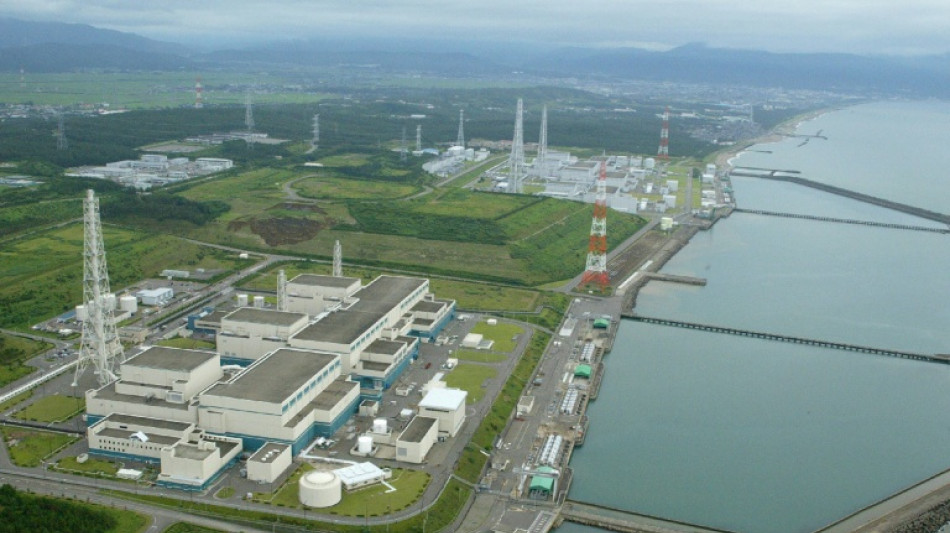
World's biggest nuclear plant edges closer to restart / Photo: © JIJI Press/AFP

World's biggest nuclear plant edges closer to restart

Japanese local authorities approved the restart of the world's biggest nuclear plant on Friday for the first time since the 2011 Fukushima disaster.

Text size:

Hideyo Hanazumi, governor of Niigata province where the Kashiwazaki-Kariwa plant is located, told a news conference he "would approve" the resumption, which will need final permission by Japan's nuclear regulator.

The plant was taken offline when Japan pulled the plug on nuclear power after a colossal earthquake and tsunami sent three reactors at the Fukushima atomic plant into meltdown in 2011.

However, the resource-poor nation now wants to revive atomic energy to reduce its heavy dependence on fossil fuels, achieve carbon neutrality by 2050 and meet growing energy needs from artificial intelligence.

Fourteen reactors, mostly in western and southern regions, have resumed operation since the post-Fukushima shutdown after strict safety standards were imposed.

The 400-hectare (1,000-acre) Kashiwazaki-Kariwa plant on the Sea of Japan coast facing the Korean peninsula would be the first restart for Fukushima operator Tepco since the disaster.

The huge facility in central Japan has been fitted out with a 15-metre (50-foot) wall in case of tsunamis, new power backup systems on higher ground and other measures.

Before the 2011 quake and tsunami, which killed around 18,000 people, nuclear power generated about a third of Japan's electricity, with fossil fuels contributing most of the rest.

Power company Kansai Electric said in July it was taking an initial step towards building the nation's first new nuclear reactor since the Fukushima disaster.

Japan is the world's fifth-largest single-country emitter of carbon dioxide, after China, the United States, India and Russia, and is heavily dependent on imported fossil fuels.

Nearly 70 percent of Japan's power needs in 2023 were met by power plants burning coal, gas and oil -- a figure Tokyo wants to slash to 30-40 percent over the next 15 years.

Almost all these fossil fuels must be imported, at a cost of around $500 million per day.

Japan passed a law in June allowing nuclear reactors to operate beyond 60 years to compensate for stoppages caused by "unforeseeable circumstances".

It aims to make renewables its top power source by 2040.

Under the plan, nuclear power will account for around 20 percent of Japan's energy supply by 2040 -- up from 5.6 percent in 2022.

F.Carrillo--TFWP