The Fort Worth Press - German plans to lower industrial power costs from January

USD -
AED 3.672498
AFN 66.10335
ALL 82.046926
AMD 381.188581
ANG 1.790403
AOA 917.000209
ARS 1457.018603
AUD 1.492671
AWG 1.8
AZN 1.697463
BAM 1.661153
BBD 2.012698
BDT 122.229536
BGN 1.662401
BHD 0.377034
BIF 2955.543289
BMD 1
BND 1.284786
BOB 6.920509
BRL 5.545302
BSD 0.999342
BTN 89.816753
BWP 13.13855
BYN 2.886166
BYR 19600
BZD 2.00981
CAD 1.37026
CDF 2199.999789
CHF 0.78918
CLF 0.023285
CLP 913.298032
CNY 7.005901
CNH 6.988415
COP 3721.74
CRC 495.084404
CUC 1
CUP 26.5
CVE 93.653652
CZK 20.619802
DJF 177.955197
DKK 6.34823
DOP 62.707294
DZD 129.509014
EGP 47.710101
ERN 15
ETB 155.381251
EUR 0.85007
FJD 2.272298
FKP 0.741074
GBP 0.74063
GEL 2.685014
GGP 0.741074
GHS 10.942185
GIP 0.741074
GMD 73.999499
GNF 8735.085559
GTQ 7.661992
GYD 209.076161
HKD 7.78375
HNL 26.345047
HRK 6.405598
HTG 130.847947
HUF 327.929797
IDR 16766
ILS 3.184235
IMP 0.741074
INR 89.777028
IQD 1310
IRR 42125.000063
ISK 125.150086
JEP 0.741074
JMD 159.201614
JOD 0.709026
JPY 155.929025
KES 129.050021
KGS 87.411504
KHR 4004.925481
KMF 418.500217
KPW 899.945536
KRW 1443.390011
KWD 0.30779
KYD 0.832785
KZT 501.65835
LAK 21601.44389
LBP 89504.53339
LKR 309.799342
LRD 177.377641
LSL 16.621552
LTL 2.952739
LVL 0.60489
LYD 5.407793
MAD 9.101132
MDL 16.758467
MGA 4561.843083
MKD 52.321504
MMK 2099.911831
MNT 3558.692599
MOP 8.001444
MRU 39.887054
MUR 46.05981
MVR 15.460381
MWK 1732.837881
MXN 17.9601
MYR 4.047018
MZN 63.898241
NAD 16.621552
NGN 1447.529668
NIO 36.771262
NOK 10.059385
NPR 143.706975
NZD 1.724614
OMR 0.384507
PAB 0.999346
PEN 3.365283
PGK 4.31574
PHP 58.835966
PKR 279.909714
PLN 3.594045
PYG 6772.693492
QAR 3.652633
RON 4.332099
RSD 99.705019
RUB 78.598347
RWF 1456.035673
SAR 3.75025
SBD 8.133497
SCR 13.931998
SDG 601.506495
SEK 9.193399
SGD 1.283195
SHP 0.750259
SLE 24.097378
SLL 20969.503664
SOS 570.08175
SRD 38.249002
STD 20697.981008
STN 20.805911
SVC 8.744028
SYP 11057.073402
SZL 16.615777
THB 31.41504
TJS 9.198768
TMT 3.5
TND 2.906393
TOP 2.40776
TRY 42.942802
TTD 6.793927
TWD 31.31897
TZS 2464.169035
UAH 42.212294
UGX 3614.836458
UYU 39.240001
UZS 12048.837456
VES 294.601185
VND 26265
VUV 120.893036
WST 2.769265
XAF 557.135152
XAG 0.013338
XAU 0.000228
XCD 2.70255
XCG 1.80104
XDR 0.692897
XOF 557.135152
XPF 101.293131
YER 238.349635
ZAR 16.629401
ZMK 9001.202186
ZMW 22.384542
ZWL 321.999592
  • CMSC

    -0.0050

    23.06

    -0.02%

  • BTI

    0.2802

    56.5501

    +0.5%

  • AZN

    0.3300

    92.85

    +0.36%

  • RELX

    -0.3090

    41.076

    -0.75%

  • RYCEF

    -0.2800

    15.28

    -1.83%

  • RIO

    0.7570

    81.147

    +0.93%

  • GSK

    0.2800

    49.4

    +0.57%

  • BP

    0.3230

    34.773

    +0.93%

  • NGG

    0.2000

    77.64

    +0.26%

  • SCS

    0.0200

    16.14

    +0.12%

  • CMSD

    -0.0100

    23.1

    -0.04%

  • RBGPF

    0.3400

    81.05

    +0.42%

  • BCC

    -0.1200

    74.34

    -0.16%

  • JRI

    0.0270

    13.507

    +0.2%

  • VOD

    0.0910

    13.241

    +0.69%

  • BCE

    0.2500

    23.635

    +1.06%

German plans to lower industrial power costs from January
German plans to lower industrial power costs from January / Photo: © AFP

German plans to lower industrial power costs from January

Germany plans to begin a scheme to slash energy costs for power-hungry manufacturers in January, the economy minister said Monday, part of efforts to revive Europe's struggling industrial powerhouse.

Text size:

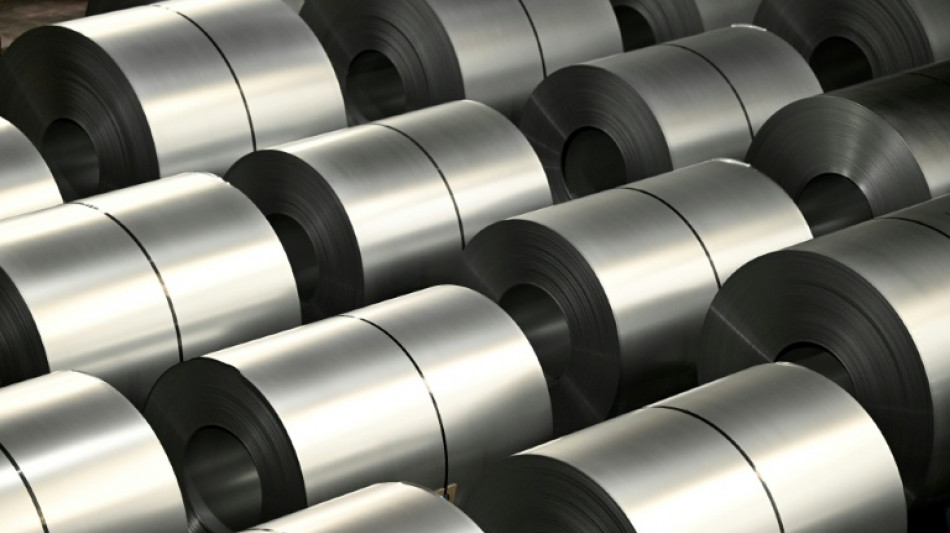
Sectors like chemicals and steel production have long been complaining that high electricity prices in Germany are adding to their burdens.

The conservative-led government, which took power in May, has promised to bring them down as it seeks to turn around Europe's biggest economy following two years of recession.

"I am assuming that we will introduce the industrial electricity price from January 1, 2026," Economy Minister Katherina Reiche said at a conference in Berlin.

"We are in the final stages of negotiations with the European Commission".

Reiche did not give further details. But the Handelsblatt financial daily reported that, under proposals put forward for the scheme, it could cost the government up to 4.5 billion euros ($5.2 billion) over three years.

To implement the plan, Berlin needs an exemption from EU state aid laws that generally ban high national subsidies. Exceptions are permitted to protect domestic industries.

Reiche said lower power prices would in particular be "key to the competitiveness of steel".

Crisis talks are due to take place in Berlin Thursday on helping the country's steel industry, which is facing fierce competition from cheaper Asian producers.

According to the Handelsblatt report, an energy advisory body and think tanks suggest targeting a subsidised price of five cents per kilowatt hour, substantially lower than the average now, and some 2,000 companies could benefit.

Firms that receive the subsidies would be obliged to boost investments in reducing greenhouse gas emissions.

The plan has faced criticism from some quarters, including that it could discourage companies from lowering energy consumption, slow the green transition, and that it applies only to firms and not households.

German energy prices surged after Russia slashed supplies of cheap gas to the country in 2022 amid soaring tensions over Moscow's invasion of Ukraine.

While Berlin has found alternative sources of energy since then, prices still remain far higher than before the war began.

S.Weaver--TFWP