The Fort Worth Press - Nvidia chief says H20 chip shipments to China not a security concern

USD -
AED 3.672504
AFN 63.503991
ALL 81.244999
AMD 376.110854
ANG 1.789731
AOA 917.000367
ARS 1399.250402
AUD 1.409443
AWG 1.8
AZN 1.70397
BAM 1.647475
BBD 2.012046
BDT 122.174957
BGN 1.647646
BHD 0.3751
BIF 2946.973845
BMD 1
BND 1.262688
BOB 6.903087
BRL 5.219404
BSD 0.998947
BTN 90.484774
BWP 13.175252
BYN 2.862991
BYR 19600
BZD 2.009097
CAD 1.36175
CDF 2255.000362
CHF 0.769502
CLF 0.021854
CLP 862.903912
CNY 6.90865
CNH 6.901015
COP 3660.44729
CRC 484.521754
CUC 1
CUP 26.5
CVE 92.882113
CZK 20.44504
DJF 177.88822
DKK 6.293504
DOP 62.233079
DZD 128.996336
EGP 46.615845
ERN 15
ETB 155.576128
EUR 0.842404
FJD 2.19355
FKP 0.732487
GBP 0.734187
GEL 2.67504
GGP 0.732487
GHS 10.993556
GIP 0.732487
GMD 73.503851
GNF 8768.057954
GTQ 7.662048
GYD 208.996336
HKD 7.81845
HNL 26.394306
HRK 6.348604
HTG 130.985975
HUF 319.430388
IDR 16832.8
ILS 3.09073
IMP 0.732487
INR 90.56104
IQD 1308.680453
IRR 42125.000158
ISK 122.170386
JEP 0.732487
JMD 156.340816
JOD 0.70904
JPY 152.69504
KES 128.812703
KGS 87.450384
KHR 4018.026366
KMF 415.00035
KPW 900.035341
KRW 1440.860383
KWD 0.30661
KYD 0.832498
KZT 494.35202
LAK 21437.897486
LBP 89457.103146
LKR 308.891042
LRD 186.25279
LSL 16.033104
LTL 2.95274
LVL 0.60489
LYD 6.298277
MAD 9.134566
MDL 16.962473
MGA 4370.130144
MKD 51.922672
MMK 2099.386751
MNT 3566.581342
MOP 8.044813
MRU 39.81384
MUR 45.903741
MVR 15.405039
MWK 1732.215811
MXN 17.164804
MYR 3.907504
MZN 63.910377
NAD 16.033104
NGN 1353.403725
NIO 36.760308
NOK 9.506104
NPR 144.775302
NZD 1.662372
OMR 0.38258
PAB 0.999031
PEN 3.351556
PGK 4.288422
PHP 57.848504
PKR 279.396706
PLN 3.54775
PYG 6551.825801
QAR 3.640736
RON 4.291404
RSD 98.909152
RUB 77.184854
RWF 1458.450912
SAR 3.749258
SBD 8.045182
SCR 13.47513
SDG 601.503676
SEK 8.922504
SGD 1.263504
SHP 0.750259
SLE 24.450371
SLL 20969.49935
SOS 570.441814
SRD 37.754038
STD 20697.981008
STN 20.637662
SVC 8.741103
SYP 11059.574895
SZL 16.029988
THB 31.080369
TJS 9.425178
TMT 3.5
TND 2.880259
TOP 2.40776
TRY 43.608504
TTD 6.780946
TWD 31.384038
TZS 2607.252664
UAH 43.08175
UGX 3536.200143
UYU 38.512404
UZS 12277.302784
VES 392.73007
VND 25970
VUV 119.056861
WST 2.712216
XAF 552.547698
XAG 0.012937
XAU 0.000198
XCD 2.70255
XCG 1.800362
XDR 0.687192
XOF 552.547698
XPF 100.459083
YER 238.350363
ZAR 15.950904
ZMK 9001.203584
ZMW 18.156088
ZWL 321.999592
  • RBGPF

    0.1000

    82.5

    +0.12%

  • VOD

    -0.0500

    15.57

    -0.32%

  • GSK

    0.3900

    58.93

    +0.66%

  • BCE

    -0.1200

    25.71

    -0.47%

  • BCC

    -1.5600

    86.5

    -1.8%

  • BTI

    -1.1100

    59.5

    -1.87%

  • RYCEF

    0.2300

    17.1

    +1.35%

  • RELX

    2.2500

    31.06

    +7.24%

  • RIO

    0.1600

    98.07

    +0.16%

  • CMSC

    0.0500

    23.75

    +0.21%

  • NGG

    1.1800

    92.4

    +1.28%

  • JRI

    0.2135

    13.24

    +1.61%

  • CMSD

    0.0647

    23.64

    +0.27%

  • AZN

    1.0300

    205.55

    +0.5%

  • BP

    0.4700

    37.66

    +1.25%

Nvidia chief says H20 chip shipments to China not a security concern
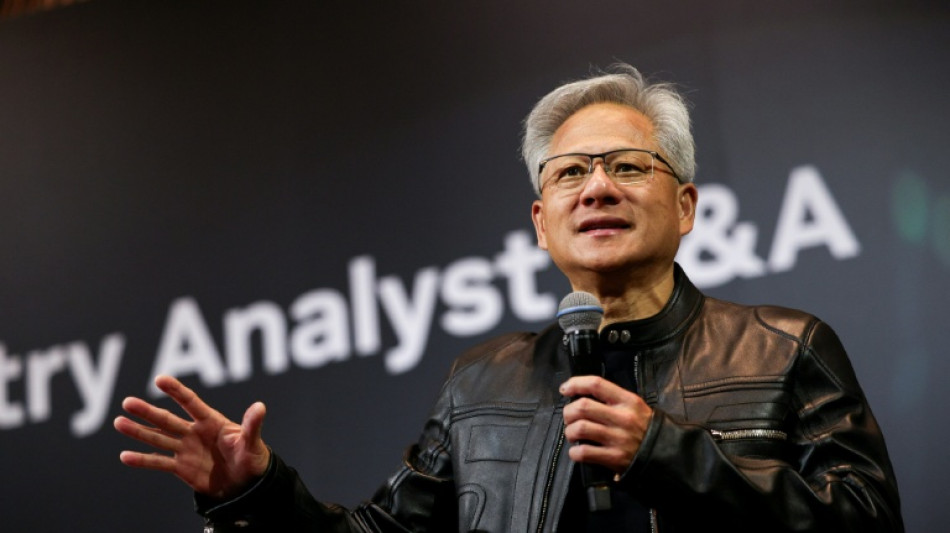
Nvidia chief says H20 chip shipments to China not a security concern / Photo: © AFP/File

Nvidia chief says H20 chip shipments to China not a security concern

Shipping Nvidia's H20 chips to China was "great" for Beijing and Washington and not a security threat, the tech giant's chief said Friday.

Text size:

The California-based company produces some of the world's most advanced semiconductors but cannot ship its most cutting-edge chips to China due to concerns from Washington that Beijing could use them to enhance military capabilities.

Nvidia developed the H20 -- a less powerful version of its AI processing units -- specifically for export to China.

That plan stalled when the Trump administration tightened export licensing requirements in April.

The H20 was "not a national security concern", Jensen Huang told reporters in Taipei, describing the chip as "great for America" and "great for the Chinese market".

Huang insisted there were "no security backdoors" in the H20 chip allowing remote access, after China summoned company representatives to discuss security issues.

"We have made very clear and put to rest that H20 has no security backdoors, there are no such things, there never has, and so hopefully the response that we've given to the Chinese government will be sufficient," Huang said.

He sidestepped a question about reports that Nvidia would pay the United States 15 percent of its revenues from the sale of H20 chips to China, which US President Donald Trump confirmed last week.

Instead, Huang expressed gratitude to the Trump administration for allowing the chips to be shipped to the Chinese market.

"The demand I believe is quite great and so the ability to ship products to, H20s to China, is very much appreciated," the CEO said.

Huang also said Nvidia is in talks with the US government about a new chip for China.

"Offering a new product to China for the data center, AI data centers, the follow on to H20, that's not our decision to make. It's up to of course the United States government, and we're in dialogue with them but it's too soon to know," he said.

Huang met with Trump at the White House this month and agreed to give the federal government the cut from its revenues, a highly unusual arrangement in the international tech trade, according to reports in the Financial Times, Bloomberg and The New York Times.

Investors are betting that AI will transform the global economy, and last month Nvidia -- the world's most valuable company and a leading designer of high-end AI chips -- became the first company ever to hit $4 trillion in market value.

The firm has, however, become entangled in trade tensions between China and the United States, which are waging a heated battle for dominance to produce the chips that power AI.

It comes as the Trump administration has been imposing stiff tariffs, with goals varying from addressing US trade imbalances, wanting to reshore manufacturing and pressuring foreign governments to change policies.

A 100 percent tariff on many semiconductor imports came into effect this month, with exceptions for tech companies that announce major investments in the United States.

T.M.Dan--TFWP