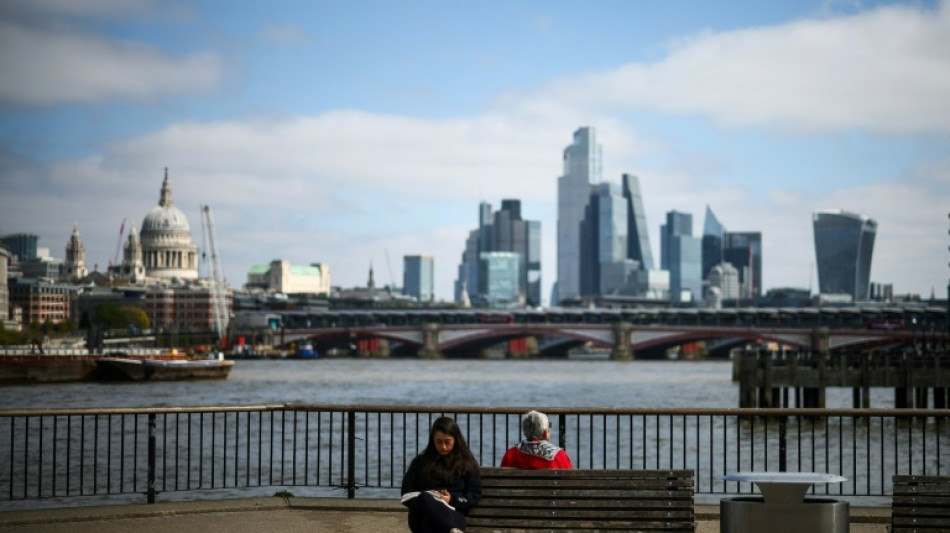
UK economy slows less than feared after tariffs / Photo: © AFP/File

Britain's economy performed better than expected in the second quarter as it weathered the impact of US tariffs and a higher UK business tax, official data showed Thursday.
Gross domestic product grew 0.3 percent in the April-June period, the Office for National Statistics (ONS) said in a statement -- beating analyst forecasts of 0.1-percent growth after reaching 0.7 percent in the first quarter.
"Today's economic figures are positive with a strong start to the year and continued growth in the second quarter," said finance minister Rachel Reeves.
"But there is more to do to deliver an economy that works for working people," she added in a statement, following a difficult first year in power for the Labour government as the economy struggles to grow significantly.
ONS data Thursday showed that growth to UK construction and services in the second quarter helped to offset a drop in production.
"Growth was led by services, with computer programming, health and vehicle leasing growing," noted Liz McKeown, ONS director of economic statistics.
Overall GDP grew 0.4 percent in June after contracting slightly in April and May, the statistics office added.
June's figure "will be welcome news for the government, which has had a frustrating time chasing elusive growth", noted Susannah Streeter, head of money and markets at Hargreaves Lansdown.
Official data Wednesday showed UK unemployment at a four-year high of 4.7 percent in the second quarter.
This is largely a result of Prime Minister Keir Starmer's government increasing a UK business tax from April, the same month that the country became subject to US President Donald Trump's 10-percent baseline tariff on most goods.
However, London and Washington reached an agreement in May to cut levies of more than 10 percent on certain UK-made items imported by the United States, notably vehicles.
"A favourable trade agreement has enabled output to pick up again as June showed growth in all sectors including manufacturing," said Danni Hewson, head of financial analysis at AJ Bell.
- Tariffs fallout -
Despite the turnaround in June, exports of goods to the United States fell by £700 million ($950 million) in the month to their lowest level since February 2022, the ONS added Thursday.
"The value of goods exports to the United States... have remained relatively low since the introduction of tariffs in April," it noted.
Citing threats to growth from US tariffs, the Bank of England last week cut its key interest rate by a quarter point to four percent.
"The weak global economy will remain a drag on UK GDP growth for a while yet," Ruth Gregory, deputy chief UK economist at Capital Economics research group, said following Thursday's data.
"The full drag on business investment from April's tax rises has yet to be felt. And the ongoing speculation about further tax rises in the (UK) autumn budget will probably keep consumers in a cautious mood."
Streeter added that "evidence of a more resilient economy may mean that the Bank of England policymakers are that bit more reticent about cutting interest rates in the months to come".
L.Coleman--TFWP