The Fort Worth Press - Aquaculture drives aquatic food yields to new high

USD -
AED 3.673002
AFN 64.499619
ALL 80.857725
AMD 361.449674
ANG 1.789785
AOA 917.999787
ARS 1524.887501
AUD 1.42801
AWG 1.80125
AZN 1.696166
BAM 1.74449
BBD 2.013379
BDT 123.649824
BGN 1.747831
BHD 0.37725
BIF 2996
BMD 1
BND 1.278292
BOB 11.691144
BRL 5.0122
BSD 0.999639
BTN 94.927772
BWP 13.724852
BYN 2.981492
BYR 19600
BZD 2.010606
CAD 1.406075
CDF 2315.000231
CHF 0.825099
CLF 0.024815
CLP 976.640141
CNY 6.67915
CNH 6.67481
COP 3172.14
CRC 454.01635
CUC 1
CUP 23.991865
CVE 98.353418
CZK 21.626951
DJF 177.72018
DKK 6.65276
DOP 61.501822
DZD 134.476003
EGP 54.444632
ERN 15
ETB 163.29086
EUR 0.89008
FJD 2.258099
FKP 0.751528
GBP 0.74735
GEL 2.594978
GGP 0.751528
GHS 11.624971
GIP 0.751528
GMD 73.500615
GNF 8848.21564
GTQ 7.639477
GYD 209.088355
HKD 7.84855
HNL 26.832455
HRK 6.706199
HTG 130.906561
HUF 324.0035
IDR 17986
ILS 3.089355
IMP 0.751528
INR 94.72615
IQD 1515.558311
IRR 1795727.499323
ISK 121.229935
JEP 0.751528
JMD 158.652431
JOD 0.708981
JPY 158.177498
KES 129.849832
KGS 87.450318
KHR 4065.631676
KMF 438.999785
KPW 899.999961
KRW 1325.850123
KWD 0.309699
KYD 0.833107
KZT 449.788164
LAK 22492.98683
LBP 89521.677274
LKR 331.534585
LRD 170.447906
LSL 16.46702
LTL 2.95274
LVL 0.60489
LYD 6.412395
MAD 9.796548
MDL 17.934092
MGA 4549.083271
MKD 54.989163
MMK 2099.540776
MNT 3598.083246
MOP 8.081669
MRU 40.224979
MUR 47.259675
MVR 15.450124
MWK 1733.468319
MXN 18.412805
MYR 4.082499
MZN 63.909848
NAD 16.467681
NGN 1328.000432
NIO 36.78366
NOK 9.40406
NPR 151.877982
NZD 1.759185
OMR 0.384496
PAB 0.999728
PEN 3.447086
PGK 4.473086
PHP 63.117966
PKR 276.67627
PLN 3.88627
PYG 5737.960807
QAR 3.633745
RON 4.740897
RSD 104.507993
RUB 82.799989
RWF 1476.043725
SAR 3.762651
SBD 8.058149
SCR 13.975198
SDG 601.496166
SEK 9.90106
SGD 1.277697
SHP 0.750188
SLE 24.679494
SLL 20969.504398
SOS 571.288409
SRD 37.661499
STD 20697.981008
STN 21.853439
SVC 8.747581
SYP 13001.999685
SZL 16.463453
THB 33.586503
TJS 9.232052
TMT 3.5
TND 2.982527
TOP 2.40776
TRY 49.575399
TTD 6.78527
TWD 32.646902
TZS 2644.99797
UAH 45.054454
UGX 4169.008054
UYU 40.102397
UZS 12040.315747
VES 879.788904
VND 25876
VUV 119.358066
WST 2.773115
XAF 583.854391
XAG 0.017268
XAU 0.000242350215
XCD 2.70255
XCG 1.801632
XDR 0.707052
XOF 583.854391
XPF 106.372921
YER 236.149737
ZAR 16.38434
ZMK 9001.214547
ZMW 20.018642
ZWL 321.999592
SSP 5816.545442
MXV 2.078495
  • RIO

    -0.3300

    97.04

    -0.34%

  • CMSC

    -0.0400

    20.67

    -0.19%

  • RELX

    0.0000

    33.41

    0%

  • RBGPF

    0.0000

    67.95

    0%

  • BCE

    -0.0700

    21.99

    -0.32%

  • BCC

    -0.0300

    75.66

    -0.04%

  • GSK

    0.8600

    51.08

    +1.68%

  • JRI

    -0.0300

    11.52

    -0.26%

  • NGG

    -0.1200

    76.68

    -0.16%

  • CMSD

    0.0900

    20.54

    +0.44%

  • BTI

    -0.0800

    55.75

    -0.14%

  • AZN

    2.0200

    168.1

    +1.2%

  • BP

    -1.4200

    43.16

    -3.29%

  • RYCEF

    0.4600

    19.7

    +2.34%

  • VOD

    0.0700

    17.02

    +0.41%

Aquaculture drives aquatic food yields to new high
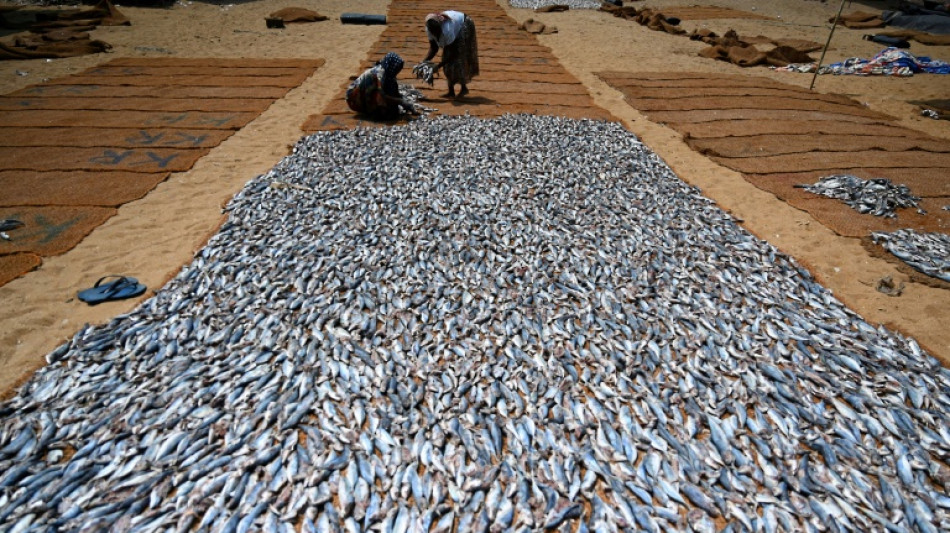
Aquaculture drives aquatic food yields to new high / Photo: © AFP/File

Aquaculture drives aquatic food yields to new high

The amount of fish, shellfish and algae caught in the wild and farmed in aquaculture hit a record 214 million tonnes in 2020, the Food and Agriculture Organization said Wednesday.

Text size:

Driven by a sustained surge in aquaculture, the new record is good news for a world facing price hikes and food shortages due to the war in Ukraine, disrupted supply chains, and inflation.

"The growth of fisheries and aquaculture is vital in our efforts to end global hunger and malnutrition," said FAO director Qu Dongyu.

But overfished oceans, climate change and pollution -- if left unaddressed -- could threaten that potential, the UN agency warned in its 2022 state of the world fisheries report.

"Aquaculture growth has often occurred at the expense of the environment," it said.

"Sustainable aquaculture development remains critical to supply the growing demand for aquatic food."

Production of aquatic animals in 2020 -- totalling 178 million tonnes -- was evenly divided between fisheries and aquaculture.

The remaining 36 million tonnes was algae production.

Yields of fish, shrimp and other shellfish destined for human consumption is more than 60 percent higher than during the 1990s, far outpacing population growth, according to the report, released during the UN Ocean Conference in Lisbon.

On average, people worldwide consume over 20 kilos (44 pounds) of aquatic foods per year today, more than double the amount 50 years ago.

Globally, 17 percent of the protein consumed by humans comes from aquatic sources. In many Asian and African countries, that figure rises to more than 50 percent, according to the report.

Wild and farmed food from the seas and inland waters are also a critical source of essential omega-3 fatty acids and micronutrients, recent research has shown.

"Aquatic foods are increasingly recognised for their key role in food security and nutrition," Qu said.

Nearly 90 percent of aquatic animal production is for human consumption, with the rest destined for non-food uses such as fishmeal and fish oil.

Asian countries were the source of 70 percent of the world's fisheries and aquaculture of aquatic animals in 2020.

China remaining by far the top fisheries producer, followed by Indonesia, Peru, Russia, the United States and Vietnam.

So-called capture fisheries in the wild -- which have stagnated since the mid-1990s -- dropped by four percent in 2020 compared to the average of the previous three years.

Part of the drop can be attributed to disruptions caused by the Covid pandemic, but long-term decline is due to overfishing.

"The FAO estimates that 34 percent of caught fish come from overfished stocks," University of British Columbia economist and fisheries expert Rashid Sumaila told AFP.

"But they are very conservative," he added. "Independent studies put that figure at 50 percent."

T.M.Dan--TFWP