Australian seaweed farm tackles burps to help climate / Photo: © AFP

It is barely visible, and needs no irrigation or fertilisers: lying off the coast of Australia is a vast seaweed crop destined to curb livestock's climate-altering flatulence and belches.
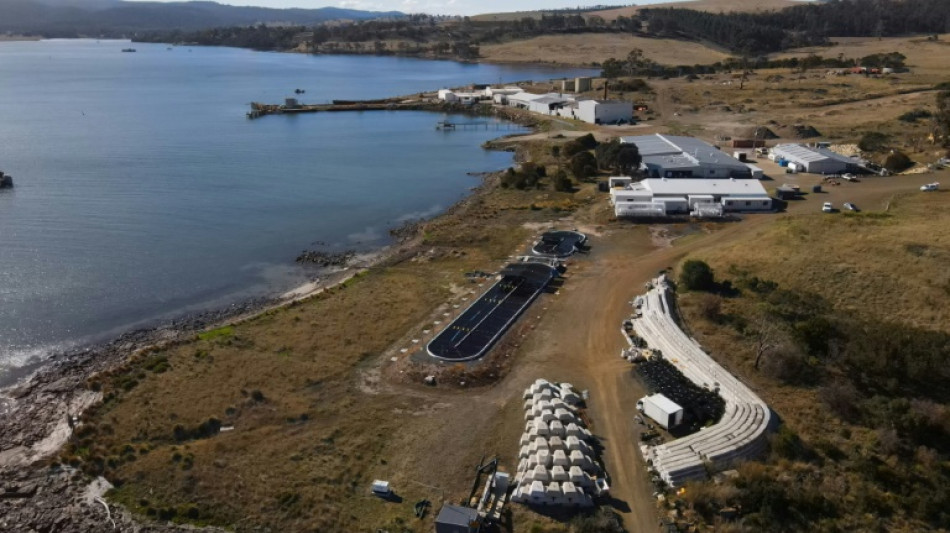
The underwater farm stretches across 1,800 hectares (4,400 acres) in the Tasman Sea, about 10 minutes off the portside town of Triabunna in the island state of Tasmania.
Beneath the waves are forests of asparagopsis, a native red seaweed abundant in Tasmanian coastal waters which is rich in the organic compound bromoform.
More than 40 studies have shown that the seaweed can lower methane emissions from livestock when added to fodder or grain, said Fran Cowley, researcher at Australia's University of New England.
According to the UN's Food and Agriculture Organization, emissions from ruminants and manure management practices account for more than 32 percent of the world's methane emissions related to human activity.
"When we look at gold-standard measurement of methane inhibition, asparagopsis is able to achieve almost complete suppression of methane suppression -- so, 95 percent," said Cowley, professor of livestock production and a leading researcher into ruminants.
While far less abundant in the atmosphere than carbon dioxide, methane is about 80 times more potent over a 20-year timescale at warming the planet.
But its lifespan is shorter, making it an important lever in attempts to limit global warming.
- Juicy meat -
Cowley led one of the longest experiments into asparagopsis, held over 200 days in bovine feed lots in the eastern state of Queensland.
Results published in August 2024 showed emissions from the animals were halved over that period when compared to animals that received no supplements.
The outcome indicated an improvement from a previous study, one of the most advanced in the field at the time, in which emissions from a Japanese herd were reduced by 28 percent.
The bromoform within the seaweed affects the digestive system and curbs the animals' burps and farts without impacting their health or the quality of the resulting food products, Cowley said.
Bromoform is a concern because at high levels it has been considered to be carcinogenic in rats, and potentially humans, she said.
But researchers found it was degraded in the stomachs of grazing animals.
"So there is no accumulation of bromoform in the meat or in the milk because it's only coming in at a relatively low dose to start with," Cowley told AFP.
"All the studies that have been done on meat have shown absolutely no accumulation of bromoform, or any impact on the taste, or the tenderness, or the juiciness of meat."
Studies had shown that any damage to the animals' rumen -- a chamber in the stomach that breaks down plants -- was no worse than in those fed a grain-based feedlot diet, she said.
- 'Enabling force' -
In Triabunna, Sea Forest's marine farm produces feed supplements from the seaweed: oils, pellets and "lick blocks" -- a solid form that animals can lick to consume.
Sea Forest founder and chief executive Sam Elsom turned to seaweed farming in 2019, after about 15 years in the textile industry.
The company wants to be the "enabling force" to make agricultural products sustainable without extra costs to farmers and consumers, he told AFP.
The seaweed is grown partly in the open sea and partly in filtered seawater ponds on land, which are easier to replicate elsewhere in the world and allow growers to control light, nutrients, and the availability of carbon.
Sea Forest is already working with Tasmanian dairy company Ashgrove and Australian burger chain Grill'd, and had signed an agreement last year with British supermarket chain Morrisons, Elsom said.
It also held "encouraging" talks with some French dairy producers and was in the process of registering its seaweed products with the European Food Safety Authority, he said.
One of the big challenges was cost to farmers, who need financial incentives and support to make the effort to lower livestock methane emissions worthwhile, Elsom said.
The ocean provides an "amazing natural resource" for food security, he said.
"Seventy-one percent of the Earth's surface is surrounded by the ocean, and seaweed require zero inputs: No irrigation, no fertiliser, no pesticides.
"So, it can grow up to 30 times faster than land-based plants. It's very exciting."
P.McDonald--TFWP