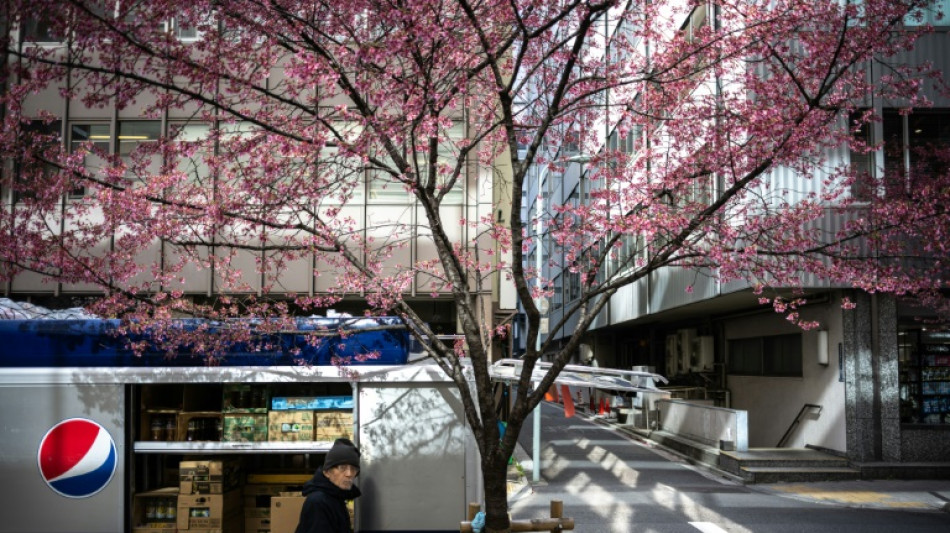
Japan core inflation slows to 3% in Feburary / Photo: © AFP

Japanese inflation eased in February, government data showed Friday, with prices excluding fresh food rising 3.0 percent year-on-year in the world's fourth-largest economy.
The core Consumer Price Index (CPI) slowed from 3.2 percent in January, remaining above the Bank of Japan's two-percent target which has been exceeded every month since April 2022.
Government subsidies for electricity and gas bills contributed to the deceleration, the internal affairs ministry said.
February's core reading narrowly beat expectations of 2.9 percent, as rising prices for petrol, food and accommodation among other necessities continued to squeeze households.
"We want to protect people's livelihoods from high prices while paying close attention to the impact of price trends on households and business activities," top government spokesman Yoshimasa Hayashi said.
Measures taken by Prime Minister Shigeru Ishiba include subsidies, the release of stockpiled rice and efforts "to realise wage increases that will not be defeated by rising prices", Hayashi told reporters.
In February, rice prices were up 81 percent year-on-year -- a record for the grain -- while chocolate was 30 percent more expensive.
This month, the government began a rare auction of its emergency rice stockpiles in a bid to help drive down the staple's surging price.
Japan has previously tapped into its reserves during disasters, but this was the first time since the stockpile was created in 1995 that supply chain problems have prompted the move.
The price of cabbage rose 130 percent, Friday's data showed -- a trend that has been dubbed "cabbage shock" by local media in recent months, after last year's record summer heat and heavy rain ruined crops.
- Tariff uncertainty -
Ishiba's minority government is struggling to gain strong support from voters, who were already angry over inflation and other issues when he took office in October.
Overall, including volatile fresh food prices, inflation in February was up 3.7 percent year-on-year, exceeding economist expectations of 3.5 percent but slowing from 4.0 percent in January.
This deceleration "was driven both by fresh food inflation coming off the boil and by the resumption of subsidies for electricity and gas", Marcel Thieliant of Capital Economics explained.
Yet "core core" inflation, excluding both fresh food and energy prices, accelerated slightly to 2.6 percent year-on-year, hitting an 11-month high.
"The strength in underlying inflation in February suggests that the Bank of Japan could hike rates at its next meeting in May but we still expect that uncertainty over the impact of US tariffs will delay a move to July," Thieliant said.
"That said, the details were not quite that encouraging. One reason for that pick-up was a further jump in rice inflation to a fresh record... which certainly won't be sustained," Thieliant added.
The Bank of Japan left its key interest rate unchanged this week, warning about the global economic outlook given US President Donald Trump's trade policies.
The BoJ is aware that rising prices "are contributing negatively to people's lives", governor Kazuo Ueda told reporters on Wednesday.
"A rise in food prices, including rice... can affect the basic pace of inflation through a change in households' mindset and expectation of future inflation," he said.
L.Holland--TFWP