The Fort Worth Press - US ends waiver for Iraq to buy Iranian electricity

USD -
AED 3.672501
AFN 64.504253
ALL 81.598713
AMD 359.67278
ANG 1.789785
AOA 917.999695
ARS 1538.2475
AUD 1.421262
AWG 1.8025
AZN 1.698959
BAM 1.758181
BBD 2.017808
BDT 124.280834
BGN 1.747831
BHD 0.378105
BIF 3005.600554
BMD 1
BND 1.283543
BOB 11.917476
BRL 5.351801
BSD 1.001892
BTN 95.226537
BWP 13.859348
BYN 2.947424
BYR 19600
BZD 2.014932
CAD 1.40315
CDF 2314.999777
CHF 0.829445
CLF 0.024924
CLP 984.130074
CNY 6.66835
CNH 6.66431
COP 3151.78
CRC 455.595609
CUC 1
CUP 24.044517
CVE 99.123517
CZK 21.882199
DJF 178.40785
DKK 6.71291
DOP 61.444278
DZD 135.331402
EGP 56.126301
ERN 15
ETB 162.972609
EUR 0.89818
FJD 2.244204
FKP 0.75114
GBP 0.75235
GEL 2.570501
GGP 0.75114
GHS 11.676555
GIP 0.75114
GMD 74.000233
GNF 8866.375106
GTQ 7.656419
GYD 209.942467
HKD 7.844915
HNL 26.89794
HRK 6.76901
HTG 131.239943
HUF 329.6745
IDR 18184
ILS 3.117425
IMP 0.75114
INR 95.141971
IQD 1518.788206
IRR 1856999.999859
ISK 122.279863
JEP 0.75114
JMD 159.404525
JOD 0.708973
JPY 157.907497
KES 129.940079
KGS 87.448605
KHR 4090.273689
KMF 441.000317
KPW 899.999961
KRW 1343.609796
KWD 0.311019
KYD 0.834862
KZT 457.910823
LAK 22548.645041
LBP 89716.422674
LKR 333.065143
LRD 170.315667
LSL 16.709083
LTL 2.95274
LVL 0.60489
LYD 6.436563
MAD 9.868303
MDL 18.093068
MGA 4560.450921
MKD 55.35329
MMK 2099.630718
MNT 3601.077836
MOP 8.095253
MRU 40.249373
MUR 47.56014
MVR 15.450191
MWK 1737.250425
MXN 18.64791
MYR 4.0766
MZN 63.909811
NAD 16.709008
NGN 1345.980222
NIO 36.866069
NOK 9.289795
NPR 152.363829
NZD 1.78115
OMR 0.384497
PAB 1.001888
PEN 3.451546
PGK 4.491231
PHP 63.968502
PKR 277.234306
PLN 3.956415
PYG 5828.864747
QAR 3.652104
RON 4.806201
RSD 105.564989
RUB 80.522822
RWF 1482.753351
SAR 3.750764
SBD 8.064647
SCR 13.702334
SDG 601.500338
SEK 9.93101
SGD 1.282035
SHP 0.749344
SLE 22.874983
SLL 20969.504398
SOS 572.550994
SRD 37.6505
STD 20697.981008
STN 22.02465
SVC 8.766631
SYP 13001.999685
SZL 16.701501
THB 33.7795
TJS 9.217057
TMT 3.5
TND 2.999551
TOP 2.40776
TRY 49.837993
TTD 6.800611
TWD 32.428499
TZS 2640.332993
UAH 45.735578
UGX 4393.203883
UYU 40.165228
UZS 11956.976101
VES 886.72915
VND 25856.5
VUV 118.98361
WST 2.767767
XAF 589.167476
XAG 0.018582
XAU 0.000246980356
XCD 2.70255
XCG 1.805556
XDR 0.707052
XOF 589.167476
XPF 107.209637
YER 236.149636
ZAR 16.65841
ZMK 9001.197509
ZMW 20.204154
ZWL 321.999592
SSP 5745.470209
MXV 2.102796
  • RIO

    -0.3300

    97.04

    -0.34%

  • CMSC

    -0.0400

    20.67

    -0.19%

  • RELX

    0.0000

    33.41

    0%

  • RBGPF

    0.0000

    67.95

    0%

  • BCE

    -0.0700

    21.99

    -0.32%

  • BCC

    -0.0300

    75.66

    -0.04%

  • GSK

    0.8600

    51.08

    +1.68%

  • JRI

    -0.0300

    11.52

    -0.26%

  • NGG

    -0.1200

    76.68

    -0.16%

  • CMSD

    0.0900

    20.54

    +0.44%

  • BTI

    -0.0800

    55.75

    -0.14%

  • AZN

    2.0200

    168.1

    +1.2%

  • BP

    -1.4200

    43.16

    -3.29%

  • RYCEF

    0.4600

    19.7

    +2.34%

  • VOD

    0.0700

    17.02

    +0.41%

US ends waiver for Iraq to buy Iranian electricity
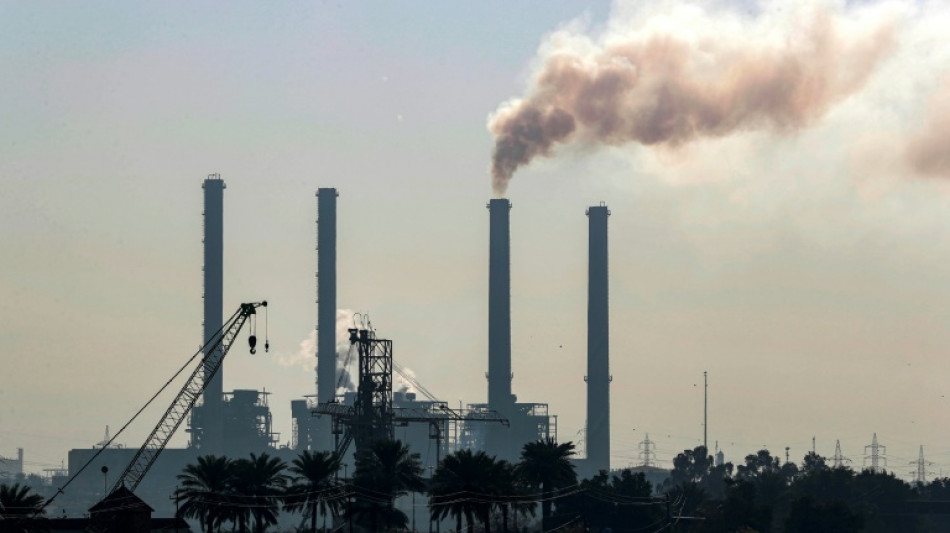
US ends waiver for Iraq to buy Iranian electricity / Photo: © AFP

US ends waiver for Iraq to buy Iranian electricity

Washington has declined to renew a sanctions waiver that allowed Iraq to buy electricity from neighbouring Iran, a spokesperson for the American embassy in Baghdad said on Sunday.

Text size:

Despite having immense oil and gas reserves, Iraq remains dependent on imports to meet its energy needs, and Iran supplies a third of the country's gas and electricity.

The Baghdad government, which hopes to achieve energy self-sufficiency by 2028, said it had prepared "for all scenarios" regarding the waiver.

"On March 8, the U.S. Department of State did not renew the waiver for Iraq to purchase Iranian electricity," the US embassy spokesperson said.

The decision "ensures we do not allow Iran any degree of economic or financial relief", the spokesperson added.

The statement did not mention Iranian gas imports, which are crucial for Iraq's domestic electricity generation.

The waiver was introduced in 2018, when Washington reimposed sanctions on Tehran after US President Donald Trump abandoned a nuclear deal with Iran during his first term in office.

Since returning to the White House in January, Trump has reinstated his policy of exerting "maximum pressure" against Iran.

"The President's maximum pressure campaign is designed to end Iran's nuclear threat, curtail its ballistic missile program, and stop it from supporting terrorist groups," the embassy spokesperson said on Sunday.

Calling Iran "an unreliable energy supplier", the spokesperson urged Baghdad "to eliminate its dependence on Iranian sources of energy as soon as possible".

"Electricity imports from Iran do not contribute substantially to power delivered to the Iraqi people," the spokesperson added.

- 'All scenarios' -

Decades of war have left Iraq's infrastructure in a pitiful state, with chronic power cuts that become worse during the blistering summer when temperatures often reach 50 Celsius (122 Fahrenheit).

Many households receive just a few hours of mains electricity per day, and those that can afford it use private generators to keep appliances such as fridges running.

Tehran also regularly cuts off its supply, worsening the power shortages that affect the daily lives of 46 million Iraqis.

Iraqi government spokesman Bassem al-Awadi told state media on Saturday that the authorities had prepared "for all scenarios" regarding the waiver, including the use of gas platform vessels via a pipeline connected to power stations in the southern province of Basra.

Iraq hopes to increase its natural gas production to help reduce dependence on imports, and has repeatedly stressed the need to diversify energy sources.

Last year it began importing electricity from Jordan and Turkey, and it also hopes to connect to the electricity grid of Gulf countries.

The government's plans also include recovering flared gas, which is natural gas produced during crude oil extraction.

Gas flaring is the polluting practice of burning off excess gas during oil drilling. The government has made eliminating this a priority, and plans to halt it by the end of 2027.

G.Dominguez--TFWP