Ukraine crisis adds to inflation jitters as ECB meets

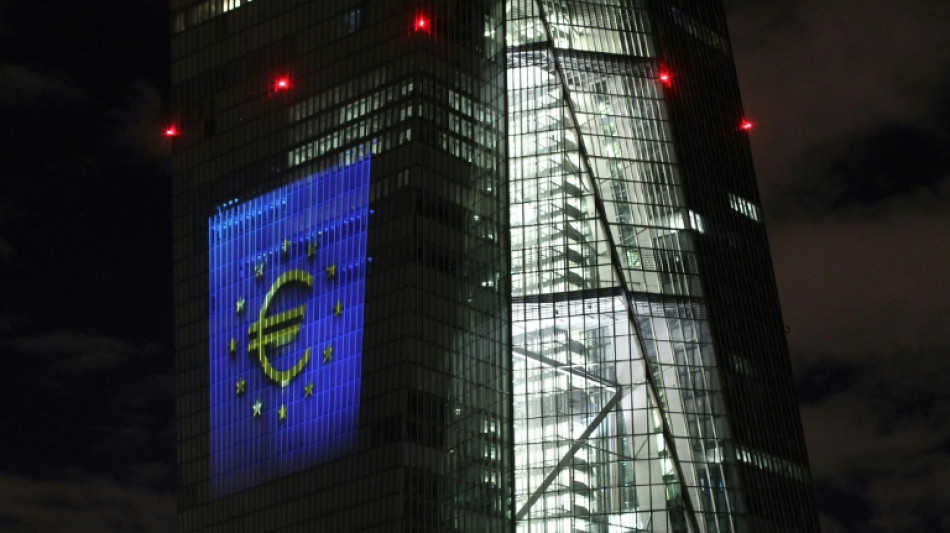
Soaring inflation will be in focus when European Central Bank governors meet on Thursday, as the threat of war in Ukraine risked further fuelling already sky-high energy prices in the region.
Prices rose in the eurozone at an annual rate of five percent in December, the highest value on record for the currency bloc, which began keeping track of inflation in 1997.
New figures for January are set to be published by Eurostat on Wednesday, ahead of the meeting, with policymakers looking for indications as to whether inflation will come off the boil in 2022, as the ECB has said it expects to happen.
The Frankfurt-based institution projected a gradual return to inflation under its target of two percent when it published its most recent forecasts in December.
The forecast grounds the ECB's decision to initiate a "step-by-step" reduction in its asset-purchasing stimulus programme, a more cautious approach than its peers in the United States and the United Kingdom.
The massive bond-buying programme has been the ECB's main crisis-fighting tool, aimed at keeping borrowing costs low and stoking economic growth in the 19-nation euro club.
The meeting on Thursday was "unlikely to bring any policy changes", said Carsten Brzeski, head of macro at ING.
The 25 members of the governing council were increasingly sensitive to the risk that inflation could be higher than expected, Brzeski said, but would seek to "steer market expectations cautiously".
- Difficult balance -
The debate over future monetary policy at the ECB is closely linked to the progress of inflation and its return to the bank's target.
As such, "the current spike in inflation seems to be challenging its commitment to leave interest rates unchanged throughout 2022", Elga Bartsch, head of macro research at Blackrock Investment, told AFP.
But the surge was driven by the persistence of supply bottlenecks and changes in consumer preferences, Bartsch said, "not by excessive demand or an overheating economy."
In other words, any monetary tightening "would do little to ship containers faster from Asia to Europe or reduce energy prices", said Brzeski.
Multi-year highs in the price for gas were one of the main forces behind record inflation at the end of last year.
Policymakers will be wary that a further escalation in Ukraine, through which Russia supplies Europe with much of its gas, could send the price for energy up even further.
- 'Different situations' -
Across the Atlantic, the US Federal Reserve has accelerated quickly towards rate hikes.
After the central bank's policy-making committee meeting last week, Fed Chair Jerome Powell said it could "raise the federal funds rate at the March meeting", having told reporters in November it could afford to be "patient".
Persistently high inflation in the US, rising to seven percent in December, has focussed minds at the Fed.
"It is clear that the ECB is on a very different path to the Fed," said Jack Allen-Reynolds of Capital Economics, predicting that the ECB would consider its first hike in 2023.
Rates sit at historic lows, including a negative overnight deposit rate that charges banks to deposit their money with the ECB overnight.
Any change was "very unlikely" in 2022, ECB President Christine Lagarde recently reiterated, with the possibility delayed until the bank has ended asset purchases.
Lagarde has also rejected comparisons with the US, saying the two economies were in "different situations," with inflation "clearly weaker" in the euro area.
ECB policymakers expect inflation to decline as one-off factors mechanically pushing the rate up, such as a 2020 value-added tax holiday in Germany, are taken out of the calculation.
M.Delgado--TFWP