The Fort Worth Press - Environmental groups urge EU 'high risk' label for Sarawak

USD -
AED 3.672504
AFN 64.000368
ALL 81.218818
AMD 360.140403
ANG 1.789785
AOA 918.000367
ARS 1535.164404
AUD 1.422273
AWG 1.8025
AZN 1.70397
BAM 1.747092
BBD 2.014338
BDT 124.158076
BGN 1.747831
BHD 0.377606
BIF 3001.375712
BMD 1
BND 1.27771
BOB 12.126707
BRL 5.440704
BSD 1.000156
BTN 94.912544
BWP 13.81787
BYN 2.946066
BYR 19600
BZD 2.011399
CAD 1.39755
CDF 2315.000362
CHF 0.823904
CLF 0.025146
CLP 992.920396
CNY 6.661104
CNH 6.653041
COP 3219.41
CRC 454.787056
CUC 1
CUP 24.001751
CVE 98.497943
CZK 21.81604
DJF 177.720393
DKK 6.697404
DOP 60.620679
DZD 135.802679
EGP 55.993189
ERN 15
ETB 161.461739
EUR 0.896104
FJD 2.243704
FKP 0.747647
GBP 0.74675
GEL 2.603861
GGP 0.747647
GHS 11.651465
GIP 0.747647
GMD 74.000355
GNF 8851.589159
GTQ 7.645651
GYD 209.633474
HKD 7.84625
HNL 26.880818
HRK 6.76901
HTG 131.032142
HUF 327.940388
IDR 18133.75
ILS 3.14456
IMP 0.747647
INR 94.917504
IQD 1516.088114
IRR 1868415.000352
ISK 121.830386
JEP 0.747647
JMD 158.924129
JOD 0.70904
JPY 157.59504
KES 129.870385
KGS 87.448704
KHR 4080.593508
KMF 441.00035
KPW 899.999961
KRW 1333.420383
KWD 0.31116
KYD 0.833434
KZT 453.459704
LAK 22517.911061
LBP 89559.597295
LKR 332.651457
LRD 170.008263
LSL 16.666696
LTL 2.95274
LVL 0.60489
LYD 6.428964
MAD 9.833447
MDL 17.902128
MGA 4523.771239
MKD 55.008665
MMK 2099.909661
MNT 3597.883233
MOP 8.081288
MRU 40.55493
MUR 47.280378
MVR 15.450378
MWK 1733.828824
MXN 18.786704
MYR 4.058204
MZN 63.910377
NAD 16.666696
NGN 1346.470377
NIO 36.803459
NOK 9.208504
NPR 151.859892
NZD 1.775884
OMR 0.384417
PAB 1.00025
PEN 3.46149
PGK 4.551281
PHP 63.764504
PKR 276.672235
PLN 3.94725
PYG 5859.074911
QAR 3.645686
RON 4.782204
RSD 105.25382
RUB 80.668011
RWF 1476.317024
SAR 3.7544
SBD 8.058206
SCR 13.759577
SDG 601.503676
SEK 9.826204
SGD 1.278304
SHP 0.748335
SLE 22.903667
SLL 20969.504398
SOS 571.533215
SRD 37.619504
STD 20697.981008
STN 21.886236
SVC 8.750648
SYP 13001.999685
SZL 16.6622
THB 33.750369
TJS 9.205654
TMT 3.5
TND 2.990728
TOP 2.40776
TRY 49.934704
TTD 6.780948
TWD 32.621504
TZS 2641.198038
UAH 45.361884
UGX 4250.396409
UYU 40.208322
UZS 11995.497668
VES 887.479804
VND 25803.5
VUV 119.217464
WST 2.773901
XAF 587.805759
XAG 0.020359
XAU 0.000258029557
XCD 2.70255
XCG 1.802387
XDR 0.707052
XOF 587.805759
XPF 106.533507
YER 236.203589
ZAR 16.727445
ZMK 9001.203584
ZMW 20.167407
ZWL 321.999592
SSP 5745.199062
MXV 2.117364
  • RIO

    -0.3300

    97.04

    -0.34%

  • CMSC

    -0.0400

    20.67

    -0.19%

  • RELX

    0.0000

    33.41

    0%

  • RBGPF

    0.0000

    67.95

    0%

  • BCE

    -0.0700

    21.99

    -0.32%

  • BCC

    -0.0300

    75.66

    -0.04%

  • GSK

    0.8600

    51.08

    +1.68%

  • JRI

    -0.0300

    11.52

    -0.26%

  • NGG

    -0.1200

    76.68

    -0.16%

  • CMSD

    0.0900

    20.54

    +0.44%

  • BTI

    -0.0800

    55.75

    -0.14%

  • AZN

    2.0200

    168.1

    +1.2%

  • BP

    -1.4200

    43.16

    -3.29%

  • RYCEF

    0.4600

    19.7

    +2.34%

  • VOD

    0.0700

    17.02

    +0.41%

Environmental groups urge EU 'high risk' label for Sarawak
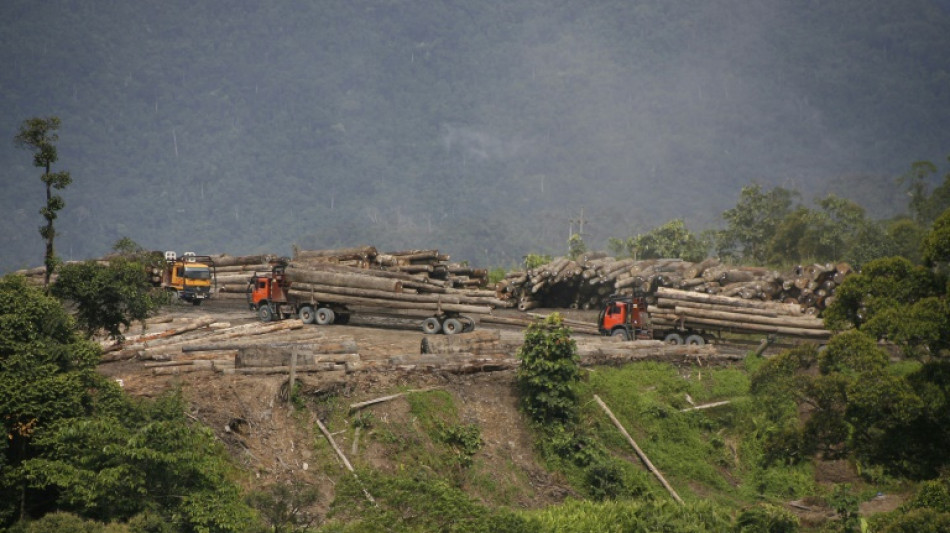
Environmental groups urge EU 'high risk' label for Sarawak / Photo: © AFP/File

Environmental groups urge EU 'high risk' label for Sarawak

Environmental and rights groups urged the European Union Tuesday to label Malaysia's Sarawak region "high risk" under controversial new anti-deforestation rules to be implemented from the end of December.

Text size:

The EU's deforestation regulation (EUDR) is due to come into force at the end of the year, although Germany and Brazil have recently joined a string of countries urging that implementation be delayed.

Environmentalists and rights groups have, however, called on the EU to move forward with the regulation.

It will bar imports of a vast range of goods -- from coffee to cocoa, soy, timber, palm oil, cattle, printing paper and rubber -- if they are produced on land that was deforested after December 2020.

It also requires exporters to assess the risk of rights violations associated with production of the commodity.

In a joint statement, a group of Malaysian and international organisations said Sarawak in Malaysian Borneo should be considered "high risk" under the new rules.

Such a designation would mean closer scrutiny of timber and palm oil imported from the region -- an unwelcome prospect for Malaysia, which is already pushing back against EUDR.

The NGOs argue Sarawak's government plans to convert hundreds of thousands of hectares of natural forest to timber plantations, and is granting companies operating leases in areas that have not been surveyed for protection purposes.

Earlier this year RimbaWatch, one of the signatory groups, warned that around 15 percent of Malaysia's natural forest is at risk because of concessions granted to companies.

Tuesday's statement also alleges routine violations of Indigenous land rights, including limits on the amount of land that can be legally recognised, and the unilateral revocation of existing land titles.

"Logging companies are still bulldozing Indigenous peoples' forests in Sarawak without consultation or consent from communities, which should translate into a 'high risk' classification," said Celine Lim, managing director of SAVE Rivers, an Indigenous organisation from Sarawak.

- Vocal opponents -

Sarawak's forestry department, and Malaysia's plantation and commodities ministry did not respond to AFP's request for comment on the claims.

Malaysia and Indonesia have been among the most vocal opponents of EUDR, arguing domestic anti-deforestation standards should be sufficient, and warning the rules will disproportionately harm smallholder producers who cannot meet onerous documentation requirements.

Environmental and rights groups have pushed back against these claims, including at talks in Brussels earlier this month between EU, Indonesian and Malaysian officials.

"Calls from EU governments to delay enforcement of the law are a deplorable abdication of leadership in the face of a climate emergency," said Luciana Tellez Chavez, senior environment and human rights researcher at Human Rights Watch.

A.Nunez--TFWP