The Fort Worth Press - From recession to inflation, how the US Fed has dealt with crises

USD -
AED 3.6725
AFN 64.999721
ALL 81.318192
AMD 362.547991
ANG 1.789785
AOA 917.000294
ARS 1517.777015
AUD 1.434082
AWG 1.80125
AZN 1.704567
BAM 1.742182
BBD 2.019847
BDT 123.364303
BGN 1.747831
BHD 0.379293
BIF 3001.563314
BMD 1
BND 1.282898
BOB 11.708429
BRL 5.062797
BSD 1.002717
BTN 95.180449
BWP 13.73935
BYN 3.020016
BYR 19600
BZD 2.016996
CAD 1.41139
CDF 2313.499676
CHF 0.824385
CLF 0.024881
CLP 979.260338
CNY 6.691197
CNH 6.68104
COP 3176.32
CRC 455.723715
CUC 1
CUP 24.068911
CVE 98.222001
CZK 21.675799
DJF 178.583836
DKK 6.660298
DOP 61.517357
DZD 134.5502
EGP 53.531296
ERN 15
ETB 163.810406
EUR 0.890971
FJD 2.25945
FKP 0.750648
GBP 0.750145
GEL 2.589958
GGP 0.750648
GHS 11.711102
GIP 0.750648
GMD 73.498524
GNF 8822.690992
GTQ 7.662467
GYD 209.814628
HKD 7.84765
HNL 26.922083
HRK 6.711901
HTG 131.336662
HUF 322.907975
IDR 18038
ILS 3.10047
IMP 0.750648
INR 94.769024
IQD 1520.296452
IRR 1795877.502842
ISK 121.35006
JEP 0.750648
JMD 159.414222
JOD 0.708977
JPY 158.103502
KES 129.97991
KGS 87.450172
KHR 4076.487593
KMF 440.000064
KPW 899.999961
KRW 1330.365026
KWD 0.31073
KYD 0.835731
KZT 453.817443
LAK 22565.272
LBP 89806.433223
LKR 332.145625
LRD 170.751234
LSL 16.484977
LTL 2.95274
LVL 0.60489
LYD 6.439546
MAD 9.74301
MDL 17.99111
MGA 4513.568766
MKD 54.892166
MMK 2099.513869
MNT 3596.411813
MOP 8.107446
MRU 40.092106
MUR 47.249982
MVR 15.460191
MWK 1738.975517
MXN 18.47089
MYR 4.082203
MZN 63.901297
NAD 16.484977
NGN 1333.710107
NIO 36.906713
NOK 9.43039
NPR 152.289753
NZD 1.767485
OMR 0.384506
PAB 1.002837
PEN 3.449551
PGK 4.553816
PHP 63.092962
PKR 277.617784
PLN 3.892197
PYG 5727.723787
QAR 3.660721
RON 4.747098
RSD 104.616997
RUB 83.075381
RWF 1480.211293
SAR 3.763551
SBD 8.064647
SCR 14.141171
SDG 601.499016
SEK 9.912185
SGD 1.279365
SHP 0.754745
SLE 24.680201
SLL 20969.504398
SOS 573.128691
SRD 37.7945
STD 20697.981008
STN 21.825114
SVC 8.775087
SYP 13001.999685
SZL 16.478563
THB 33.5515
TJS 9.228751
TMT 3.51
TND 2.98768
TOP 2.40776
TRY 49.552298
TTD 6.808242
TWD 32.504098
TZS 2643.31497
UAH 44.982296
UGX 4142.133065
UYU 40.314905
UZS 12089.683862
VES 878.910599
VND 25912
VUV 118.97233
WST 2.787823
XAF 584.438683
XAG 0.0173
XAU 0.000239008592
XCD 2.70255
XCG 1.807395
XDR 0.707052
XOF 584.438683
XPF 106.234578
YER 236.149344
ZAR 16.45654
ZMK 9001.19826
ZMW 20.07732
ZWL 321.999592
SSP 5750.775019
MXV 2.085175
  • RIO

    -0.3300

    97.04

    -0.34%

  • CMSC

    -0.0400

    20.67

    -0.19%

  • RELX

    0.0000

    33.41

    0%

  • RBGPF

    0.0000

    67.95

    0%

  • BCE

    -0.0700

    21.99

    -0.32%

  • BCC

    -0.0300

    75.66

    -0.04%

  • GSK

    0.8600

    51.08

    +1.68%

  • JRI

    -0.0300

    11.52

    -0.26%

  • NGG

    -0.1200

    76.68

    -0.16%

  • CMSD

    0.0900

    20.54

    +0.44%

  • BTI

    -0.0800

    55.75

    -0.14%

  • AZN

    2.0200

    168.1

    +1.2%

  • BP

    -1.4200

    43.16

    -3.29%

  • RYCEF

    0.4600

    19.7

    +2.34%

  • VOD

    0.0700

    17.02

    +0.41%

From recession to inflation, how the US Fed has dealt with crises
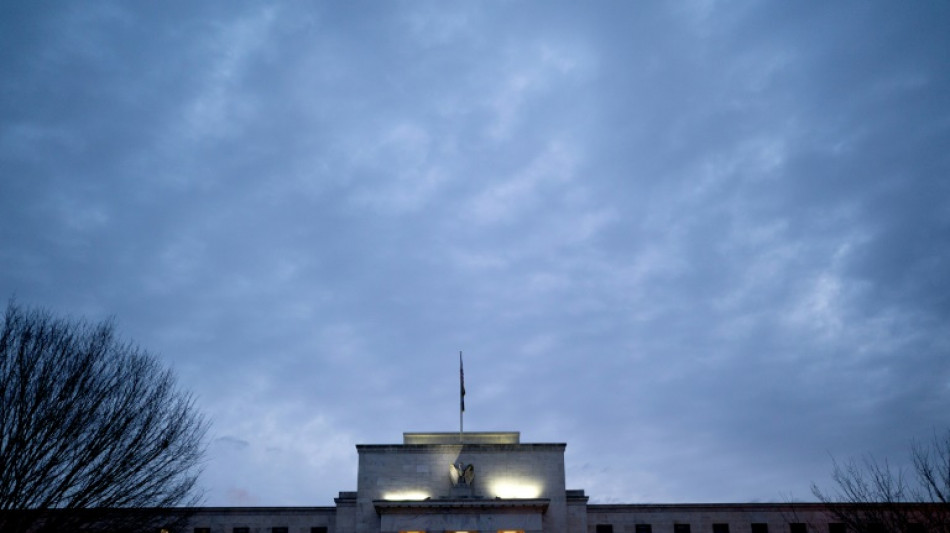
From recession to inflation, how the US Fed has dealt with crises / Photo: © AFP/File

From recession to inflation, how the US Fed has dealt with crises

The US Federal Reserve has strongly signaled it will raise interest rates by half a percentage point this week to rein in soaring inflation, and likely continue hiking throughout this year.

Text size:

The Fed has long played a decisive role when the world's largest economy faces tough times. Here are some of its major actions since the 2008 global financial crisis:

- The financial crisis and recovery -

November 2008: The Fed began injecting liquidity into financial markets following the collapse of Lehman Brothers investment bank. The central bank launched three such programs before ending asset purchases in June 2014.

December 2008: The central bank cut its lending rate to zero amid the crisis, where it remained until December 2015.

October 2017: The Fed began reducing the holdings on its balance sheet, which had ballooned from less than $900 billion before the crisis to $4.5 trillion.

- Trade war slows growth -

December 2018 to August 2019: Interest rates peaked in the range of 2.25 percent to 2.5 percent.

Fall 2019: The Fed cut rates several times to the 1.5-1.75 percent range as the trade war launched by then-president Donald Trump slowed growth. The Republican leader had criticized the bank for its high rates.

- Support during the pandemic -

March 3, 2020: The Fed cut its lending rate by 50 basis points to between one and 1.25 percent.

March 16, 2020: As Covid-19 spread across the country and the economy shut down, the Fed slashed its lending rate by 100 basis points to zero and resumed its asset purchase policy, which eventually reached $120 billion per month in Treasury bonds and mortgage-backed securities.

- Economy recovers, inflation arrives -

November 3, 2021: The Fed announced it will begin slowing the pace of its asset purchases, with a view towards ending them entirely by the following June, which would set the stage for rate hikes to fight inflation.

December 15, 2021: Recognizing that inflation will not be "transitory," as top officials had believed, the central bank accelerated the end of its asset purchases to March.

March 16, 2022: The central bank raised interest rates for the first time since 2018 to the 0.25-0.50 percent range.

April 6, 2022: The minutes from the Fed's March policy meeting are released, showing that many participants see one or more 50-basis point rate hikes as necessary if inflation pressure continues.

April 29, 2022: The Fed's preferred inflation gauge, the personal consumption expenditures price index, rises 6.6 percent year-on-year and 0.9 percent month-on-month in March, both faster paces than the month prior.

L.Coleman--TFWP