The Fort Worth Press - In Brazil, hopes to use AI to save wildlife from roadkill fate

USD -
AED 3.672977
AFN 65.0004
ALL 81.626056
AMD 360.510494
ANG 1.789785
AOA 918.000068
ARS 1541.585196
AUD 1.421494
AWG 1.8
AZN 1.687821
BAM 1.756231
BBD 2.013047
BDT 124.13403
BGN 1.747831
BHD 0.377298
BIF 3001.5
BMD 1
BND 1.281647
BOB 12.038845
BRL 5.378401
BSD 0.99943
BTN 95.119137
BWP 13.826143
BYN 2.945822
BYR 19600
BZD 2.010084
CAD 1.403845
CDF 2314.502233
CHF 0.830025
CLF 0.025026
CLP 988.180036
CNY 6.66605
CNH 6.664565
COP 3169.93
CRC 454.457699
CUC 1
CUP 23.987213
CVE 99.224987
CZK 21.885969
DJF 177.719677
DKK 6.712575
DOP 60.370006
DZD 135.277004
EGP 56.089099
ERN 15
ETB 163.857782
EUR 0.89807
FJD 2.244197
FKP 0.75114
GBP 0.751865
GEL 2.570499
GGP 0.75114
GHS 11.650139
GIP 0.75114
GMD 73.501784
GNF 8795.000128
GTQ 7.63805
GYD 209.438376
HKD 7.845495
HNL 26.831951
HRK 6.76901
HTG 130.948372
HUF 329.9395
IDR 18180
ILS 3.123155
IMP 0.75114
INR 95.29225
IQD 1515.218182
IRR 1864649.999685
ISK 121.91994
JEP 0.75114
JMD 158.527332
JOD 0.708968
JPY 158.288042
KES 130.000272
KGS 87.448599
KHR 4075.50088
KMF 441.999797
KPW 899.999961
KRW 1344.385001
KWD 0.31101
KYD 0.832963
KZT 455.005455
LAK 22525.000169
LBP 89550.000228
LKR 332.317142
LRD 170.240229
LSL 16.670086
LTL 2.95274
LVL 0.60489
LYD 6.430047
MAD 9.852994
MDL 17.990957
MGA 4540.985152
MKD 55.296394
MMK 2099.630718
MNT 3601.077836
MOP 8.076272
MRU 40.199425
MUR 47.570073
MVR 15.460443
MWK 1737.000259
MXN 18.68429
MYR 4.076599
MZN 63.900258
NAD 16.670073
NGN 1342.29009
NIO 36.780453
NOK 9.278675
NPR 152.193532
NZD 1.780202
OMR 0.384502
PAB 0.999421
PEN 3.447629
PGK 4.480862
PHP 63.9685
PKR 276.5266
PLN 3.956803
PYG 5850.263778
QAR 3.643866
RON 4.804297
RSD 105.523987
RUB 80.494213
RWF 1479.735463
SAR 3.750314
SBD 8.064647
SCR 13.975633
SDG 601.49594
SEK 9.93486
SGD 1.283198
SHP 0.749344
SLE 22.874984
SLL 20969.504398
SOS 571.202795
SRD 37.615504
STD 20697.981008
STN 22.000027
SVC 8.745235
SYP 13001.999685
SZL 16.657163
THB 33.787499
TJS 9.205205
TMT 3.5
TND 2.998649
TOP 2.40776
TRY 49.837799
TTD 6.78409
TWD 32.445899
TZS 2644.428012
UAH 45.57773
UGX 4352.413493
UYU 40.211023
UZS 12008.530699
VES 886.72915
VND 25856.5
VUV 118.98361
WST 2.767767
XAF 589.095335
XAG 0.01869
XAU 0.000247965444
XCD 2.70255
XCG 1.801308
XDR 0.707052
XOF 589.095335
XPF 107.090743
YER 236.149886
ZAR 16.687205
ZMK 9001.197055
ZMW 20.164415
ZWL 321.999592
SSP 5745.470209
MXV 2.106899
  • RIO

    -0.3300

    97.04

    -0.34%

  • CMSC

    -0.0400

    20.67

    -0.19%

  • RELX

    0.0000

    33.41

    0%

  • RBGPF

    0.0000

    67.95

    0%

  • BCE

    -0.0700

    21.99

    -0.32%

  • BCC

    -0.0300

    75.66

    -0.04%

  • GSK

    0.8600

    51.08

    +1.68%

  • JRI

    -0.0300

    11.52

    -0.26%

  • NGG

    -0.1200

    76.68

    -0.16%

  • CMSD

    0.0900

    20.54

    +0.44%

  • BTI

    -0.0800

    55.75

    -0.14%

  • AZN

    2.0200

    168.1

    +1.2%

  • BP

    -1.4200

    43.16

    -3.29%

  • RYCEF

    0.4600

    19.7

    +2.34%

  • VOD

    0.0700

    17.02

    +0.41%

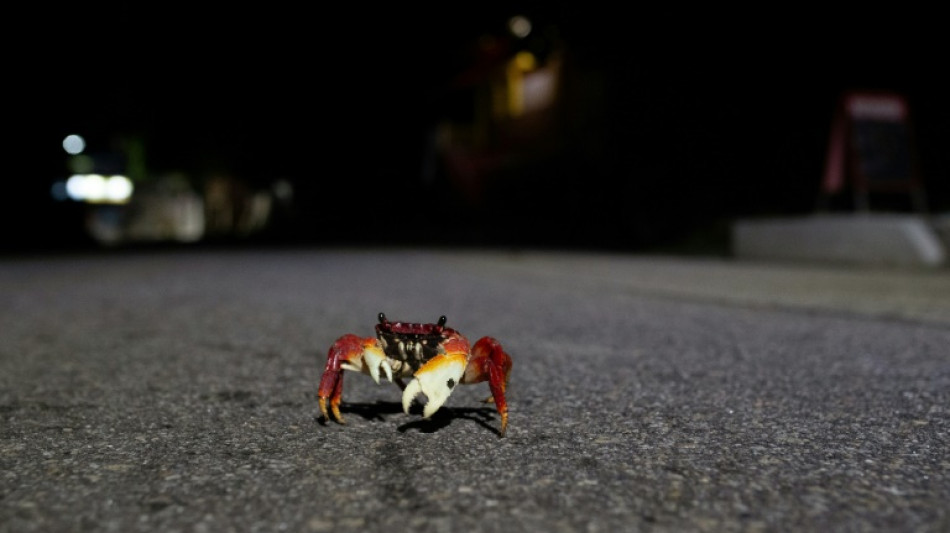
In Brazil, hopes to use AI to save wildlife from roadkill fate
In Brazil, hopes to use AI to save wildlife from roadkill fate / Photo: © AFP

In Brazil, hopes to use AI to save wildlife from roadkill fate

In Brazil, where about 16 wild animals become roadkill every second, a computer scientist has come up with a futuristic solution to this everyday problem: using AI to alert drivers to their presence.

Text size:

Direct strikes on the vast South American country's extensive road network are the top threat to numerous species, forced to live in ever-closer proximity with humans.

According to the Brazilian Center for Road Ecology (CBEE), some 475 million vertebrate animals die on the road every year -- mostly smaller species such as capybaras, armadillos and possums.

"It is the biggest direct impact on wildlife today in Brazil," CBEE coordinator Alex Bager told AFP.

Shocked by the carnage in the world's most biodiverse country, computer science student Gabriel Souto Ferrante sprung into action.

The 25-year-old started by identifying the five medium- and large-sized species most likely to fall victim to traffic accidents: the puma, the giant anteater, the tapir, the maned wolf and the jaguarundi, a type of wild cat.

Souto, who is pursuing a master's degree at the University of Sao Paulo (USP), then created a database with thousands of images of these animals, and trained an AI model to recognize them in real time.

Numerous tests followed, and were successful, according to the results of his efforts recently published in the journal Scientific Reports.

Souto collaborated with the USP Institute of Mathematical and Computer Sciences.

For the project to become a reality, Souto said scientists would need "support from the companies that manage the roads," including access to traffic cameras and "edge computing" devices -- hardware that can relay a real-time warning to drivers like some navigation apps do.

There would also need to be input from the road concession companies, "to remove the animal or capture it," he told AFP.

It is hoped the technology, by reducing wildlife strikes, will also save human lives.

- 'More roads, more vehicles'-

Bager said a variety of other strategies to stop the bloodshed on Brazilian roads have failed.

Signage warning drivers to be on the lookout for crossing animals have little influence, he told AFP, leading to a mere three-percent reduction in speed on average.

There are also so-called fauna bridges and tunnels meant to get animals safely from one side of the road to the other, and fences to keep them in -- all insufficient to deal with the scope of the problem, according to Bager.

In 2014, he created an app called Urubu with other ecologists, to which thousands of users contributed information, allowing for the identification of roadkill hotspots.

The project helped to create public awareness and even inspired a bill on safe animal crossing and circulation, which is awaiting a vote in Congress.

A lack of money saw the app being shut down last year, but Bager is intent on having it reactivated.

"We have more and more roads, more vehicles and a number of roadkill animals that likely continues to grow," he said.

A.Nunez--TFWP