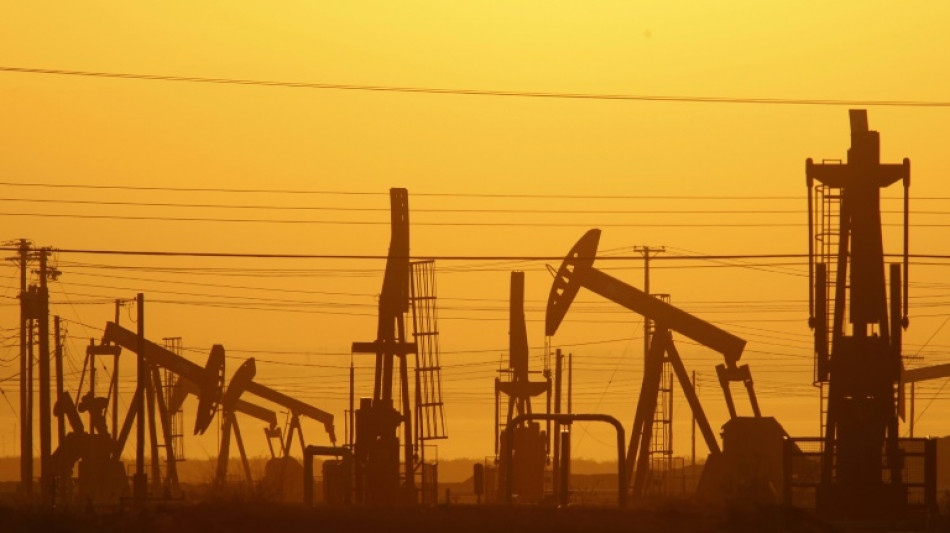
Intense talks as OPEC+ meets to decide over output amid tumbling prices / Photo: © GETTY IMAGES NORTH AMERICA/AFP/File

Uncertainty hovered over what major oil-producing nations -- collectively known as OPEC+ -- will decide on output policy as they headed into virtual meetings Thursday in a bid to halt a continuous slump in prices.
Amid stuttering global economic growth, analysts expect OPEC+ -- the 13 OPEC members headed by Saudi Arabia and 10 partners led by Russia -- to extend or deepen production cuts into next year to prop up prices.
The OPEC states began today's first meeting via videoconference at 1000 GMT.
Their 10 partners are due to join at around 1400 GMT to decide on next year's OPEC+ policy, according to a source close to the organisation.
But heading into the meeting, disagreement over output quotas persisted among the OPEC+ group, which was forced to delay its key meeting by four days.
It remained unclear whether Saudi Arabia would succeed in convincing African producers to accept lower output targets to further buttress prices, as some members were pushing for higher production instead, sources told AFP.
In recent months, nine OPEC+ members including Riyadh, Moscow, Baghdad and Dubai have reduced their output.
Saudi Arabia has born the brunt of the cuts by voluntarily slashing production by a further million barrels a day since July.
- Elusive agreement -
Intense negotiations have continued in recent days as Saudi Arabia sought to convince African countries to chip in by accepting lower production quotas.
"The dispute with the African members still persists," a source told AFP on condition of anonymity, saying that a decision on their quotas may need to be postponed until next year if no compromise is reached.
Angola and Nigeria are among those countries reluctant to sign up, seeking to step up production to secure foreign currency, according to sources.
A rollover of the last OPEC+ decisions, as well as deeper cuts by the alliance or Saudi Arabia alone were still on the table, the source added.
DNB analysts however said an agreement across OPEC+ to jointly curb production seems unlikely.
- Supply cuts -
Since the end of 2022, the alliance has implemented supply cuts of about five million barrels per day (bpd).
They initially slashed some two million barrels in their first in-person meeting after the Covid pandemic.
In May they implemented more cuts by nine members totalling 1.6 million bpd.
A month later, Riyadh announced it was to take a further one million barrels off the market, a decision extended month by month until the end of 2023 and followed to a lesser extent by Russia.
But investors have warned that cutting production might not be enough to prevent prices from plummeting.
Oil prices are far from the near-$140 a barrel peak reached after the Russian invasion of Ukraine.
But they remain above the average of the last five years, currently hovering at around $80 per barrel after nearly striking $100 in September.
Concerns among producers persist about demand falling owing to slowing economies, particularly China's -- the world's biggest importer of crude.
On the supply side, "US and Brazilian crude production rose to record highs, while OPEC+ members exempted from cuts -- Libya, Venezuela and Iran -- have been able to increase their production as well", said Giovanni Staunovo of UBS.
A.Nunez--TFWP