Sudan's coup-hit economy in free fall as prices bite

Sudanese schoolteacher Babiker Mohamed barely covers his family's needs with his meagre income, but since last year's military coup he no longer knows if he can even keep afloat.
Like many in Sudan, Mohamed has been grappling with shortages in basic goods, as well as new taxes and steep price hikes on fuel, electricity and food since an October military coup led by army chief Abdel Fattah al-Burhan.
"I used to buy 20 loaves of bread at 100 Sudanese pounds before the coup," Mohamed, who provides for a family of six, told AFP.
"Bread alone now costs me around 27,000 pounds a month which is like 90 percent of my salary" of about 30,000 pounds (or $50), he said.
"I don't know if I can afford to send my children to school anymore."
Mohamed joined teachers who went on strike this week against the worsening living conditions.
Sudan's latest coup upended a transition painstakingly negotiated between civilian and military leaders following the 2019 ouster of president Omar al-Bashir, whose rule was marked by crippling US sanctions and international isolation.
It also triggered international condemnation and punitive measures, with the United States, World Bank and International Monetary Fund suspending badly needed aid to the impoverished country.
Sudanese exports have sharply declined, foreign currency shortages have been reported, and efforts by local banks to re-establish ties with international counterparts in the US and the West came to a screeching halt.
"It's like the embargo was back since October 25," said economist Sumaya Sayed.
- 'Beyond people's reach' -
Protesters staged several rallies this week against the decline in living conditions.
Sudanese citizens have for decades endured severe economic hardship due to government mismanagement, internal conflicts and the 2011 secession of the oil-rich south.
Bashir himself was ousted in April 2019 following months of street protests initially triggered by the tripling of bread prices.
Essameddine Okasha, spokesman for the association of bakery owners in Khartoum, said bread prices have surged "beyond people's reach".
He attributed the hikes to increasing operational costs.
Sudan is also especially vulnerable to the impact of global supply shortages in the wake of Russia's invasion of Ukraine.
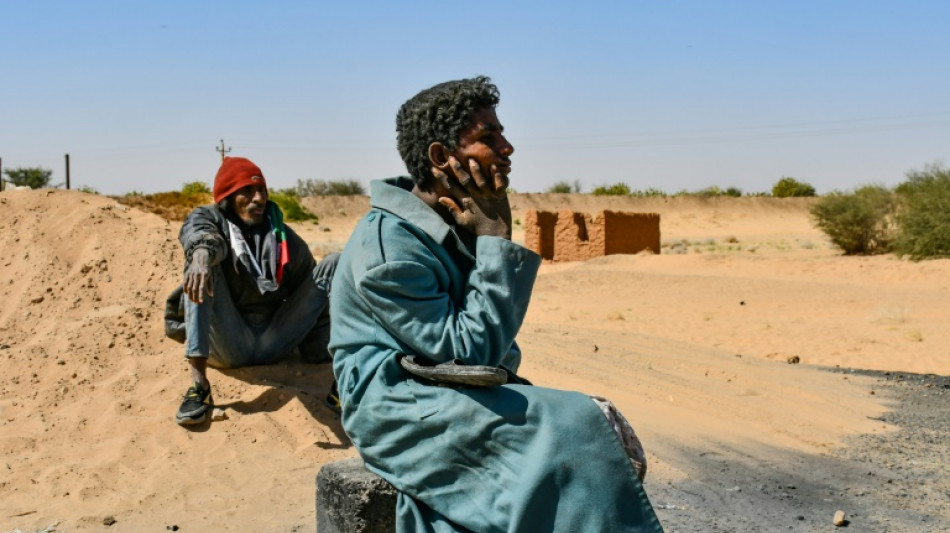
Protesters in northern Sudan have in recent weeks blocked a key trade route between Egypt and Sudan following a sharp increase in electricity tariffs.
In January, Sudanese authorities sharply raised electricity prices across sectors, with households seeing an increase of about 500 percent.
Sudan had already embarked on plans to scrap fuel subsidies under the transition which was derailed by the coup.
Fuel prices have undergone several hikes over the past year.
On Saturday, petrol at the pump cost 672 pounds ($1.50) per litre, up from some 320 pounds before the coup.
- Workers laid off -
Many local business owners have been forced to suspend operations.
"I have laid off some 300 employees, mostly women who were the breadwinners of their families," said a food factory owner in North Khartoum, speaking on condition of anonymity.
"I couldn't keep up with electricity and production input price hikes."
Economist Mohamed al-Nayer says Sudan is in a "state of shock".
"The absence of international aid and loans in the 2022 budget is having a negative effect," he said, pointing out that the fiscal plans rely heavily on tax rises.
"Taxes now constitute 58 percent of the budget, sharply increasing prices and pushing the country into recession."
Sudan has been reeling from triple-digit inflation, which stood at 258 percent in February.
"It will not be possible for the government to bring down inflation... instead it will likely jump to 500 percent," forecast Nayer.
- 'Right decision, wrong time' -
Sudan has yet to name a prime minister since the January resignation of UN economist-turned-premier Abdalla Hamdok.
This month, Sudan formed a council to address key economic challenges, led by the deputy head of its Sovereign Council, Mohamed Hamdan Daglo, known as Hemeti.
On March 9, Daglo blamed a "mafia" of currency dealers responsible for currency and gold speculation on the local market.
Sudan's central bank announced this month it will allow the currency to float as part of measures to stem the black market.
"It was the right decision but at the wrong time," according to Sayed.
She said the move would only drive up inflation and further weaken the local currency.
In mid-February, the Sudanese pound hovered at 450 pounds to the dollar but now the greenback buys about 600 pounds.
"Central bank policies... have so far failed," Sayed said. The situation "requires proper reserves of funds and gold".
J.P.Cortez--TFWP