The Fort Worth Press - Heat stress could threaten health of one billion cows

USD -
AED 3.672504
AFN 64.503991
ALL 81.046102
AMD 360.780113
ANG 1.789785
AOA 917.000367
ARS 1523.143125
AUD 1.433486
AWG 1.8025
AZN 1.70397
BAM 1.745704
BBD 2.012675
BDT 123.586379
BGN 1.747831
BHD 0.377114
BIF 2995.403222
BMD 1
BND 1.277279
BOB 11.766859
BRL 4.965204
BSD 0.999331
BTN 94.818583
BWP 13.766234
BYN 2.934172
BYR 19600
BZD 2.009729
CAD 1.40025
CDF 2316.000362
CHF 0.825078
CLF 0.025212
CLP 986.459589
CNY 6.67805
CNH 6.670604
COP 3171.419646
CRC 456.018209
CUC 1
CUP 23.982684
CVE 98.420137
CZK 21.719504
DJF 177.944392
DKK 6.67165
DOP 61.293346
DZD 134.335699
EGP 55.079216
ERN 15
ETB 162.538225
EUR 0.89267
FJD 2.237204
FKP 0.74764
GBP 0.747692
GEL 2.590391
GGP 0.74764
GHS 11.586558
GIP 0.74764
GMD 74.000355
GNF 8843.664926
GTQ 7.638684
GYD 209.291739
HKD 7.84235
HNL 26.828223
HRK 6.728204
HTG 130.968001
HUF 327.370388
IDR 18093.85
ILS 3.10555
IMP 0.74764
INR 94.945504
IQD 1514.883742
IRR 1832375.000352
ISK 121.780386
JEP 0.74764
JMD 158.593297
JOD 0.70904
JPY 156.860385
KES 129.754095
KGS 87.448604
KHR 4082.652742
KMF 439.503794
KPW 899.999961
KRW 1323.525039
KWD 0.31069
KYD 0.832775
KZT 453.715357
LAK 22486.722899
LBP 89486.053465
LKR 331.81595
LRD 170.375329
LSL 16.556076
LTL 2.95274
LVL 0.60489
LYD 6.399786
MAD 9.815504
MDL 18.037221
MGA 4519.123488
MKD 54.987281
MMK 2100.187629
MNT 3599.924651
MOP 8.073191
MRU 39.936627
MUR 47.160378
MVR 15.460378
MWK 1732.762083
MXN 18.668404
MYR 4.085304
MZN 63.903729
NAD 16.556076
NGN 1332.060377
NIO 36.774222
NOK 9.35739
NPR 151.709734
NZD 1.750854
OMR 0.38297
PAB 0.999241
PEN 3.431874
PGK 4.475387
PHP 63.618038
PKR 276.527424
PLN 3.92999
PYG 5779.443924
QAR 3.642612
RON 4.779804
RSD 104.87794
RUB 80.331771
RWF 1476.413621
SAR 3.753249
SBD 8.07458
SCR 13.982238
SDG 601.503676
SEK 9.931804
SGD 1.276904
SHP 0.7473
SLE 22.950371
SLL 20969.504398
SOS 571.07154
SRD 37.628038
STD 20697.981008
STN 21.868166
SVC 8.743696
SYP 13001.999685
SZL 16.555541
THB 33.770369
TJS 9.208462
TMT 3.51
TND 2.983978
TOP 2.40776
TRY 49.703804
TTD 6.789842
TWD 32.585804
TZS 2645.601821
UAH 45.239791
UGX 4402.195742
UYU 40.076762
UZS 11958.762887
VES 879.788904
VND 25842.5
VUV 119.07444
WST 2.767685
XAF 585.553409
XAG 0.018551
XAU 0.000250266221
XCD 2.70255
XCG 1.800955
XDR 0.707052
XOF 585.553409
XPF 106.448878
YER 236.103589
ZAR 16.57373
ZMK 9001.203584
ZMW 20.091043
ZWL 321.999592
SSP 5745.690365
MXV 2.106972
  • RIO

    -0.3300

    97.04

    -0.34%

  • CMSC

    -0.0400

    20.67

    -0.19%

  • RELX

    0.0000

    33.41

    0%

  • RBGPF

    0.0000

    67.95

    0%

  • BCE

    -0.0700

    21.99

    -0.32%

  • BCC

    -0.0300

    75.66

    -0.04%

  • GSK

    0.8600

    51.08

    +1.68%

  • JRI

    -0.0300

    11.52

    -0.26%

  • NGG

    -0.1200

    76.68

    -0.16%

  • CMSD

    0.0900

    20.54

    +0.44%

  • BTI

    -0.0800

    55.75

    -0.14%

  • AZN

    2.0200

    168.1

    +1.2%

  • BP

    -1.4200

    43.16

    -3.29%

  • RYCEF

    0.4600

    19.7

    +2.34%

  • VOD

    0.0700

    17.02

    +0.41%

Heat stress could threaten health of one billion cows
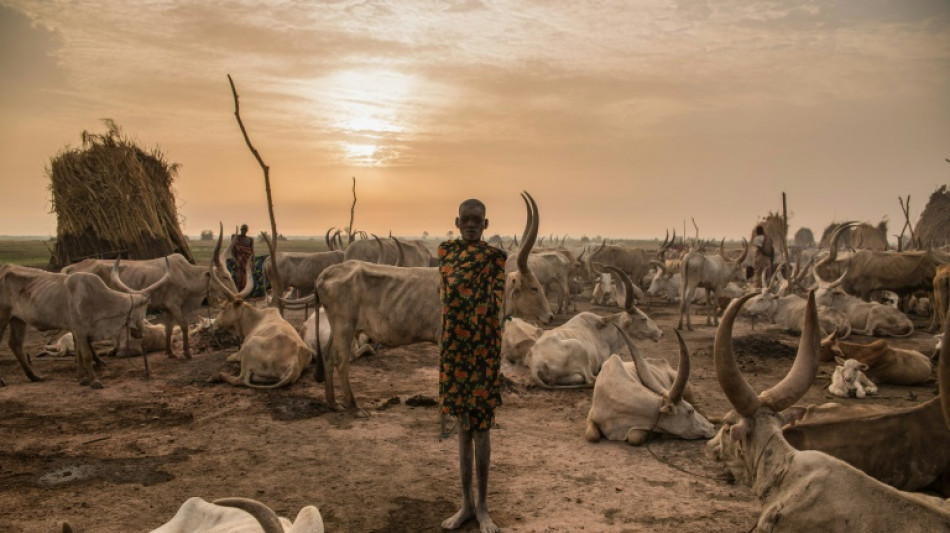
Heat stress could threaten health of one billion cows / Photo: © AFP

Heat stress could threaten health of one billion cows

By the end of century, more than one billion cows worldwide could suffer from heat stress if global warming continues unabated, threatening their fertility, milk production and lives, according to research published on Thursday.

Text size:

Nearly eight out of 10 cows across the planet are already experiencing excessively high body temperatures, spiked respiration rates, bowed heads and open-mouthed panting -- all symptoms associated with severe heat stress, the study said.

In tropical climates, 20 percent of cattle endure those symptoms year-round.

These numbers are projected to balloon if cattle farming continues to expand in the Amazon and Congo basins, where temperatures are on track to rise more quickly than the global average.

If emissions of climate-heating greenhouse gases continue to rise, the study predicts heat stress will become a year-round problem in Brazil, southern Africa, northern India, northern Australia and central America by 2100.

"A very important determinant of how many cows are exposed to this heat is decisions about land-use change," lead author Michelle North of University of KwaZulu-Natal in South Africa told AFP.

"Deforestation of tropical forests for livestock expansion is not a viable development future, because it makes climate change worse and will expose hundreds of millions more cattle to severe heat stress," she added.

The study, published in Environmental Research Letters, found that in a worst-case scenario, cattle husbandry will nearly double in Asia and Latin America and increase more than fourfold in Africa.

- Losing livelihoods -

If greenhouse gases are curbed sufficiently -- including by cutting the use of fossil fuels and by limiting the expansion of cattle farming -- the number of cows suffering could be reduced by half in Asia and by four-fifths in Africa.

Commercial ranchers stand to lose a lot of money from heat stress. It already costs as much as 1.7 billion dollars annually in the United States alone.

But these farmers usually have insurance, good relations with banks and the ability to draw on loans to help them recover from heat-related losses, said North.

When heat or other climate disasters hit small-scale farmers, however, "it can lead to farmers literally losing their livelihoods, even if the net losses may appear 'negligible'", she said.

North and her team found that global milk supplies would be reduced by 11 million tonnes per year by 2050 under a high greenhouse gas emission scenario.

If emissions are aggressively reduced, nearly half of that amount would still be lost, mostly in Asia and Africa, where milk supplies are already low.

In the near term, overheated cows can be helped by providing them with access to shade and fans, and feeding them earlier in the day.

M.McCoy--TFWP