The Fort Worth Press - Adding peanuts to young children's diet can help avoid allergy: study

USD -
AED 3.672499
AFN 64.000163
ALL 82.459813
AMD 376.320031
AOA 916.999894
ARS 1387.017863
AUD 1.421676
AWG 1.8
AZN 1.695079
BAM 1.671981
BBD 2.012823
BDT 122.815341
BHD 0.377276
BIF 2970.5
BMD 1
BND 1.273995
BOB 6.905365
BRL 5.1008
BSD 0.999316
BTN 92.260676
BWP 13.408103
BYN 2.916946
BYR 19600
BZD 2.009908
CAD 1.38539
CDF 2300.999702
CHF 0.791815
CLF 0.022797
CLP 897.240136
CNY 6.83625
CNH 6.835615
COP 3649.77
CRC 464.865789
CUC 1
CUP 26.5
CVE 94.849798
CZK 20.916898
DJF 177.720115
DKK 6.408303
DOP 60.649653
DZD 132.463001
EGP 53.252598
ERN 15
ETB 155.625045
EUR 0.85755
FJD 2.214899
FKP 0.744078
GBP 0.74685
GEL 2.685013
GGP 0.744078
GHS 11.015012
GIP 0.744078
GMD 73.000145
GNF 8780.000092
GTQ 7.645223
GYD 209.079369
HKD 7.834155
HNL 26.620024
HRK 6.460999
HTG 131.013289
HUF 324.049489
IDR 17074.9
ILS 3.096015
IMP 0.744078
INR 92.72225
IQD 1310
IRR 1315000.000268
ISK 123.320093
JEP 0.744078
JMD 157.315666
JOD 0.709021
JPY 158.856011
KES 129.195659
KGS 87.449743
KHR 4013.999891
KMF 424.500704
KPW 899.95413
KRW 1482.585038
KWD 0.30894
KYD 0.832781
KZT 477.797202
LAK 21962.506225
LBP 89531.243299
LKR 315.00748
LRD 184.201822
LSL 16.615039
LTL 2.95274
LVL 0.60489
LYD 6.34497
MAD 9.305006
MDL 17.208704
MGA 4137.503608
MKD 52.852464
MMK 2099.780124
MNT 3575.250437
MOP 8.062591
MRU 40.098027
MUR 46.579771
MVR 15.459947
MWK 1737.000218
MXN 17.44645
MYR 3.982973
MZN 63.959478
NAD 16.609838
NGN 1379.526725
NIO 36.730379
NOK 9.58785
NPR 147.619434
NZD 1.71528
OMR 0.384506
PAB 0.999308
PEN 3.40375
PGK 4.310187
PHP 59.732028
PKR 279.000192
PLN 3.64719
PYG 6482.581748
QAR 3.646016
RON 4.368702
RSD 100.629368
RUB 78.533888
RWF 1460.5
SAR 3.752889
SBD 8.04851
SCR 14.899105
SDG 600.999953
SEK 9.32866
SGD 1.275101
SLE 24.650265
SOS 571.502969
SRD 37.553991
STD 20697.981008
STN 21.44
SVC 8.744604
SYP 110.553826
SZL 16.615015
THB 32.049014
TJS 9.498763
TMT 3.5
TND 2.891968
TRY 44.56189
TTD 6.778082
TWD 31.824299
TZS 2605.000387
UAH 43.307786
UGX 3697.197396
UYU 40.598418
UZS 12230.0006
VES 474.416899
VND 26321
VUV 119.534712
WST 2.769292
XAF 560.735672
XAG 0.013519
XAU 0.000212
XCD 2.70255
XCG 1.8011
XDR 0.698977
XOF 564.0003
XPF 102.550256
YER 238.575016
ZAR 16.425039
ZMK 9001.173951
ZMW 19.112505
ZWL 321.999592
  • RBGPF

    -13.5000

    69

    -19.57%

  • CMSC

    0.1500

    22.29

    +0.67%

  • RELX

    0.5700

    33.93

    +1.68%

  • CMSD

    0.2100

    22.5

    +0.93%

  • BCC

    4.5200

    79.23

    +5.7%

  • GSK

    1.5300

    57.37

    +2.67%

  • RIO

    3.7900

    98.45

    +3.85%

  • NGG

    2.4400

    89.96

    +2.71%

  • BTI

    1.1500

    59.95

    +1.92%

  • BCE

    0.2900

    24.12

    +1.2%

  • RYCEF

    -0.5000

    15.25

    -3.28%

  • JRI

    0.1600

    12.85

    +1.25%

  • BP

    -1.3500

    45.89

    -2.94%

  • AZN

    3.4600

    204.27

    +1.69%

  • VOD

    0.4600

    15.77

    +2.92%

Adding peanuts to young children's diet can help avoid allergy: study


Adding peanuts to young children's diet can help avoid allergy: study

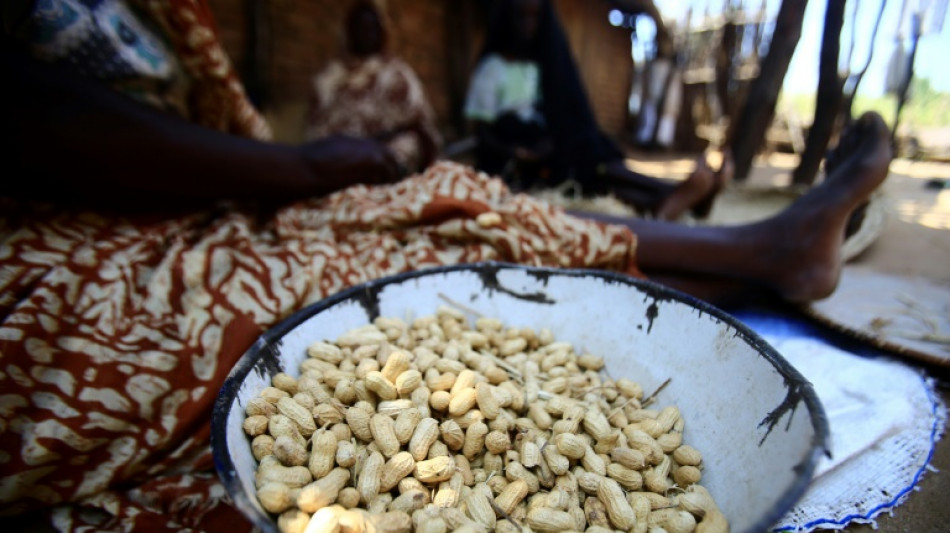
Including peanuts in children's diets early in life could help stave off allergies against the legume, which can be fatal and affect swathes of youngsters globally, according to a new study Friday.

Text size:

Researchers found that introducing peanut products to babies and infants, and gradually increasing exposure, led to greater tolerance for the common allergen.

The peer-reviewed study, published in The Lancet, involved 146 peanut-allergic children aged between zero and three over two-and-a-half years.

Of the group, 96 were given peanut protein powder every day, with the dose increasing progressively to the equivalent of six peanuts. The other children received a placebo of oat flour.

Twenty of the children who received peanut powder showed allergy remission, meaning no allergic reaction occurred six months after the therapy ended.

One child in the placebo group showed remission.

Six months after the treatment, the children in remission could tolerate a dose equivalent to 16 peanuts.

An additional 20 children who received peanut powder were considered 'desensitised', meaning they had a higher allergic threshold but were not considered in remission.

These children could tolerate a dose equivalent to between six and 12 peanuts six months after the treatment ended.

The youngest children in the study experienced remission the most often, and the best results were in those under 12 months.

"Very early interventions may provide the best opportunity to achieve remission", said co-author Stacie Jones.

- 'Considerable burden' -

Peanut allergies affect two percent of children in Western countries, according to the study, and can last a lifetime.

Affected children must avoid eating peanuts and have self-injectable adrenaline available to fight allergic shocks, which can be fatal if they are accidentally exposed.

Exposure can even occur when a child hugs someone who has just consumed peanuts.

"There are no treatment options, resulting in a considerable burden on allergic children and their caregivers to avoid accidental exposure," said co-author Wesley Burks.

"In severe cases, this can restrict peanut-allergic children's freedoms, particularly when it comes to navigating daycare or schools and public spaces where access to a safe diet is in jeopardy," he added.

Previous studies have produced similar results but the length of the latest studies makes it unique.

Although it provided important results, it may not reflect the behaviour of the children's bodies in real-world conditions.

The study was conducted under close medical supervision, and adrenaline injections were administered on 21 children during the trial.

G.George--TFWP