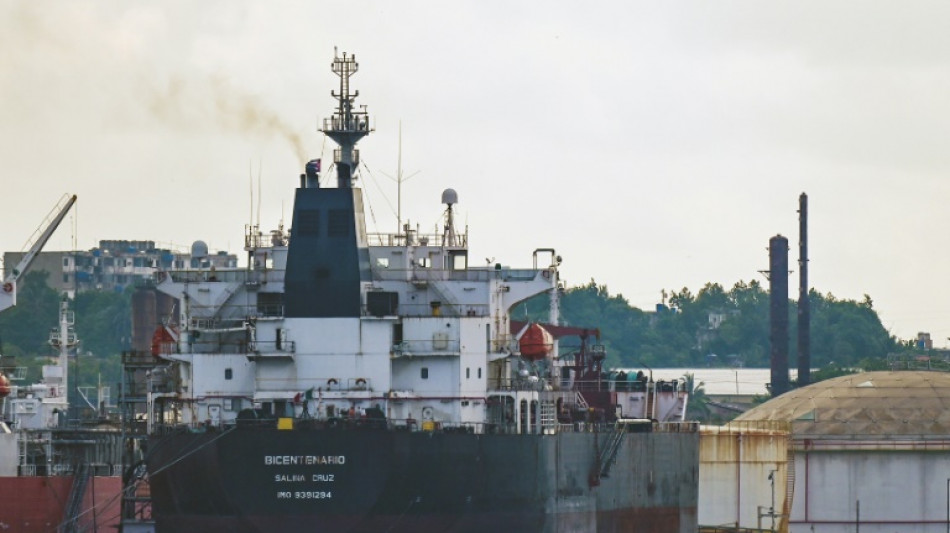
Mexican and Russian oil shipments ease Cuban fuel crisis / Photo: © AFP

With oil tankers docking from Mexico and Russia in recent days, Cuba could see its severe fuel shortage ease for the near future.
Since the end of March, endless lines of cars queuing for gasoline have been a common site on the Communist Party-ruled island, and service stations have created WhatsApp groups to organize customers.
Cuba, under US embargo, is going through its worst economic crisis in three decades. It only produces a third of the fuel it needs each day, while residents navigate blackouts and food shortages.
According to shipping tracker Vessel Finder, Mexican tanker Bicentenario, with an estimated cargo of 265,000 barrels of oil, arrived at the port of Havana on Tuesday. The ship was anchored at the Nico Lopez refinery in the capital, AFP confirmed.
At the end of May, Cameroonian-flagged supertanker Limo, en route from Russia, arrived at the port of Matanzas with some 800,000 barrels.
Vicente de la O Levy, minister of energy and mines, had in recent weeks declared "there will be a recovery" from fuel shortages, "and a decrease in uncomfortable queues."
With a processing capacity of 22,000 barrels per day at the Havana refinery, the capital could be supplied for up to three weeks, said Jorge Pinon, director of the Latin America and Caribbean Energy and Environmental Program at the University of Texas.
- Looking for partners -
Tuesday's arrival of the Bicentenario is the third such shipment this year, said Pinon. State-owned Petroleos Mexicanos did not respond to a request for comment.
Mexico, led by leftist President Andres Manuel Lopez Obrador, is pursuing a policy of both pushing for an end to US sanctions on Cuba while also maintaining a dialogue with Washington and cordial hemispheric relations, said Arturo Lopez-Levy, a visiting professor at the Autonomous University of Madrid.
Relations between Moscow and Havana, meanwhile, have intensified in recent months, with an uptick in bilateral projects and visits between senior officials.
But it can be difficult for Cuba to pay for the oil. Sometimes, countries ship the oil on credit, or in exchange for Cuban doctors coming to work in the country shipping the oil.
"Cuba does not have money and I doubt that it will pay for that oil," said Pinon. "I assume that Mexico, instead of paying in cash for the shipment of Cuban doctors, is doing it with oil, as Venezuela does."
- Chevron vs. Cuba -
Cuba has faced a multitude of fuel difficulties recently, including a fire at its main fuel storage center in Matanzas, and a drop in shipments from Venezuela, a regional ally.
Even with shipments from allies, the country often runs a deficit of at least 20,000 barrels a day, said Pinon.
The decision by Washington earlier this year to authorize US oil producer Chevron to expand production in sanctioned Venezuela and resume exports of its oil, is also hitting Cuba.
But if tensions between the United States and Venezuela can further ease -- like they did last year to allow Chevron to strike a major deal in Venezuela -- that could free up more oil that could make its way to Cuba, said Lopez Levy.
Getting the oil to consumers is another problem. Because Cuban refineries do not have the capacity to process untreated Venezuelan crude, the island's government had to resell a shipment from Caracas last month because it couldn't use it.
C.M.Harper--TFWP