US private hiring, services activity cool in March / Photo: © AFP/File

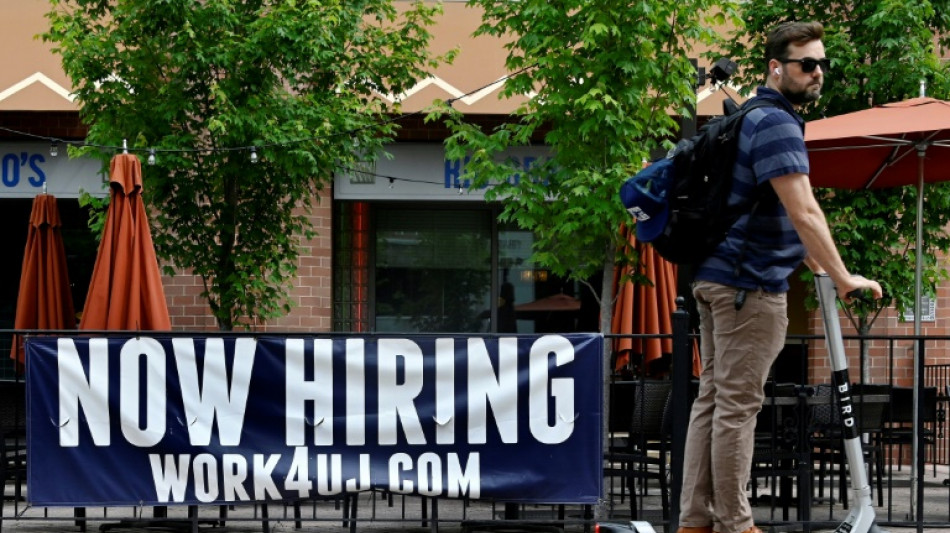
US private employers slowed their hiring pace in March while services sector activity eased, separate surveys showed Wednesday, in signs that the economy is cooling following efforts to contain inflation.
Private employers added 145,000 jobs last month, markedly lower than the revised 261,000 figure in February and weaker than analysts expected, according to payroll firm ADP.
Meanwhile, the Institute for Supply Management's (ISM) services index recorded a 51.2 percent reading in March, down from February's figure.
A number above 50 signals the services sector is still expanding but ISM survey chair Anthony Nieves said the pullback in growth was due in part to slower new orders and a mixed employment environment.
A strong labor market may encourage optimism that the United States can avoid a major recession after a quick succession of interest rate hikes by the central bank, but policymakers have been eyeing job market tightness and wage growth, which can feed into inflation.
"Our March payroll data is one of several signals that the economy is slowing," ADP chief economist Nela Richardson said in a statement on Wednesday.
"Employers are pulling back from a year of strong hiring and pay growth, after a three-month plateau, is inching down," she added.
While sectors like leisure and hospitality continued to see larger gains in employment, areas such as financial activities and professional services saw declines.
In March, pay growth decelerated also, with annual gains slipping to 6.9 percent for workers who did not change jobs, according to the recently revamped ADP report which includes wage data.
For workers who changed jobs, pay growth was at 14.2 percent, cooling slightly as well.
The data offers a preview of the government employment report due on Friday, although ADP's figures do not always align with official numbers.
Overall, labor data has indicated the market is "only gradually softening in response to a rapid increase in interest rates," said Rubeela Farooqi, chief US economist at High Frequency Economics.
But the impact is expected to broaden as monetary policy ripples through the economy, she said.
- Recession risk -
For now, most services industries are reporting growth in March, according to the ISM report.
"Restaurant sales remain favorable compared to pre-pandemic trends. Traffic is recovering and nearly flat. We are optimistic about the coming months," said a respondent in the accommodation and food services sector.
Other businesses added that supply chains are back to normal.
But in the broader picture, Kieran Clancy of Pantheon Macroeconomics told AFP that while his earlier expectations were for the US to avoid recession this year, this has changed with recent banking sector turmoil amid the failure of three medium-sized US banks.
"It's pretty clear now that there's going to be a very big tightening in credit standards in response to the banking failures," he said.
He added that while there has been an increase in liquidity in the system, banks may not lend this out but instead use it to shore themselves up in case conditions worsen -- and a dip in lending could prompt the slip into negative territory.
F.Garcia--TFWP