The Fort Worth Press - A fifth of new cars in California zero-emission in 2022: data

USD -
AED 3.673008
AFN 64.503214
ALL 80.819685
AMD 361.405228
ANG 1.789785
AOA 917.000132
ARS 1525.743205
AUD 1.42204
AWG 1.80125
AZN 1.694926
BAM 1.741787
BBD 2.015015
BDT 123.745402
BGN 1.747831
BHD 0.377604
BIF 3000.997453
BMD 1
BND 1.278059
BOB 11.730759
BRL 5.0336
BSD 1.000472
BTN 94.559477
BWP 13.70595
BYN 2.971479
BYR 19600
BZD 2.012094
CAD 1.40468
CDF 2315.999614
CHF 0.823985
CLF 0.02484
CLP 977.639757
CNY 6.67805
CNH 6.673855
COP 3194.48
CRC 455.529135
CUC 1
CUP 24.010794
CVE 98.199695
CZK 21.58565
DJF 177.720049
DKK 6.651515
DOP 61.440772
DZD 134.600855
EGP 54.383604
ERN 15
ETB 163.87083
EUR 0.88984
FJD 2.253797
FKP 0.747587
GBP 0.74635
GEL 2.589651
GGP 0.747587
GHS 11.660299
GIP 0.747587
GMD 73.49688
GNF 8854.987666
GTQ 7.645587
GYD 209.311853
HKD 7.846885
HNL 26.857072
HRK 6.703799
HTG 131.084908
HUF 325.065498
IDR 18027.05
ILS 3.088402
IMP 0.747587
INR 94.43255
IQD 1516.6493
IRR 1832374.999738
ISK 121.269746
JEP 0.747587
JMD 158.780625
JOD 0.709015
JPY 158.134988
KES 129.859579
KGS 87.449845
KHR 4068.146802
KMF 439.503571
KPW 899.999961
KRW 1325.979763
KWD 0.31018
KYD 0.833753
KZT 446.890557
LAK 22518.390538
LBP 89591.044298
LKR 332.14739
LRD 170.580744
LSL 16.412051
LTL 2.95274
LVL 0.60489
LYD 6.419294
MAD 9.819615
MDL 17.998442
MGA 4521.489767
MKD 54.903951
MMK 2099.21541
MNT 3597.533576
MOP 8.085932
MRU 40.128421
MUR 47.319959
MVR 15.459751
MWK 1734.751129
MXN 18.645615
MYR 4.081198
MZN 63.902977
NAD 16.412051
NGN 1331.830194
NIO 36.816372
NOK 9.371645
NPR 151.295341
NZD 1.75332
OMR 0.384501
PAB 1.000481
PEN 3.438421
PGK 4.479652
PHP 63.399499
PKR 276.89823
PLN 3.87625
PYG 5756.677086
QAR 3.647261
RON 4.753003
RSD 104.53802
RUB 82.104013
RWF 1478.615162
SAR 3.748965
SBD 8.07458
SCR 13.97401
SDG 601.492558
SEK 9.878845
SGD 1.27707
SHP 0.7473
SLE 23.919966
SLL 20969.504398
SOS 571.749178
SRD 37.735499
STD 20697.981008
STN 21.819089
SVC 8.754392
SYP 13001.999685
SZL 16.418788
THB 33.570497
TJS 9.214157
TMT 3.51
TND 2.986543
TOP 2.40776
TRY 49.598465
TTD 6.792416
TWD 32.411301
TZS 2644.999678
UAH 45.047334
UGX 4207.076509
UYU 40.164934
UZS 11975.562621
VES 879.788897
VND 25856.5
VUV 119.136032
WST 2.774679
XAF 583.696876
XAG 0.017313
XAU 0.000241628771
XCD 2.70255
XCG 1.803058
XDR 0.707052
XOF 583.696876
XPF 106.20998
YER 236.101147
ZAR 16.360597
ZMK 9001.202969
ZMW 20.069287
ZWL 321.999592
SSP 5787.554334
MXV 2.10465
  • RIO

    -0.3300

    97.04

    -0.34%

  • CMSC

    -0.0400

    20.67

    -0.19%

  • RELX

    0.0000

    33.41

    0%

  • RBGPF

    0.0000

    67.95

    0%

  • BCE

    -0.0700

    21.99

    -0.32%

  • BCC

    -0.0300

    75.66

    -0.04%

  • GSK

    0.8600

    51.08

    +1.68%

  • JRI

    -0.0300

    11.52

    -0.26%

  • NGG

    -0.1200

    76.68

    -0.16%

  • CMSD

    0.0900

    20.54

    +0.44%

  • BTI

    -0.0800

    55.75

    -0.14%

  • AZN

    2.0200

    168.1

    +1.2%

  • BP

    -1.4200

    43.16

    -3.29%

  • RYCEF

    0.4600

    19.7

    +2.34%

  • VOD

    0.0700

    17.02

    +0.41%

A fifth of new cars in California zero-emission in 2022: data
A fifth of new cars in California zero-emission in 2022: data / Photo: © AFP

A fifth of new cars in California zero-emission in 2022: data

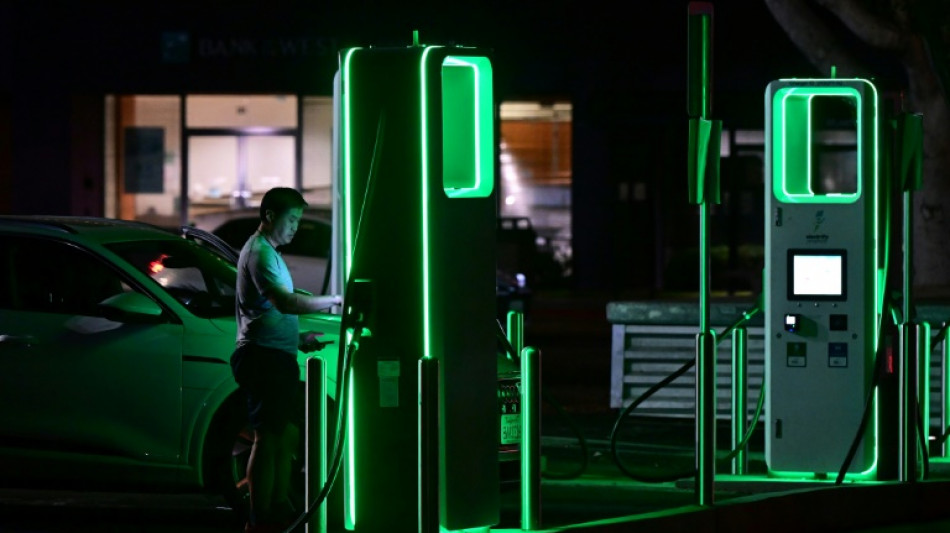
One-in-five new cars sold in California in 2022 was a zero-emission vehicle, the state said Friday, as the largest car market in the United States charges towards its goal of electrifying its fleet.

Text size:

Last year officials set ambitious targets for boosting the number of electric vehicles (EVs) and plug-in hybrid vehicles (PHEVs) on the roads, as they look to slash planet-warming gases produced by combustion engines.

The California Air Resources Board announced in August the sale of new gasoline and diesel-powered cars would be eliminated by 2035, setting an aggressive timeline to phase them out.

On Friday the California Energy Commission said 18.8 percent of new cars sold in the state in 2022 were EVs, PHEVs or fuel cell electric vehicles, all of which California includes in its zero-emission category.

Ten years ago, that figure was two percent.

"California continues to lead the zero-emission vehicle revolution with groundbreaking policies and investments that drive innovation, create good jobs and expand (zero-emission vehicle) access and affordability across the state,” said Governor Gavin Newsom.

"Keeping our focus on the communities that are most impacted by the intensifying climate crisis, we’ll keep pushing ahead to make our clean transportation future a reality in California."

Data showed Tesla continued to dominate the market for EVs, with around two-thirds of the 346,000 zero-emission vehicles sold in the year being made by Elon Musk's company.

California already accounts for the lion's share of electric vehicles in the United States, with 1.4 million of them on the state's roads, and around 40 percent of all ZEV sales in the US are in the state.

Their popularity has mushroomed in the years since they were seen as little more than novelty golf carts for tree-huggers who were content to drive no more than a few dozen miles (kilometers).

Mainstream manufacturers like Ford and Mercedes are rushing headlong into the market, producing everything from small runarounds to luxury sedans to heavy duty pick-ups.

Still, the vehicles remain more expensive than their fossil fuel-powered equivalents, and critics say only federal subsidies of up to $7,500 make them viable for many buyers.

But supporters say the incentives are necessary short-term supports that will fade away as increased adoption boosts economies of scale and drives down prices.

As the biggest auto market in the United States, California has an outsized influence on national standards.

Environmentalists hope that as manufacturers fall into line with California's rules and produce more attractive, cheaper EVs, opposition from less liberal states will be overcome, and America can be weaned off its addiction to gas-guzzling cars.

Human-caused global warming has already raised average temperatures around the planet, affecting weather patterns and worsening natural hazards like wildfires and storms.

Scientists say dramatic action is required to limit the damage, and point to curbing emissions from fossil fuels as key to the battle.

K.Ibarra--TFWP