Ethiopia starts generating power at Nile mega-dam

Ethiopia began generating electricity from its mega-dam on the Blue Nile on Sunday, a milestone in the controversial multi-billion dollar project.
Prime Minister Abiy Ahmed, accompanied by high-ranking officials, toured the power station and pressed a series of buttons on an electronic screen, a move that officials said initiated production.
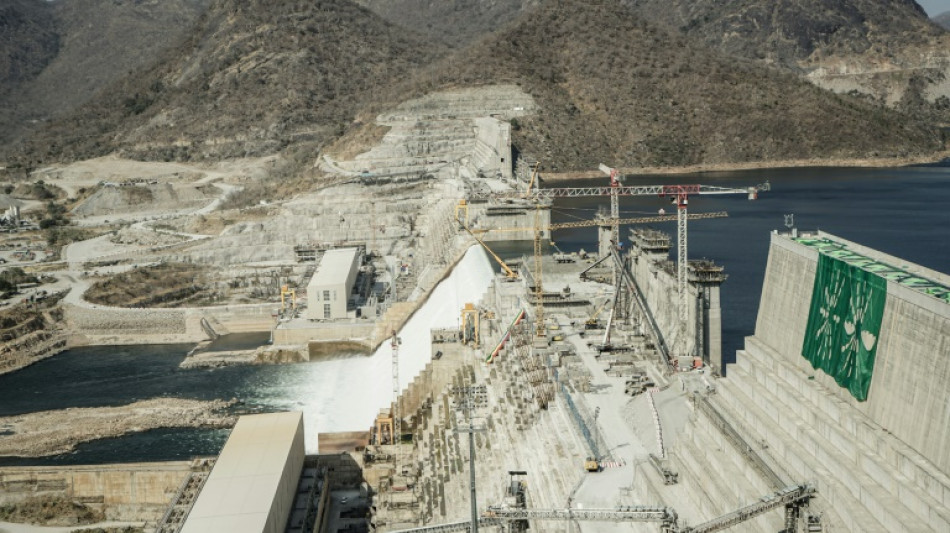
The Grand Ethiopian Renaissance Dam (GERD) is set to be the largest hydroelectric scheme in Africa but has been at the centre of a dispute with downstream nations Egypt and Sudan ever since work first began in 2011.
Abiy described Sunday's development as "the birth of a new era".
"This is a good news for our continent & the downstream countries with whom we aspire to work together," he said on Twitter.
Addis Ababa deems the project essential for the electrification and development of Africa's second most populous country, but Cairo and Khartoum fear it could threaten their access to vital Nile waters.
Abiy, wearing sunglasses and a khaki-coloured hat emblazoned with the Ethiopian flag as he toured the site, dismissed those concerns.
"As you can see this water will generate energy while flowing as it previously flowed to Sudan and Egypt, unlike the rumours that say the Ethiopian people and government are damming the water to starve Egypt and Sudan," he said as water rushed through the concrete colossus behind him.
But Cairo denounced Sunday's start-up, with the foreign ministry saying Addis Ababa was "persisting in its violations" of a declaration of principles on the project signed by the three nations in 2015.
- 'Resisting external pressure' -
The $4.2-billion (3.7-billion-euro) dam is ultimately expected to produce more than 5,000 megawatts of electricity, more than doubling Ethiopia's current output.
Only one of 13 turbines is currently operational, with an installed capacity of 375 megawatts.
A second will come online within a few months, project manager Kifle Horo told AFP, adding that the dam is currently expected to be fully completed in 2024.
The 145-metre (475-foot) high structure straddles the Blue Nile in the Benishangul-Gumuz region of western Ethiopia, near the border with Sudan.
Egypt, which depends on the Nile for about 97 percent of its irrigation and drinking water, sees the dam as an existential threat.
Sudan hopes the project will regulate annual flooding, but fears its own dams could be harmed without agreement on the GERD's operation.
Both have long been pushing for a binding deal over the filling and operation of the massive dam, but African Union-sponsored talks have failed to achieve a breakthrough.
William Davison, senior analyst at the International Crisis Group, said the GERD is seen domestically "as a symbol of Ethiopia resisting external pressure".
"The government has propagated the idea that foreign actors are trying to undermine Ethiopia's sovereignty, so I think this will be cast as showing they are still making progress despite a hostile environment."
Addisu Lashitew of the Brookings Institution in Washington added that the GERD's commissioning was a "rare positive development that can unite a deeply fractured country" after 15 months of brutal conflict with Tigrayan rebels.
"The newly-generated electricity from the GERD could help revive an economy that has been devastated by the combined forces of a deadly war, rising fuel prices and the Covid-19 pandemic," he said.
- Project delays -
The dam was initiated under former prime minister Meles Zenawi, the Tigrayan leader who ruled Ethiopia for more than two decades until his death in 2012.
Civil servants contributed one month's salary towards the project in the year of the project launch, and the government has since issued dam bonds targeting Ethiopians at home and abroad.
But officials on Sunday credited Abiy with reviving the dam after what they claim was mismanagement delayed its progress.
"Our country has lost so much because the dam was delayed, especially financially," project manager Kifle said at the launch ceremony.
The process of filling the GERD's vast reservoir began in 2020, with Ethiopia announcing in July of that year it had hit its target of 4.9 billion cubic metres.
The reservoir’s total capacity is 74 billion cubic metres, and the target for 2021 was to add 13.5 billion.
Last July Ethiopia said it had hit that target, meaning there was enough water to begin producing energy, although some experts had cast doubt on the claims.
Kifle declined to reveal how much water was collected last year or what the target is for the coming rainy season.
P.Grant--TFWP