Prepay meters worsen energy inequality in UK / Photo: © AFP

A bitter cold descends on snow-topped terraced houses in the north London suburb of Arnos Grove, as Samantha Pierre-Joseph warms her living room with a small whirring fan heater.
The home, bedecked with snowflake decorations and a Christmas tree, has the central heating switched off to save cash as energy bills rocket but temperatures plunge.
Pierre-Joseph, 40, who lives with her grown-up daughter, was recently switched to a prepayment meter by her supplier following a debt dispute.
She now pays more for electricity and gas than the old direct-debit payment system, worsening the cost-of-living crisis as prices of food and other essentials also soar.
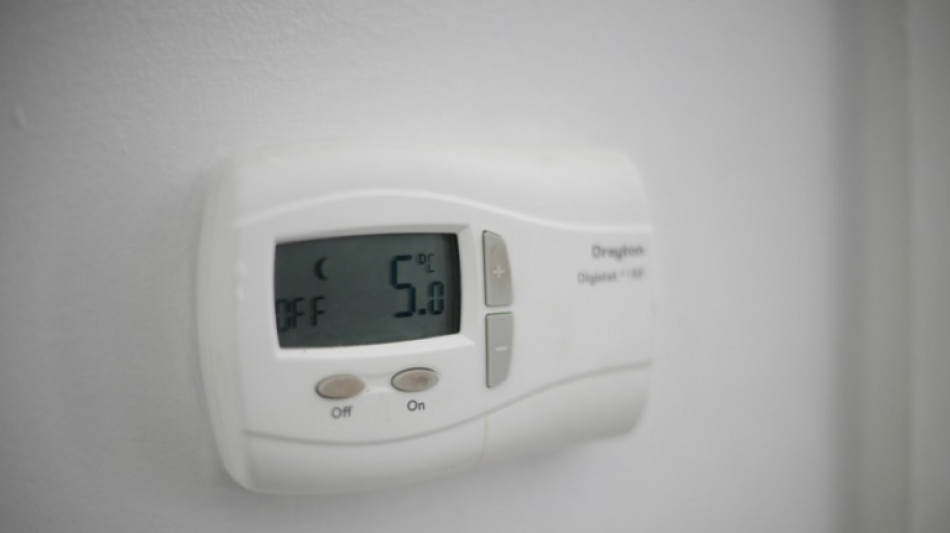
More than two million UK homes are connected via such smart prepay devices which link up to suppliers and use remote credit payment.
Another two million households have older prepay meters which use electronic keys or cards that are charged up at local shops.
- 'Top up now' -
"About six weeks ago, I came home from shopping and I went into my kitchen, put bags down and looked at my smart meter," Pierre-Joseph told AFP.
"And it had a message that said, 'Top up now', and had about £3 ($3.60) on there, which was really odd."
Credit can be purchased online, over the phone or via the post office and a network of small shops.
Domestic energy prices have rocketed across Europe this year following key gas producer Russia's invasion of Ukraine.
And people with prepayment meters -- who tend to be poorer -- have been the worst affected because they charge in advance and cost more, according to Peter Smith, policy director at fuel poverty charity National Energy Action.
In contrast, a direct-debit billing system allows consumers to spread the cost and access cheaper tariffs under normal market conditions.
"We know that households on prepayment meters have been the hardest hit by the energy crisis (because) from day one they've had to pay for the soaring cost of energy upfront," Smith told AFP.
"It is a more expensive payment method compared to direct debit."
Consumer associations estimate that hundreds of thousands of UK homes could be forced into prepayment meters due to spiralling debts during the cold northern hemisphere winter.
Households are rarely disconnected for non-payment of energy bills by suppliers in Britain.
Instead, the real risk is "self-disconnection", where the poor face a stark choice between heating or eating -- and choose the latter.
Some "households just don't have the means to top up their energy meters and stop consuming energy in their home, much to the detriment of their health and well-being", Smith warned.
- 'Very challenging' -
UK energy regulator Ofgem has also expressed deep concern.
"We've become aware of possible failings in how some suppliers treat vulnerable smart meter consumers, including some customers being switched to prepayment meters without full regard to the customer's situation," it said.
"In extreme cases the reports we've received suggest this has led to some vulnerable customers being left without power for days or even weeks.
"This is completely unacceptable, especially as we head into a very challenging winter."
In Arnos Grove, Pierre-Joseph counts every single pound of electricity or gas.
"Basically, all of my appliances are off most of the time," she said.
"There's nothing that's on apart from the fridge, and obviously the boiler, and that's for hot water and stuff like that, everything else gets switched off.
"Nothing is left on unless you're actually using it."
She only heats one room at any one time and cooks only every two days to bring down costs.
Yet despite those efforts, she pays at least £60 onto her prepay meter per week.
- Anxiety -
"There's this anxiety, when you top up, you can see that literally the money is just going, going, going," she said, tapping the meter's touchscreen to display the balance.
"It's always people who have the least money who end up spending more."
Pierre-Joseph added that it was "really unfair" that some households, like hers, were forced to switch to costly prepay meters.
The UK government is currently partially subsidising energy bills for most Britons as a result of the ongoing crisis.
Consumers on modern prepay meters receive automatic payment under its Energy Price Guarantee policy.
Some two million households with older devices must apply for vouchers but around 40 percent of those eligible have not done so.
The Joseph Rowntree Foundation, an anti-poverty charity, estimates that more than three million UK families cannot afford to heat their homes -- and 710,000 of those households cannot afford warm clothes or sufficient food.
M.Delgado--TFWP