'In our blood': Egyptian women reclaim belly dance from stigma / Photo: © AFP

As belly dancing gains popularity internationally, young Egyptian performers are working to restore its reputation at home, pushing back against decades of stigma to reclaim the dance as part of their artistic heritage.
Once iconic figures of Egypt's cinematic golden age, belly dancers have watched their prestige wane, their art increasingly confined to nightclubs and wedding halls.
"No woman can be a belly dancer today and feel she's truly respected," said Safy Akef, an instructor and great-niece of dance legend Naima Akef, a fixture on the silver screen during the 1950s.
Despite her celebrated lineage, Safy, 33, has never performed on stage in Egypt.
"Once the show ends, the audience doesn't respect you, they objectify you," she told AFP.
Today, belly dance is known for skin-baring theatrics performed by foreign dancers and a handful of Egyptians.
The shift has fuelled moral disapproval in the conservative society and pushed even the descendants of iconic starlets away.
"People ask me all the time where they can see belly dancing that does justice to the art," said Safaa Saeed, 32, an instructor at a Cairo dance school.
"I struggle to answer," she told AFP.
Saeed, who was enchanted by Akef as a child, is now part of a movement led by choreographer Amie Sultan to reframe the art as part of Egyptian heritage, fit for theatres, festivals and UNESCO recognition.
- Colonial baggage -
A classically trained ballerina turned belly dancer, Sultan prefers to call what is formally known as oriental dance baladi, from the Arabic word "balad", meaning homeland.
"Baladi reflects the soul of who we are."
"But now it carries images of superficial entertainment, disconnected from its roots," she told AFP.
This disconnection, Sultan said, stems from shifting moral codes -- and colonial baggage.
In her book "Imperialism and the Heshk Beshk", author Shatha Yehia traces the artform's roots to ancient Egypt, but says the modern colloquial term only emerged in the 19th century, coined by French colonisers as danse du ventre, or "dance of the belly".
While descriptive, the phrase exoticised the movement and shaped perceptions both at home and abroad.
"Heshk beshk", an old onomatopoeic Egyptian expression evoking a performer's shaking moves, "is not merely a label for the dancer", Yehia writes.
"It is the Egyptian vernacular version of a femme fatale, the destructive woman who wields her body and feminine power to get what she wants. It's not just a label of vulgarity or immorality, it's synonymous with evil and debauchery."
Yehia argues that views on "heshk beshk" -- now shorthand for provocative, lowbrow dancing -- were shaped both by Western imperialism and local conservatism.
The fallout has been generational.
Akef's great-aunt was a star who "acted, danced and created iconic film tableaux".
But Safy instead has chosen to train others, including in Japan, where she spent three years teaching Egyptian folk and belly dance.
- 'Place of our own' -
Sultan launched the Taqseem Institute, named after the improvisational solos of Arabic music, in 2022.
Since then, dozens of women have been trained at the school, seven of whom now teach full-time.
The students are trained not only in choreography, but also in musicality, history and theory.
They study the evolution of Egyptian dance from pre-cinema figures like Bamba Kashshar and Badia Masabni through the golden age icons like Tahiya Carioca and Samia Gamal.
Sultan even takes the message to universities, giving talks to demystify the art form for new audiences, while her dancers work to preserve its history.
In 2023, she staged El-Naddaha, a performance blending Sufi themes with traditional and contemporary Egyptian movement.
Still, challenges remain.
"We want to have a place of our own -- like the old theatres -- a teatro where we can regularly perform," Saeed said.
Sultan is also pushing for official recognition.
She has begun the process of campaigning for the dance to be inscribed on UNESCO's Intangible Cultural Heritage list.
But the path is long and requires support from the country's culture authorities.
For the time being, the dancers at Taqseem focus on their next performance.
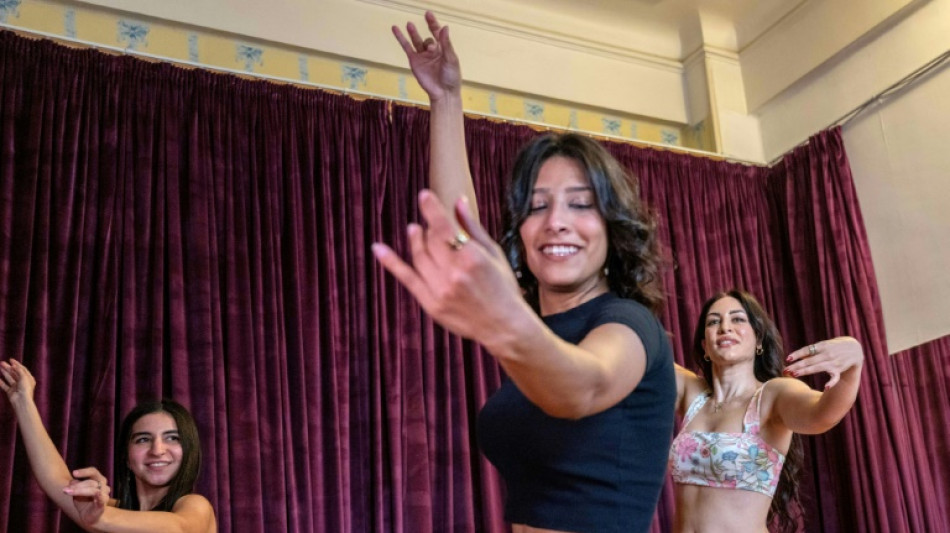
Barefoot and clad in fitted dancewear, they hold one final run-through, undulating to a melody by Egyptian diva Umm Kulthum as the beat of a tabla drum echoes.
It's a dream come true for Saeed, who has been dancing since she was a child.
"I believe it's in our blood," she said with a smile.
L.Coleman--TFWP