How Finnish youth learn to spot disinformation / Photo: © AFP

Finland is consistently ranked as Europe's most media literate country and the skills needed to spot online hoaxes are on the school curriculum, amidst a boom of mis- and disinformation campaigns.
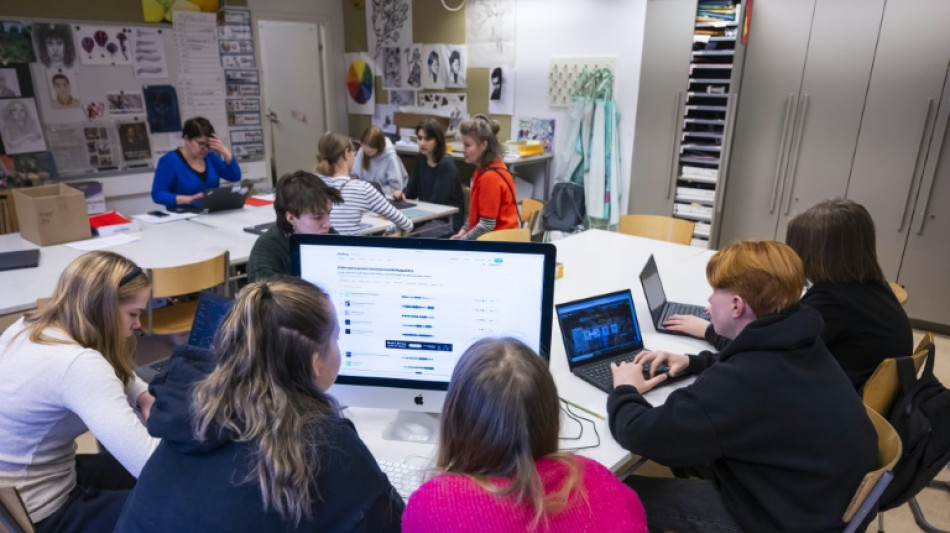
"Who knew what a troll was before?" literature and Finnish language teacher Saara Varmola asked her 14 to 15 year-old students who all promptly raised their hands during a class at a Helsinki school in November.
"Who produced the material that you watch, what do you produce yourself and whether you have an ethical responsibility," Varmola tells AFP, as she lists the critical questions to ask when living in a global information environment increasingly characterised by misleading information.
By teaching its citizens how to critically engage with media content to debunk hoaxes, mis- and disinformation, as well as to produce content of their own, Finland wants to promote media literacy as a civic skill.
The Nordic country was among the first in Europe to outline a national policy for media literacy in 2013.
Updated in 2019, the national policy ensures media literacy is integrated in subjects throughout education from early childhood to upper secondary classes.
To enhance skills among adults and the elderly, libraries and NGO's are offering courses.
"Media literacy is essential to building societal resilience, and Finland realised this quite early on," Anders Adlercreutz, Minister of Education, told AFP.
"As traditional media is responsible for less and less of the information we receive, it's especially important to be able to critically evaluate what you read," he added.
- 'Not immune to influence' -
The index compares 41 countries' resilience to disinformation based on indicators such as quality of education, media freedom and trust in society.
Neighbours Denmark, Norway, Estonia and Sweden trailed Finland's top ranking last year.
A collaborative approach between many sectors help explain Finland's success in promoting media literacy among its 5.5 million residents, according to Adlercreutz.
"It's not just the school, it's the media, the newspapers, businesses, the libraries, museums. Everybody sort of takes part in this work," he said.
According to Leo Pekkala, Deputy Director of Finland's National Audiovisual Institute (KAVI) -- an institution mandated to implement the country's media literacy policy -- it also boils down to Finns' trust in its societal institutions.
"We Finns still have a very strong trust in the defence forces, the army, the police and the government. We trust our politicians and we also trust the media", he said.
Still, between sharing a 1,340 kilometre (830 miles) border with Russia and facing the rise of artificial intelligence, Finland is not immune to the influence of dis- and misinformation campaigns, Adlercreutz warned.
"I'm not so sure that we have yet been tested fully in this matter", he said.
- Critical thinking key -
In the snow-covered school in Helsinki, Varmola handed out assignments to her students with questions related to online disinformation: 'Can youtubers and streamers mislead?', 'Is sponsored content a way of influencing through information?'
"Yes, youtubers and streamers and people on social media can do it. In my opinion, it's something you come across", 8th grader Bruno Kerman said in a discussiong with some of his fellow students.
"Yes, and who is preventing them?" classmate Niilo Korkeaoja continued.
The students said the education system had equipped them with abilities to spot suspicious information online, critically analyse content and verify sources they encounter on social media networks such as TikTok, Snapchat and Instagram.
"School has taught me to interpret messages in the media, also those written between the lines," Ronja Turunen, another student, said.
The country has a long tradition of promoting media skills among its citizens -- when its free comprehensive school system was introduced in the 1970's, the first education curriculum already referenced mass media education.
While education has evolved and adapted to the changing media environment and the advent of digital technologies, the key objective of teaching critical thinking has persisted, Pekkala noted.
"Our overall objective is to promote the kind of skills that will enable people to think and act critically and be active members of a democratic society," he said.
A major challenge now is to keep all its citizens up to date with the rapid changes in the digital sphere, including for the country's growing elderly population who may never have learned how to detect fake news on the internet.
C.Rojas--TFWP