In volatile election season, US companies battle 'brand disinformation' / Photo: © GETTY IMAGES NORTH AMERICA/AFP

From Google to Netflix, prominent US companies are battling internet boycott calls over their perceived political leanings in a polarizing election season that has exposed them to what researchers call "brand disinformation."
The online campaigns, which falsely claim both Netflix and Google are funding or favoring Democratic nominee Kamala Harris ahead of the November election, illustrate how brands are vulnerable to political falsehoods that can expose them to financial perils.
Those calling for a boycott, researchers say, include fake accounts on the platform X. The site is owned by Elon Musk, who has endorsed Donald Trump and appears to exert an outsized influence on voters through the platform, which has become a hotbed of disinformation.
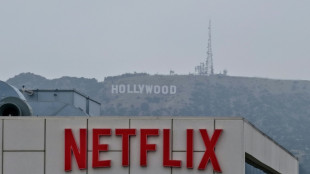
The recent boycott calls targeting Netflix, which also spread on other platforms such as TikTok and Instagram, were triggered by false claims of a $7 million donation from the streaming service to Harris's campaign, AFP fact-checkers reported.
Reed Hastings, the service's co-founder and executive chairman, made a contribution to Vice President Harris's campaign but the company said it was a "personal donation" and had "no connection to Netflix."
Still, calls to "cancel Netflix" flooded social media sites, with many users falsely claiming the company was indirectly funding the Harris campaign. Some shared screenshots of their canceled subscriptions.
Nearly a quarter of the boycott calls on X were traced to fake profiles, which have consistently expressed support for Trump through the past year, according to the disinformation security company Cyabra.
"Brand disinformation campaigns in today's polarized climate have far-reaching impacts beyond just corporate reputation," Dan Brahmy, Cyabra's chief executive, told AFP.
"The Netflix case demonstrates how rapidly these campaigns spread, potentially reaching hundreds of millions" and shows how "disinformation can manipulate public opinion and consumer behavior," he said.
- 'Delicate balancing act' -
As the hotly contested election nears, Brahmy cautioned, "brands must be vigilant."
Similar boycott calls recently targeted Google after unfounded claims that the company censors election-related content and manipulates search engine results in favor of Harris.
Cyabra identified hundreds of fake profiles on X –- many with a recent history of pro-Trump content -– which called for a boycott of the tech giant while promoting another search engine.
Musk, who has repeatedly criticized Google, played a "significant role in amplifying negative content" against the company, Cyabra said in a report.
In one evidence-free tweet in late July, Musk wrote: "Wow, Google has a search ban on President Donald Trump! Election interference?"
Google did not respond when AFP asked about the allegations, or about the impact of the boycott calls.
Earlier this month, a survey by the portal Sitejabber showed 30 percent of respondents had boycotted a brand over political reasons in the past 12 months, while 41 percent said they prefer that companies keep their "political positions private."
"Brands face a delicate balancing act this election year," Michael Lai, chief executive of Sitejabber, told AFP.
"While staying apolitical may seem safe, it's important for businesses to understand that even neutrality can be interpreted as a position."
- 'Chaos and distrust' -
Another survey by market research firm Certus Insights showed that consumers were divided over whether corporations should engage in partisan politics, with more than half the respondents saying companies should refrain from doing so.
Other surveys suggest consumers consider it the brand's fault if its advertising appears next to polarizing, false or defamatory content.
Such concerns have prompted many advertisers to abandon X, which has scaled back content moderation and restored once-banned accounts known to peddle disinformation or hate following Musk's 2022 acquisition of the platform.
Some also left in light of Musk's own controversial musings on the site.
Earlier this month, X sued an advertising group and several large corporations, accusing them of causing billions of dollars of losses by "illegally" boycotting his site.
"Disinformation creates chaos and distrust. Brands normally benefit from a well-informed society," Claire Atkin, co-founder and chief executive of the anti-disinformation watchdog Check My Ads, told AFP.
"On the internet, advertisers have let tech companies take their ads away from the news and straight into the arms of bad actors. Now, unfortunately, we are all experiencing the consequences."
J.Barnes--TFWP