The Fort Worth Press - New dyeing method could help jeans shrink toxic problem

USD -
AED 3.672501
AFN 63.501996
ALL 81.529489
AMD 375.111005
ANG 1.789884
AOA 917.999429
ARS 1378.523604
AUD 1.397917
AWG 1.8
AZN 1.700244
BAM 1.670018
BBD 2.021074
BDT 123.120931
BGN 1.668102
BHD 0.377212
BIF 2983.85754
BMD 1
BND 1.277223
BOB 6.933593
BRL 4.968599
BSD 1.003407
BTN 94.06767
BWP 13.491474
BYN 2.823304
BYR 19600
BZD 2.018171
CAD 1.366802
CDF 2310.999669
CHF 0.785097
CLF 0.022619
CLP 890.229815
CNY 6.824799
CNH 6.833425
COP 3571.47
CRC 457.171157
CUC 1
CUP 26.5
CVE 94.15346
CZK 20.80635
DJF 178.685179
DKK 6.383655
DOP 60.386896
DZD 132.512995
EGP 51.999482
ERN 15
ETB 157.950756
EUR 0.85425
FJD 2.217902
FKP 0.740532
GBP 0.741245
GEL 2.69013
GGP 0.740532
GHS 11.10817
GIP 0.740532
GMD 73.00022
GNF 8806.991628
GTQ 7.669581
GYD 209.952866
HKD 7.83231
HNL 26.659209
HRK 6.4376
HTG 131.351211
HUF 311.80799
IDR 17286.8
ILS 3.00559
IMP 0.740532
INR 94.047499
IQD 1314.468201
IRR 1319500.000189
ISK 122.840209
JEP 0.740532
JMD 158.959624
JOD 0.70899
JPY 159.553955
KES 129.149781
KGS 87.427401
KHR 4016.616359
KMF 421.00028
KPW 899.95002
KRW 1480.910083
KWD 0.30808
KYD 0.836208
KZT 464.965162
LAK 22138.636519
LBP 89858.937248
LKR 318.857162
LRD 184.634433
LSL 16.494808
LTL 2.95274
LVL 0.60489
LYD 6.345262
MAD 9.265398
MDL 17.188821
MGA 4161.845762
MKD 52.678579
MMK 2099.761028
MNT 3579.096956
MOP 8.094644
MRU 40.057552
MUR 46.74025
MVR 15.449665
MWK 1739.624204
MXN 17.34975
MYR 3.965497
MZN 63.910124
NAD 16.494808
NGN 1351.590305
NIO 36.930302
NOK 9.30164
NPR 150.509557
NZD 1.698215
OMR 0.3845
PAB 1.003488
PEN 3.448364
PGK 4.413987
PHP 60.424499
PKR 279.73666
PLN 3.62613
PYG 6311.960448
QAR 3.658464
RON 4.350301
RSD 100.242031
RUB 75.100648
RWF 1466.294941
SAR 3.750609
SBD 8.048395
SCR 14.13904
SDG 600.500392
SEK 9.226705
SGD 1.276355
SHP 0.746601
SLE 24.649815
SLL 20969.496166
SOS 573.470581
SRD 37.458014
STD 20697.981008
STN 20.921395
SVC 8.780484
SYP 110.632441
SZL 16.48863
THB 32.385499
TJS 9.447326
TMT 3.505
TND 2.91772
TOP 2.40776
TRY 44.924502
TTD 6.80289
TWD 31.544503
TZS 2595.000256
UAH 44.026505
UGX 3717.808593
UYU 39.893265
UZS 12170.349023
VES 482.15515
VND 26328
VUV 118.032476
WST 2.725399
XAF 560.113225
XAG 0.013156
XAU 0.000212
XCD 2.70255
XCG 1.80844
XDR 0.696601
XOF 560.115617
XPF 101.833707
YER 238.650268
ZAR 16.50625
ZMK 9001.197612
ZMW 19.090436
ZWL 321.999592
  • CMSC

    0.1700

    22.83

    +0.74%

  • BCC

    -0.2100

    82.24

    -0.26%

  • CMSD

    0.0900

    23.13

    +0.39%

  • RBGPF

    -13.5000

    69

    -19.57%

  • JRI

    -0.0500

    13

    -0.38%

  • BCE

    -0.1700

    23.73

    -0.72%

  • RIO

    2.5600

    100.28

    +2.55%

  • NGG

    1.3300

    85.6

    +1.55%

  • GSK

    -0.4200

    55.7

    -0.75%

  • BTI

    1.3400

    56.17

    +2.39%

  • BP

    0.4600

    46.37

    +0.99%

  • RYCEF

    -1.9600

    15.2

    -12.89%

  • RELX

    -0.8000

    36.27

    -2.21%

  • AZN

    -0.9700

    194.81

    -0.5%

  • VOD

    0.1200

    15.31

    +0.78%

New dyeing method could help jeans shrink toxic problem
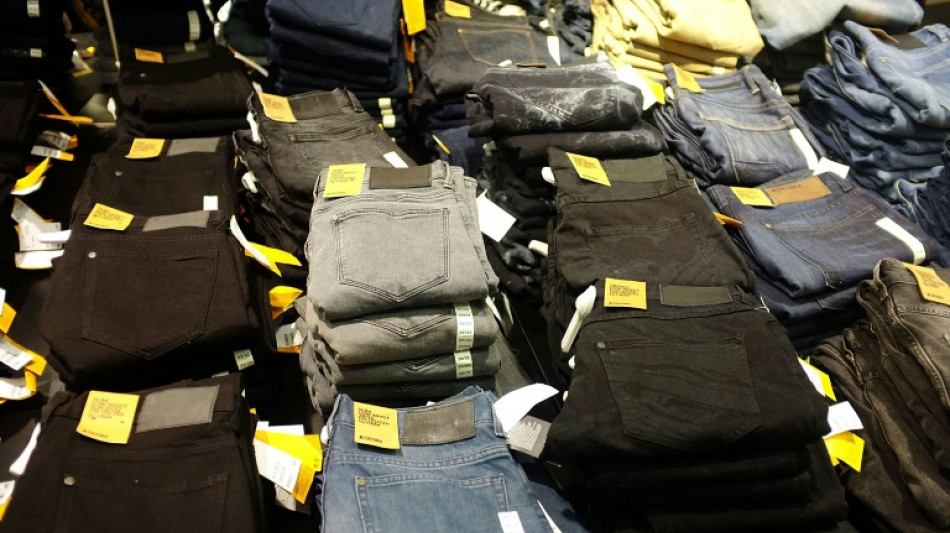
New dyeing method could help jeans shrink toxic problem / Photo: © GETTY IMAGES NORTH AMERICA/AFP/File

New dyeing method could help jeans shrink toxic problem

Can the multi-billion-dollar denim industry keep producing blue jeans in every shape, size and silhouette, while shrinking oversized levels of hazardous pollution? Research published Tuesday suggests a new dye could be a step in the right direction.

Text size:

Scientists have been searching for ways to make a more sustainable form of indigo, used for centuries to colour textiles, but which in its modern synthetic form needs toxic chemicals, large quantities of water and is linked to substantial carbon dioxide emissions.

But a study published in the journal Nature Communications suggests ditching the classic dye altogether.

Using Indican -- a colourless compound also derived form indigo-producing plants -- could reduce the environmental and societal impacts associated with dying jeans by around 90 percent because it does not need toxic chemicals, researchers said.

"It's been known for some years that indigo could be replaced by this other chemical called indican, because you can use it without any strong chemicals," study author Ditte Hededam Welner, a researcher at the Novo Nordisk Foundation Center for Biosustainability Enzyme Engineering and Structural Biology, told AFP.

The researchers engineered a variant of an enzyme found in the indigo-producing plant that could produce indican on an industrial scale.

While they said production of indican would still require polluting petrochemicals, so would not be significantly better than producing synthetic indigo, the benefits come when the dye is put to use.

Indican in powdered form can be dissolved in water then used on fabric and activated with either an enzyme or exposure to light.

The study found light-driven dyeing could cut the environmental damage of traditional indigo dyeing by 73 percent, while using the enzyme could slash the impacts by up to 92 percent.

In both cases, the classic blue jean colour turns up the same as when conventional indigo is used.

Researchers suggest that, if indican were to replace indigo to dye the nearly four billion jeans traded annually, there would be a significant reduction in production of toxic waste and global CO2 emissions.

The authors, who have a published patent for their study, acknowledged limitations to their work, including a lack of facilities to simulate indican production at scale.

Indican could also be slightly more expensive than traditional dye, they said.

But the study said growing consumer demand for sustainable clothing could still make indican "a commercially viable route".

D.Johnson--TFWP