The Fort Worth Press - Number of spider species creeps up to 50,000

USD -
AED 3.67315
AFN 63.495448
ALL 83.065048
AMD 376.960019
ANG 1.790083
AOA 917.000195
ARS 1385.9458
AUD 1.446341
AWG 1.8
AZN 1.704736
BAM 1.699144
BBD 2.014422
BDT 122.722731
BGN 1.709309
BHD 0.377573
BIF 2966
BMD 1
BND 1.288204
BOB 6.911051
BRL 5.157102
BSD 1.00013
BTN 93.154671
BWP 13.721325
BYN 2.963529
BYR 19600
BZD 2.011459
CAD 1.39165
CDF 2296.000491
CHF 0.79856
CLF 0.023224
CLP 916.999677
CNY 6.885603
CNH 6.88828
COP 3662.46
CRC 465.397112
CUC 1
CUP 26.5
CVE 95.874998
CZK 21.242698
DJF 177.719879
DKK 6.473803
DOP 60.724966
DZD 133.043328
EGP 54.231703
ERN 15
ETB 156.149758
EUR 0.8662
FJD 2.285973
FKP 0.750158
GBP 0.75565
GEL 2.684987
GGP 0.750158
GHS 11.025011
GIP 0.750158
GMD 73.999931
GNF 8774.999616
GTQ 7.651242
GYD 209.312427
HKD 7.83695
HNL 26.63065
HRK 6.528103
HTG 131.271448
HUF 332.924012
IDR 16972
ILS 3.125465
IMP 0.750158
INR 92.97395
IQD 1310
IRR 1319124.999929
ISK 125.110005
JEP 0.750158
JMD 157.682116
JOD 0.708974
JPY 159.479499
KES 130.099774
KGS 87.448799
KHR 4013.000017
KMF 426.999693
KPW 899.994443
KRW 1507.589857
KWD 0.30934
KYD 0.833496
KZT 473.939125
LAK 21949.999805
LBP 89550.000333
LKR 315.52795
LRD 183.800876
LSL 16.950349
LTL 2.95274
LVL 0.60489
LYD 6.390039
MAD 9.362501
MDL 17.597769
MGA 4165.00021
MKD 53.420757
MMK 2099.621061
MNT 3572.314592
MOP 8.074419
MRU 40.120444
MUR 46.949777
MVR 15.459392
MWK 1736.501301
MXN 17.85163
MYR 4.029901
MZN 63.950275
NAD 16.950151
NGN 1381.220207
NIO 36.714955
NOK 9.740215
NPR 149.047474
NZD 1.74857
OMR 0.384497
PAB 1.000126
PEN 3.452497
PGK 4.309015
PHP 60.319002
PKR 279.097754
PLN 3.705225
PYG 6469.6045
QAR 3.644998
RON 4.415195
RSD 101.742978
RUB 80.165707
RWF 1460
SAR 3.754117
SBD 8.038772
SCR 15.044443
SDG 600.999809
SEK 9.43223
SGD 1.284903
SHP 0.750259
SLE 24.64979
SLL 20969.510825
SOS 571.499729
SRD 37.351
STD 20697.981008
STN 21.625
SVC 8.75114
SYP 110.548921
SZL 16.949806
THB 32.597358
TJS 9.585632
TMT 3.51
TND 2.922498
TOP 2.40776
TRY 44.575798
TTD 6.78508
TWD 31.953096
TZS 2599.999804
UAH 43.803484
UGX 3752.226228
UYU 40.501271
UZS 12154.999988
VES 473.390501
VND 26336
VUV 120.132513
WST 2.770875
XAF 569.874593
XAG 0.013691
XAU 0.000214
XCD 2.70255
XCG 1.80252
XDR 0.703479
XOF 567.515562
XPF 103.84975
YER 238.649886
ZAR 16.935055
ZMK 9001.197205
ZMW 19.327487
ZWL 321.999592
  • BCC

    -1.8800

    73.2

    -2.57%

  • NGG

    1.1500

    87.99

    +1.31%

  • BTI

    0.3900

    58.28

    +0.67%

  • BCE

    -0.9300

    24.45

    -3.8%

  • CMSD

    0.1100

    22.26

    +0.49%

  • GSK

    0.7000

    56.69

    +1.23%

  • AZN

    2.7600

    203.49

    +1.36%

  • CMSC

    0.0500

    22.04

    +0.23%

  • RBGPF

    -13.5000

    69

    -19.57%

  • RIO

    -0.3600

    94.45

    -0.38%

  • JRI

    0.0900

    12.61

    +0.71%

  • VOD

    0.0800

    15.21

    +0.53%

  • RELX

    0.3600

    33.59

    +1.07%

  • RYCEF

    0.5500

    15.64

    +3.52%

  • BP

    0.9500

    47.12

    +2.02%

Number of spider species creeps up to 50,000


Number of spider species creeps up to 50,000

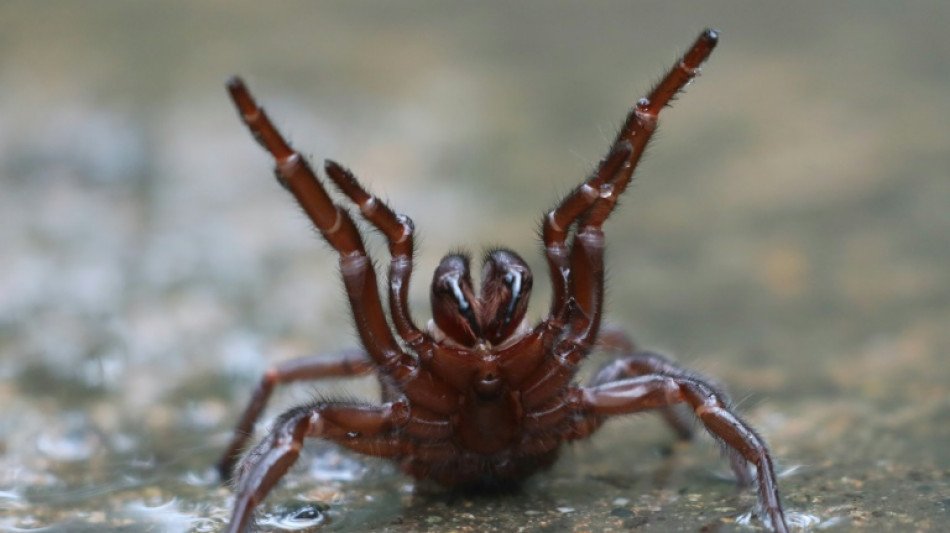
There are now 50,000 known different species of spider crawling the Earth, the World Spider Catalog announced Wednesday -- and there might be another 50,000 out there.

Text size:

The WSC, based at the Natural History Museum of Bern in the Swiss capital, said the 50,000th spider registered is the Guriurius minuano, which belongs to the Salticidae family of jumping spiders and hunts its prey on shrubs and trees in southern Brazil, Uruguay, and around Buenos Aires.

It was described by the arachnologist Kimberly S. Marta and her colleagues from Brazil and is named after the now-extinct Minuane people who lived in the area.

The first scientific description of a spider was in 1757 and while it has taken 265 years to reach 50,000, the rate of discovery is steadily increasing, and it is thought it could take less than 100 years to discover the same number again.

"We estimate that there are still approximately 50,000 more spider species out there to discover," said the WSC's publishers.

The spider catalogue is freely available on the museum's website.

"Spiders are the most important predators in Earth's terrestrial habitats, and their ecological significance should not be underestimated," the museum said.

"Consuming some 400 to 800 million tonnes of insects every year, they are the most important regulators of insect populations. Accordingly, they are also of fundamental importance to humans."

S.Rocha--TFWP