The Fort Worth Press - Online images reinforce gender stereotypes more than text: study

USD -
AED 3.672499
AFN 64.999685
ALL 81.652501
AMD 376.168126
ANG 1.79008
AOA 916.999698
ARS 1431.790169
AUD 1.42709
AWG 1.8025
AZN 1.701218
BAM 1.654023
BBD 2.008288
BDT 121.941731
BGN 1.67937
BHD 0.375914
BIF 2954.881813
BMD 1
BND 1.269737
BOB 6.889932
BRL 5.217395
BSD 0.997082
BTN 90.316715
BWP 13.200558
BYN 2.864561
BYR 19600
BZD 2.005328
CAD 1.36749
CDF 2200.000154
CHF 0.776259
CLF 0.021803
CLP 860.889893
CNY 6.93895
CNH 6.92969
COP 3699.522179
CRC 494.312656
CUC 1
CUP 26.5
CVE 93.2513
CZK 20.500702
DJF 177.555076
DKK 6.32116
DOP 62.928665
DZD 129.553047
EGP 46.768515
ERN 15
ETB 155.0074
EUR 0.84645
FJD 2.209503
FKP 0.73461
GBP 0.735024
GEL 2.695011
GGP 0.73461
GHS 10.957757
GIP 0.73461
GMD 72.999747
GNF 8752.167111
GTQ 7.647681
GYD 208.609244
HKD 7.813602
HNL 26.338534
HRK 6.376098
HTG 130.618631
HUF 319.803498
IDR 16855.5
ILS 3.110675
IMP 0.73461
INR 90.57645
IQD 1306.186308
IRR 42125.000158
ISK 122.710294
JEP 0.73461
JMD 156.057339
JOD 0.70905
JPY 157.680499
KES 128.622775
KGS 87.450187
KHR 4023.848789
KMF 419.000361
KPW 899.990005
KRW 1463.804285
KWD 0.30721
KYD 0.830902
KZT 493.331642
LAK 21426.698803
LBP 89293.839063
LKR 308.47816
LRD 187.449786
LSL 16.086092
LTL 2.95274
LVL 0.60489
LYD 6.314009
MAD 9.153622
MDL 17.000296
MGA 4426.402808
MKD 52.129054
MMK 2099.624884
MNT 3567.867665
MOP 8.023933
MRU 39.425769
MUR 46.059684
MVR 15.45001
MWK 1728.952598
MXN 17.254972
MYR 3.947503
MZN 63.750379
NAD 16.086092
NGN 1366.980298
NIO 36.694998
NOK 9.675195
NPR 144.506744
NZD 1.662954
OMR 0.383441
PAB 0.997082
PEN 3.354899
PGK 4.275868
PHP 58.510975
PKR 278.812127
PLN 3.57034
PYG 6588.016407
QAR 3.634319
RON 4.310404
RSD 99.268468
RUB 76.85146
RWF 1455.283522
SAR 3.748738
SBD 8.058149
SCR 13.84955
SDG 601.49594
SEK 9.020445
SGD 1.273029
SHP 0.750259
SLE 24.449691
SLL 20969.499267
SOS 568.818978
SRD 37.818031
STD 20697.981008
STN 20.719692
SVC 8.724259
SYP 11059.574895
SZL 16.08271
THB 31.534994
TJS 9.342721
TMT 3.505
TND 2.891792
TOP 2.40776
TRY 43.6125
TTD 6.752083
TWD 31.589868
TZS 2577.445135
UAH 42.828111
UGX 3547.71872
UYU 38.538627
UZS 12244.069517
VES 377.985125
VND 25950
VUV 119.182831
WST 2.73071
XAF 554.743964
XAG 0.012866
XAU 0.000201
XCD 2.70255
XCG 1.797032
XDR 0.689923
XOF 554.743964
XPF 100.858387
YER 238.382409
ZAR 16.04375
ZMK 9001.193234
ZMW 18.570764
ZWL 321.999592
  • RBGPF

    0.1000

    82.5

    +0.12%

  • NGG

    1.1700

    88.06

    +1.33%

  • SCS

    0.0200

    16.14

    +0.12%

  • CMSC

    -0.0400

    23.51

    -0.17%

  • VOD

    0.4900

    15.11

    +3.24%

  • RYCEF

    0.2600

    16.88

    +1.54%

  • RIO

    2.2900

    93.41

    +2.45%

  • GSK

    1.0600

    60.23

    +1.76%

  • RELX

    -0.7100

    29.38

    -2.42%

  • AZN

    5.8700

    193.03

    +3.04%

  • BTI

    0.8400

    62.8

    +1.34%

  • BP

    0.8400

    39.01

    +2.15%

  • CMSD

    0.0600

    23.95

    +0.25%

  • JRI

    0.0900

    12.97

    +0.69%

  • BCC

    1.8700

    91.03

    +2.05%

  • BCE

    -0.4900

    25.08

    -1.95%

Online images reinforce gender stereotypes more than text: study
Online images reinforce gender stereotypes more than text: study / Photo: © AFP/File

Online images reinforce gender stereotypes more than text: study

Images on the internet reinforce gender stereotypes -- such as doctors being men or nurses women -- more than text, contributing to a lasting bias against women, a US-based study said Wednesday.

Text size:

The importance of images has soared as much of the world's media, communication and even social interactions have moved online.

But this rising dominance of the image "exacerbates gender bias" by significantly under-representing women, according to the study in the journal Nature.

Lead author Douglas Guilbeault, a researcher at the business school of the University of California, Berkeley, told AFP that this was an "alarming" trend.

He warned of "the potential consequences this can have on reinforcing stereotypes that are harmful, mostly to women, but also to men."

Study co-author Solene Delecourt, also from UC Berkeley, said an example would be if a child was trying to find out more about a profession online but only saw images of one gender.

"They may feel like they don't belong," she said.

Images are also "often more memorable and emotionally evocative than text," the study said.

- 'Really concerning' -

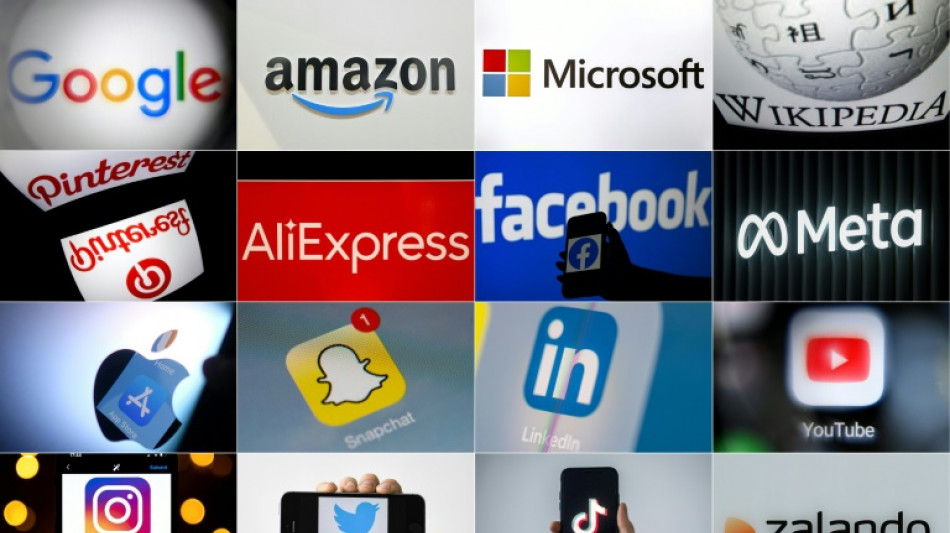
For the study, the researchers sifted through more than one million images from Google, Wikipedia and the IMDb film database, as well as billions of words on those platforms.

They looked for potential bias in nearly 3,000 social categories, including jobs such as doctor or lawyer, or roles such as neighbour or colleague.

Both over-represented men, but the images displayed even more gender bias than the words, the researchers found.

For example, the stereotype that women are nurses was "consistently stronger" in the images than the text, Guilbeault said.

This bias was not limited to the United States -- the researchers used many images from websites around the world -- nor was it confined to a particular platform.

The gender bias is also larger than what the general public broadly think, according to an opinion poll carried out by the researchers.

The team also used US census data to show that the under-representation of women for these jobs seen in online images does not match reality.

Finally, they looked into what psychological impact this bias has on people using the internet.

They had 450 people search online for specific jobs -- such as astronaut, poet or neurobiologist -- some reading text while others looked at images.

Afterwards, the participants carried out a test designed to measure their bias.

The group that looked up images had a more pronounced gender bias -- and the effect was still present during another test three days later, the researchers said.

"Images influence people in ways that they may not consciously realise," Guilbeault said.

He also lamented that there has been so little attention paid to "this shift towards image-based communication".

The researchers pointed to the role of online platforms in amplifying gender bias through their images, calling for more to be done.

They also warned that new image generators driven by artificial intelligence algorithms draw heavily on existing online images.

"It's not a surprise that the images these algorithms generate reflect all kinds of biases," Guilbeault said.

F.Garcia--TFWP