Treasured trash: UK waste gets new lease of life

From facial scrubs using coffee grounds to clothes made from plastic bottles and furniture decorated with agave fibres, efforts to upcycle or repurpose waste products are gaining traction in Britain.
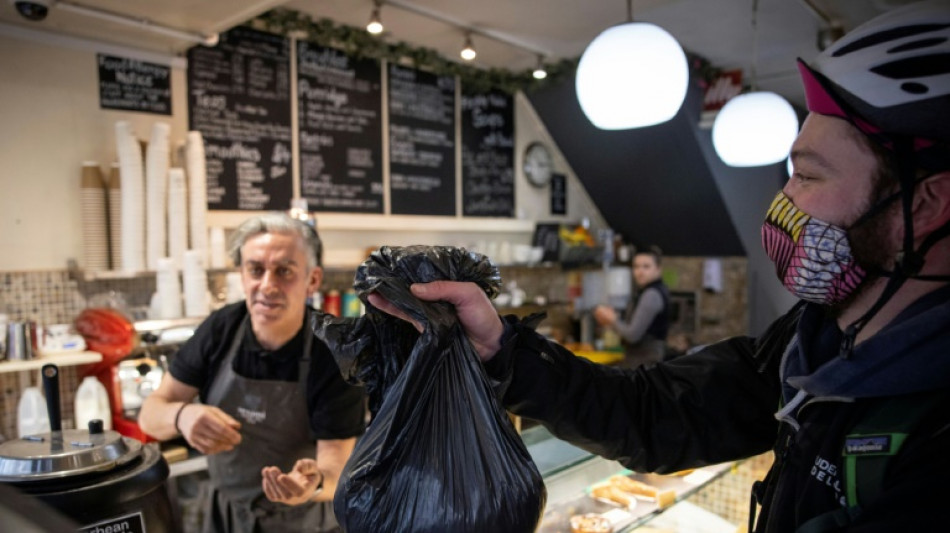
Every day a bike courier for the skincare brand Upcircle visits 25 cafes in London and collects some 100 kg (220 pounds) of coffee grounds that would otherwise be thrown away.
Set up six years ago by Anna Brightman and her brother Will Brightman, Upcircle reuses the coffee grounds to make beauty products, adding ingredients such as camomile infusions or a powder made from olive stones.
The siblings took the plunge to set up their own business after working for multinational companies.
"I wanted to do something that was closer to my heart," Anna Brightman told AFP.
"It was my brother who had the initial inspiration when asking out of curiosity at the coffee shop where he was going every day what happened to the coffee grounds," she said.
"He was shocked to learn the coffee was disposed of at a landfill and they had to pay on top for it."
She joked that she and her brother have since "made a name (for themselves) as the crazy siblings collecting coffee around London and making cosmetics".
Once the coffee collections got going, "people started to contact us with all types of by-products," Anna said, noting more than 15 of them are now incorporated into their range.
Among these are water from making concentrated fruit juices, fading flowers that get thrown away by florists and leftover chai spices.
- 'Not gross' -
Upcircle pay for some of these ingredients, though the coffee grounds, for example, are free. But the logistics involved in collecting them can be complex and costly.
Every year, half a million tonnes of coffee grounds are thrown away in the UK and the firm claims to have recycled 400 tonnes to date.
Nevertheless, the idea of marketing a beauty product made from "trash" initially got a thumbs-down from industry insiders, Anna Brightman admitted.
She said they have to work to get the message across that "these ingredients we are working with are not gross, old or unclean".
Younger people are "more open to the idea of the circular economy", she added.
"For obvious reasons, they are concerned about the future of our planet".
Used coffee grounds work better as a skin care ingredient than dry ones, said Barbara Scott-Atkinson, the formulator for Upcircle's products.
"It's been heated and it's damp. This makes it more suitable to use than plain ground coffee and the level of antioxidants increases."
The company sends the ingredients for repurposing at its factory in Bridport on the southwest coast of England.
The smell of citrus essential oils wafts through the factory as they are being used to make a scrub.
The production process is simple: coffee grounds are mixed with sugar and essential oils, then whipped shea butter and a natural preservative is added.
The exfoliant is then poured into glass jars, 3,000 of which are distributed around the UK every week.
Demand is growing rapidly, particularly in the United States, according to the company, which is reluctant to give figures on its sales or growth.
The burgeoning interest in repurposing food waste puts Upcircle in competition with other brands of natural cosmetics, such as Britain's Wildefruit or Australia's Frank Body, or even the UK giant Body Shop.
- 'Put in landfill'-
As a result, coffee grounds are starting to become sought-after, Anna Brightman said.
"Some cafes tell us they... would like if we could split the week: they get the coffee waste Monday and Tuesday, and us the rest of the week," she added.
To combat ravaging the planet's resources, entrepreneurs and designers are increasingly coming up with new ways to create value from waste.
An exhibition called "Waste Age" at London's Design Museum (until February 20) showcases the use of agave, or sisal fibres, by Mexican designer Fernando Laposse, who studied at London's Central St Martin art school.
Laposse turns the natural fibres of the plant -- used to make tequila -- into avant-garde furniture such as tables, benches and hammocks.
He also uses colourful corncobs from his country of birth to make furniture and veneer, helping boost the "circular economy" and create jobs.
"In the UK, we recycle 15 percent of our waste, the rest is incinerated or put in landfill", said the exhibition's curator Gemma Curtin.
The Design Museum exhibition also shows chairs made from old fridges, baskets decorated with fishnets recovered from the ocean and creations by fashion designers, such as Stella McCartney and Phoebe English, who use recycling.
Curtin added this prompts visitors to question what is really "luxury"?
The exhibition's final room shows furniture and building blocks made of takeaway coffee cups. In Britain alone, 2.5 billion of these are thrown away each year, with their thin plastic coating making them impossible to recycle.
The huge amounts of plastics being made and then thrown away globally have prompted scientists to call for urgent production caps.
The United Nations will hold a meeting on tackling plastic pollution in Nairobi later this month, a potential prelude to talks on a worldwide plastics treaty.
B.Martinez--TFWP