NEW REPORT: How High Prescription Drug Prices Shape the Lives of Hispanic and Latino Families

WASHINGTON, D.C. / ACCESS Newswire / September 2, 2026 / Hispanic and Latino patients are delaying treatment, rationing medication, taking on debt, and traveling abroad to purchase prescription drugs because they cannot afford the high prices charged in the United States, according to a new report released today by Patients For Affordable Drugs, We Are Más, and Brown University's Information Futures Lab.
The Price Patients Pay: How Unaffordable Prescription Drugs Shape the Health, Finances, and Daily Lives of Hispanic and Latino Communitiesoffers a look beyond national statistics and examines the experiences of patients navigating the U.S. prescription drug affordability crisis. The report offers actionable recommendations for policymakers, healthcare providers, advocacy organizations, philanthropists, and community leaders to improve prescription drug affordability, hold those in power accountable, and help ensure patients can access the medications they need.
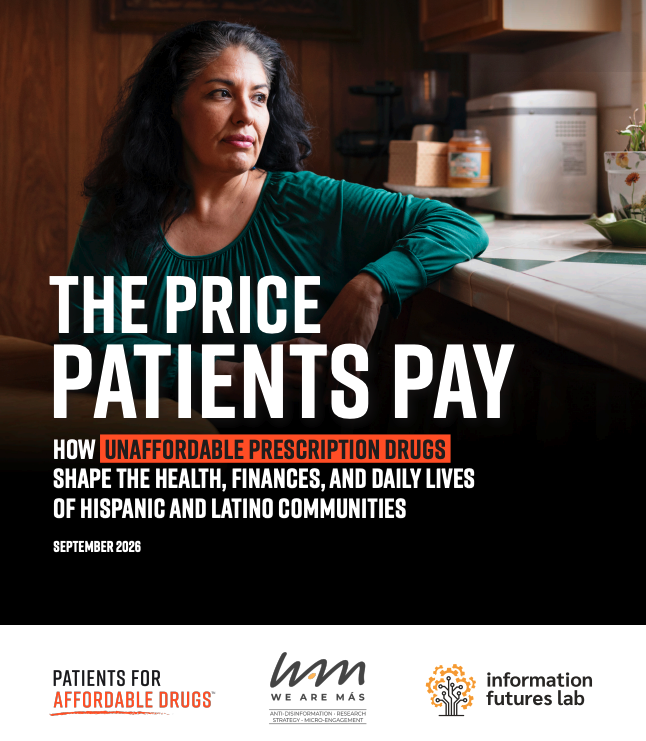
Read the full report in English here, and in Spanish here
"Prescription drug prices are high because the system in the U.S. allows drug companies to charge prices that are at least four times higher than what patients in other countries pay," said Merith Basey, CEO of Patients For Affordable Drugs. "Those prices adversely affect Hispanic and Latino communities at a higher rate, yet their experiences are too often absent from the conversations about the solutions. This report helps ensure their voices are included in the fight to make prescription drugs more affordable."
"Many of the people we spoke with know firsthand that the same medicines can be far more affordable in other countries. That perspective makes it very clear that these prices are not inevitable," said Evelyn Pèrez-Verdïa, CEO of the bilingual social impact agency, We Are Más. "Families are drawing on relatives, community networks, and connections across borders to get the medicines they need. But those networks should be a source of strength, not a substitute for an affordable healthcare system."
"A health system that can identify and procure the medicine that could keep someone well-or alive-and then make that medicine financially unreachable is failing at its most basic job," said Stefanie Friedhoff, Professor of the Practice and director of the Information Futures Lab at Brown University School of Public Health. "In a country with the resources of the United States, that is not only a health care problem; it is a public health failure. Too often the consequences are blamed on patients rather than the systems that produced them."
While polling shows that Hispanic and Latino communities are disproportionately burdened by high prescription drug prices, this report goes beyond the data to document the lived experiences of Hispanic, Latino, and Spanish-speaking adults in South Florida. Through five weeks of interviews, weekly questionnaires, and community discussions-most conducted in Spanish-it captures the difficult decisions families make when medicines become unaffordable, the emotional toll of those choices, and the strategies patients use to stay healthy.
While every participant's story was unique, several clear themes emerged throughout the project.
Patients are forced to choose between medicine and basic necessities. Participants regularly described deciding between filling prescriptions, buying groceries, paying rent, or covering utility bills, often at the expense of their health and financial stability.
"Just imagine not having the medication you need to survive...the sheer anguish of knowing that the medication exists, yet being unable to go get it, is horrible."
The consequences extend far beyond financial hardship. High prescription drug prices contributed to chronic stress, anxiety, social isolation, strained family relationships, and fear about losing access to lifesaving medications.
Patients view unaffordable prescription drugs as the result of systemic failures, not personal choices.
"Everyone here in the U.S. should have access to affordable medication - after all, I see that in other countries, many people enjoy that benefit."
Patients developed risky strategies to access lifesaving drugs. Participants reported rationing medications, delaying treatment, purchasing prescriptions abroad, relying on credit cards, searching extensively for lower-cost options, and turning to family and community networks when the healthcare system failed them.
Community networks are critical - but lasting solutions require systemic reform. While support from trusted healthcare providers, family members, and community organizations helped participants navigate the system, they consistently emphasized that lasting relief will require systemic reform.
"It often feels like the system makes it harder on purpose so patients end up paying full price"
Within the report, readers will also find additional patient stories, in-depth analysis of the project's key themes, and recommendations informed directly by participants' experiences.
Read the full report in English here, and in Spanish here.
###
Patients For Affordable Drugs is the only national patient advocacy organization focused exclusively on policies that lower prescription drug prices. We empower and mobilize patients by amplifying their experiences with high drug prices to hold those in power accountable and fight to shape and achieve system-changing policies that make prescription drugs affordable for all people in the United States. P4AD does not accept funding from organizations that profit from the development or distribution of drugs. To learn more, visit: PatientsForAffordableDrugs.org
We Are Más is a South Florida-based social impact organization specializing in culturally competent, hyperlocal engagement with diaspora groups in Hispanic, English- and Spanish-speaking communities. Working with a variety of purpose-driven organizations across the public, private, and third sectors, We Are Más combines listening and an active local presence with research and strategic communications to support partners in connecting deeply with communities in diverse places such as South Florida, Texas, and other Hispanic communities across the U.S.
Brown University's Information Futures Lab is a new type of university hub. Interdisciplinary researchers work alongside organizations, journalists, civic society leaders, and other sources of trusted information to respond to the information crisis as a civic and public health threat. Recognizing information as a social determinant of health, we create an evidence base and work with our partners to improve information ecosystems and strengthen the capacity of citizens to effectively access, create, and make sense of information that is crucial to their well-being. Learn more about the Information Futures Lab and its initiatives on our website.
CONTACT: Brennan Fiske [email protected]
SOURCE: Patients For Affordable Drugs
View the original press release on ACCESS Newswire
T.Harrison--TFWP