The Fort Worth Press - Afghanistan's water crisis worsened last year: UN report

USD -
AED 3.672503
AFN 62.510149
ALL 81.93627
AMD 368.780033
ANG 1.79046
AOA 917.999902
ARS 1391.803896
AUD 1.395722
AWG 1.8025
AZN 1.699853
BAM 1.670681
BBD 2.023354
BDT 122.776371
BGN 1.66992
BHD 0.37888
BIF 2990.939666
BMD 1
BND 1.279172
BOB 6.911397
BRL 4.984704
BSD 1.004599
BTN 95.835344
BWP 14.149665
BYN 2.806682
BYR 19600
BZD 2.020437
CAD 1.37409
CDF 2244.999991
CHF 0.785504
CLF 0.022715
CLP 893.980249
CNY 6.785102
CNH 6.802941
COP 3789.72
CRC 456.526589
CUC 1
CUP 26.5
CVE 94.702803
CZK 20.906401
DJF 178.887039
DKK 6.41821
DOP 59.543216
DZD 132.279623
EGP 52.889602
ERN 15
ETB 156.856564
EUR 0.85889
FJD 2.200301
FKP 0.739691
GBP 0.74865
GEL 2.679853
GGP 0.739691
GHS 11.409727
GIP 0.739691
GMD 72.500769
GNF 8808.792491
GTQ 7.630738
GYD 209.246802
HKD 7.83105
HNL 26.716372
HRK 6.471103
HTG 131.549935
HUF 309.2955
IDR 17598.65
ILS 2.91151
IMP 0.739691
INR 95.907398
IQD 1310
IRR 1314999.999881
ISK 123.340071
JEP 0.739691
JMD 158.836248
JOD 0.709
JPY 158.6235
KES 129.150199
KGS 87.449808
KHR 4030.663241
KMF 422.00046
KPW 899.97066
KRW 1503.935062
KWD 0.30858
KYD 0.833543
KZT 473.448852
LAK 21955.000361
LBP 89538.01782
LKR 325.320759
LRD 183.250175
LSL 16.490153
LTL 2.95274
LVL 0.60489
LYD 6.376444
MAD 9.20875
MDL 17.268391
MGA 4207.491806
MKD 52.972364
MMK 2099.865061
MNT 3580.130218
MOP 8.069362
MRU 40.143624
MUR 47.170237
MVR 15.403383
MWK 1741.59617
MXN 17.31692
MYR 3.948501
MZN 63.909859
NAD 16.489918
NGN 1369.69032
NIO 36.969988
NOK 9.302097
NPR 154.01359
NZD 1.704575
OMR 0.384496
PAB 1.000184
PEN 3.446986
PGK 4.212967
PHP 61.740499
PKR 279.799921
PLN 3.64815
PYG 6121.626027
QAR 3.6455
RON 4.469102
RSD 100.847023
RUB 73.245574
RWF 1469.361841
SAR 3.754148
SBD 8.016136
SCR 14.598829
SDG 600.503834
SEK 9.427502
SGD 1.27865
SHP 0.746601
SLE 24.650127
SLL 20969.502105
SOS 574.154469
SRD 37.207019
STD 20697.981008
STN 21.0203
SVC 8.751249
SYP 110.528733
SZL 16.478199
THB 32.563035
TJS 9.346574
TMT 3.5
TND 2.887973
TOP 2.40776
TRY 45.544803
TTD 6.790867
TWD 31.5755
TZS 2605.000166
UAH 44.163821
UGX 3740.52909
UYU 39.831211
UZS 12045.000298
VES 510.148815
VND 26360
VUV 118.077659
WST 2.708521
XAF 562.792354
XAG 0.012842
XAU 0.000219
XCD 2.70255
XCG 1.802565
XDR 0.699933
XOF 562.792354
XPF 102.625027
YER 238.650242
ZAR 16.62751
ZMK 9001.203608
ZMW 18.911406
ZWL 321.999592
  • RBGPF

    0.8900

    61.68

    +1.44%

  • BTI

    1.3500

    66.7

    +2.02%

  • CMSC

    0.0898

    23.14

    +0.39%

  • RIO

    -2.4500

    109.59

    -2.24%

  • BCE

    -0.2000

    24.19

    -0.83%

  • NGG

    0.4500

    87.43

    +0.51%

  • GSK

    -0.0300

    50.96

    -0.06%

  • AZN

    -2.7600

    184.96

    -1.49%

  • RYCEF

    -0.1300

    15.9

    -0.82%

  • BP

    -0.0200

    44.12

    -0.05%

  • VOD

    -0.0300

    15.48

    -0.19%

  • RELX

    -0.1600

    31.46

    -0.51%

  • JRI

    0.0100

    13.14

    +0.08%

  • BCC

    2.4200

    69.4

    +3.49%

  • CMSD

    0.0400

    23.6

    +0.17%

Afghanistan's water crisis worsened last year: UN report
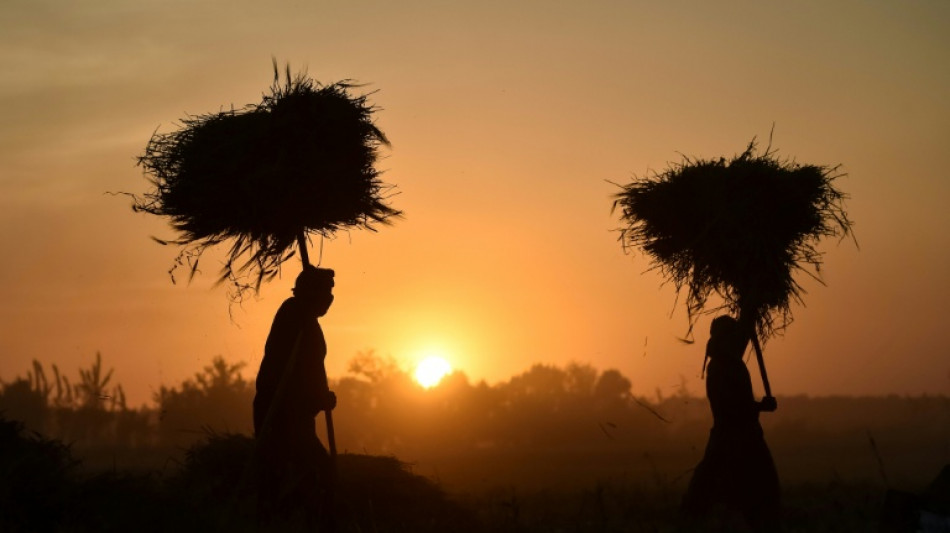
Afghanistan's water crisis worsened last year: UN report / Photo: © AFP

Afghanistan's water crisis worsened last year: UN report

Afghanistan's water crisis worsened in 2025, the United Nations said in a report, with drought nearly doubling compared to the year before.

Text size:

Most of Afghanistan's 48.6 million people depend on agriculture, and water scarcity can have devastating consequences in a country already experiencing widespread poverty, food insecurity and conflict.

"Water access deteriorated sharply," the United Nations Development Programme (UNDP) said in the report released on Wednesday, adding that drought became "the dominant environmental stressor across nearly all regions" of Afghanistan.

Drought prevalence rose to 64 percent in 2025 from 34 percent the year before, according to the UNDP.

The most affected regions range from western Afghanistan to the northeastern province of Badakhshan, "with 92 percent of households reporting drought impacts", the report said.

"In a country that depends on agriculture, that brings food insecurity," Najibullah Yusufi, a UN expert on climate change, told AFP, adding that water issues also affect the health sector.

Between 2024 and 2025, "reports of non-functional or dried-up water points tripled, and full drinking water sufficiency fell from 59 percent to 44 percent nationally", the UNDP report showed.

Studies show that the capital Kabul could run out of ground water by as early as 2030 due to climate change and rapid urbanisation.

The Afghan National Environment Protection Agency said on Thursday that "groundwater, the main source of drinking water for most of the population, is being depleted rapidly" in major cities across the country.

More than five million Afghans have returned home from Iran and Pakistan since September 2023, according to the International Organisation for Migration.

Many of them are trying to start a new life in the capital, expecting the swelling city of more than six million to offer the best prospects of work in a country where nearly half of the population needs humanitarian assistance.

"Kabul is facing a lot of issues, population has increased, the need for water has risen, and we don't have enough rain to recharge the ground water," Yusufi said.

This year's rainfalls were better than last year, Afghanistan's disaster management authority said in April, hoping it "can strengthen the underground sources of water", and improve harvests.

F.Garcia--TFWP