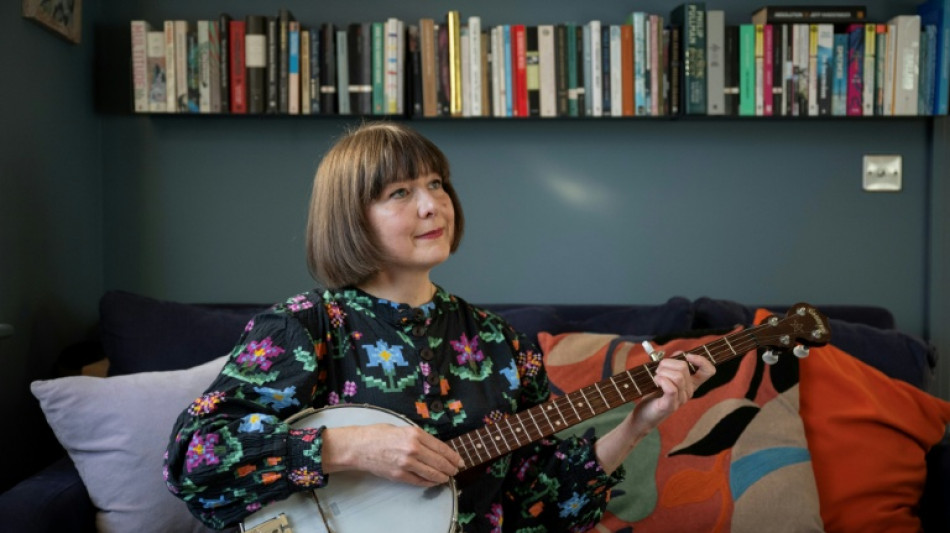
'Easiest scam in the world': Musicians sound alarm over AI impersonators / Photo: © AFP

Does the latest track by your favourite singer sound slightly off? You may be right. Fraudulent AI-generated tracks are increasingly appearing in artists' own profiles on streaming platforms, presented as their original work.
British folk musician Emily Portman got a shock in July when she received a message from a fan congratulating her on her new album -- even though she hadn't released one since 2022.
That's when she discovered "Orca" on numerous streaming platforms including Spotify and Apple Music.
The titles of the songs resembled something she might have created herself, but "very quickly I recognised it was AI-produced music", she said.
According to the independent artist, the AI behind "Orca" was "trained" on her previous albums, mimicking her folk-inspired instrumentation and lyrics.
"I just felt really uncomfortable and disturbed that people could be going to my profile ... and then think 'wow, what's this?'," she said.
Portman said people were fooled despite the "pristine perfection" of the vocals and "vacuous lyrics".
The musician couldn't identify the perpetrators of the fraud, but believes she knows how they operate.
Scammers claiming to be artists approach distribution companies, which then upload the music online without any identity checks, she said.
- 'Easiest scam in the world' -
On the other side of the world, Australian musician Paul Bender also discovered from early this year that four "bizarrely bad" AI-generated songs had been added to the profiles of his band, The Sweet Enoughs.
He said the streaming industry hadn't kept pace with security measures such as two-factor authentication now widely used in other sectors.
"You just say: 'Yes that's me' ... and upload a song to whoever's profile," he said.
"It's the easiest scam in the world."
After an Instagram discussion, Bender, who is also the bassist for the Grammy-nominated band Hiatus Kaiyote, received hundreds of messages from artists and music fans.
He compiled a list of numerous suspect albums, particularly in the catalogues of deceased artists, such as the experimental Scottish musician Sophie, who died in 2021.
Around 24,000 people signed a petition Bender launched on change.org, including rapper and singer-songwriter Anderson .Paak and singer Willow Smith, urging platforms to step up security.
- Virtually undetectable -
AI-powered music generators such as Suno and Udio have become increasingly refined.
Almost all listeners are now unable to distinguish AI-generated tracks from the real thing, according to an Ipsos study for the French platform Deezer in November.
This has driven success for bands solely created by AI, such as The Velvet Sundown, which has garnered one million subscribers on Spotify, but also led to a rise in fraudulent activity.
"The reason that music was uploaded under her (Portman's) name was essentially to make sure that they could gain royalties from (it)," said Dougie Brown of the industry representative UK Music.
Revenues on the platforms are generally low, but add up thanks to bots that multiply listening streams tenfold, he said.
Portman and Bender, who have not taken legal action, asked the various platforms to remove the offending tracks -- a process that took between 24 hours and eight weeks.
Some countries and states have legislation to protect artists against imitation, particularly in California.
In others, including the United Kingdom, limited copyright leaves artists vulnerable, said Philip Morris of the Musicians' Union.
He said Portman's case showed how AI-generated music was now so sophisticated it could actually be used "to impersonate the original work of a real artist".
Accused of a lack of transparency, Spotify recently announced measures to make the platform more reliable and transparent.
Like its competitor Apple Music, it says it is working upstream with distributors to better detect fraud.
"Across the music industry, AI is accelerating existing problems like spam, fraud, and deceptive content," it said.
Despite her concerns about potential UK legislation that artists say will damage their interests, and fraudsters making a mockery of the "beauty of the creative process", Portman is working on a new album.
"The album that I'm making, it's costing a lot of money ... but for me it's all about those human connections, creativity and teaming up with other amazing creatives," she said.
J.P.Estrada--TFWP